Experimental water mass inspection
1. pH value test
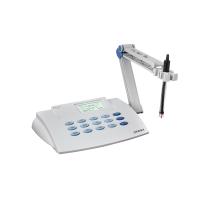
Take 10mL of water sample, add 2 drops of methyl red pH indicator (color change range is pH4. ) 5 drops, no blue is qualified. It can also be checked with precision pH test paper or measured with a pH meter (acidity meter).
2. Determination of electrical conductivity
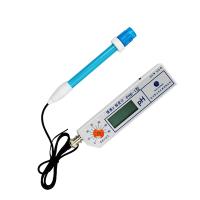
The conductivity meter used for primary and secondary water determination is equipped with an "on-line" conductivity cell with an electrode constant of 0.01~0.1cm-', and has an automatic temperature compensation function. If the conductivity meter has no temperature compensation function, an "online" heat exchanger can be installed to control the water temperature at (25±1)°C during measurement. Or record the water temperature and convert it according to the conversion formula.
The conductivity meter used for tertiary water determination is equipped with a conductivity cell with an electrode constant of 0.01~1cm-' and has an automatic temperature compensation function. If the conductivity meter has no temperature compensation function, it can be installed with a constant temperature Water Bath to control the temperature of the water sample to be tested at (25±1)°C. Or record the water temperature and convert it according to the conversion formula.
When the measured water at all levels is not 25°C, the conductivity can be converted according to the following formula:
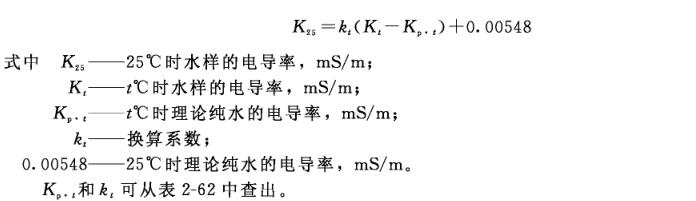
The conductivity measurement of primary and secondary water is to install the conductivity cell at the water outlet of the water treatment device, adjust the flow rate of the water, and drive away the air bubbles in the pipeline and the conductivity cell, then the measurement can be carried out.
The conductometric measurement of the tertiary water is to take 400mL water sample in the Erlenmeyer flask and insert it into the conductivity cell for measurement.


By measuring the conductivity of water, the method of converting the content of total soluble salts in water can be calculated, which has certain experience and error, but still has certain practical value. It can be used as a reference when preparing pure water. The relationship between conductivity, resistivity and dissolved solids content of water is shown in Table 2-63.
3. Oxidizable substance limit test
Measure 1000mL of secondary water, inject it into the beaker, add 5.0mL20% sulfuric acid solution, and mix.
Measure 200mL of tertiary water, inject it into the beaker, add 1.0mL20% sulfuric acid solution, and mix.
Add 1.00mL0.01m01/L (jKMn04) standard solution to the above acidified test solution, mix well, cover with a watch glass, heat to boil and keep for 5min, the pink color of the solution must not disappear completely.
4. Determination of absorbance
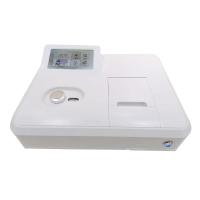
Water samples were injected into the quartz absorption cells with a thickness of 1cm and 2cm respectively, and the absorbance of the water samples in the 2cm absorption cell was measured on the ultraviolet-visible Spectrophotometer at a wavelength of 254nm, using the water sample in the 1cm absorption cell as a reference.
If the sensitivity of the instrument is not enough, the thickness of the measuring absorption cell can be appropriately increased.
5. Determination of evaporation residue
Measure 1000mL of secondary water (500mL of tertiary water). Add the water sample to the 500mL distillation flask of the rotary evaporator several times, and evaporate it under reduced pressure on the Water Bath (avoid evaporation to dryness). When the water sample is finally evaporated to about 50mL, stop heating.
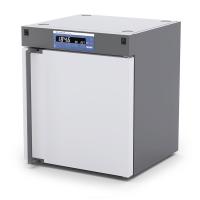
Transfer the above-mentioned pre-concentrated water sample to a glass evaporating dish with constant weight at (105±2)°C, and rinse the distillation bottle with 5-10mL water sample for 2-3 times, and mix the washing liquid with the pre-concentrated water. The samples were combined, evaporated to dryness on a Water Bath, and dried in an Electric Oven at (105±2)°C to constant weight.
The mass of the residue shall not be greater than 1.0mg.
6. Limit test of soluble silicon
Measure 520mL of primary water (270mL of secondary water), and inject it into the platinum dish. Under dust-proof conditions, when the sub-boiling evaporates to about 20mL, stop heating. Cool to room temperature, add 1.0mL50g/L ammonium molybdate solution, stir well. After standing for 5min, add 1.0mL 50g/L oxalic acid solution and stir well. After standing for 1min, add 1.0mL of 2g/L rhodol sulfate solution and stir well. Transfer to a 25mL colorimetric tube, dilute to the mark, shake well, and incubate in a Water Bath at 60°C for 10min. Visual color comparison, the blue of the test solution shall not be deeper than the standard.
The standard is to take 0.50mL of silica standard solution (0.01mg/mL), add 20mL of water sample, and then start from adding 1.0mL of ammonium molybdate solution to the sample test solution at the same time.
50g/L ammonium molybdate solution: Weigh 5.0g of ammonium molybdate [(NH4)6M07o24·4H2o], dissolve in water, add 20.0mL of 20% sulfuric acid solution, dilute to 100mL, shake well, and store in a polyethylene bottle. Discard any precipitate that is found.
2g/L rhodol sulfate (Metol) solution: Weigh 0.20g rhodol sulfate, dissolve it in water, add 20.0g sodium metabisulfite, dissolve and dilute to 100mL. Shake well and store in a polyethylene bottle. Store away from light, valid for two weeks.
50g/L oxalic acid solution: Weigh 5.0g oxalic acid, dissolve in water and dilute to 100mL. Store in polyethylene bottles.