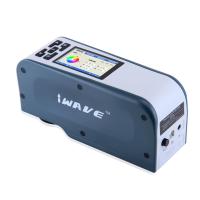
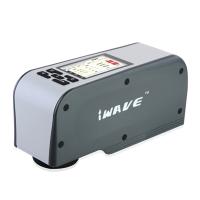
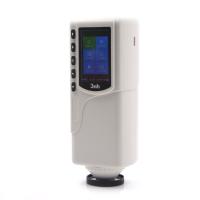
The thing between Colorimeter and Color
What is the close relationship between Colorimeter and color? Below we will introduce in several parts, including the introduction of the Colorimeter, optical knowledge, and color characteristics, as explained below.
Instrumental measurement of color difference
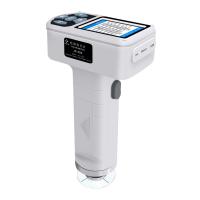
Commonly used color measuring instruments: color difference meter, Spectrophotometer
It is a basic color detection instrument used to measure the color information of a measured standard sample or compare the color difference between the sample and the sample at several wavelengths in the entire visible light range.
Mainly used for color measurement and comparison of color difference.
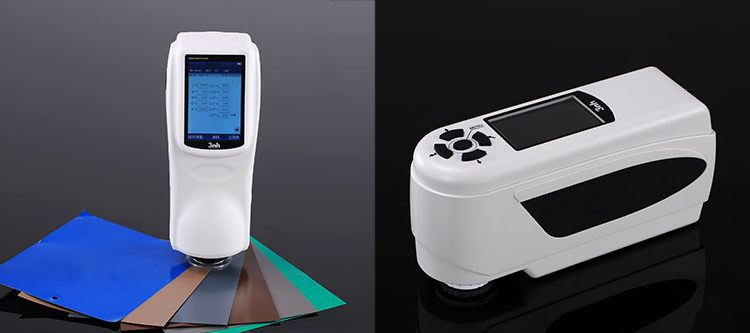
Principle: The reflection method is used to measure the color data of opaque or almost opaque (but not translucent) materials.
There are many models of chromatic aberration instruments, with different performances such as observation area, lighting method and geometric conditions, and the data results measured by different types of instruments are not completely consistent.
Calibration: In order to obtain accurate measurement results, any color measuring instrument needs to be calibrated before testing. Although the calibration methods vary with different types of instruments, there are still common principles.
Sample preparation: The satisfactory sample for determination should be an opaque sample that is stiff, non-deformable, inert, and uniform in color. Such satisfactory samples do not exist in production.
Therefore, it is necessary to use technology and experience to eliminate or reduce the impact of any errors that may have on instrument measurements when measuring most products.
Factors Affecting Instrument Color Measurement
Samples that are not stiff or have obvious features on the surface: the change in the amount of their protruding into the test hole will cause a large deviation in the test results. Those surfaces with obvious features such as: mesh, napping, jacquard, etc. are not suitable.
Containing fluorescent samples: from dyes or optical brighteners, the results are difficult to reproduce between instruments.
Glossy, shimmering fabric with a finish.
Internal color difference (unevenness) of the sample: When the sample measured by the Colorimeter is uneven in color, the average value needs to be measured to achieve consistent and reproducible measurement results.
A large amount of data needs to be measured for the selection of the window, and the average number should be able to repeat the measurement at any part of the sample with reproducibility.
Computer color difference values do not always agree with their visual inspection.
The human eye is more sensitive to changes in hue, and has a much higher color changing ability in low-saturation color areas than in bright and vivid areas (it is more tolerant to chroma and lightness).
For example, two pairs of samples with the same color difference value, if the color difference of one pair comes from hue, and the other pair comes from saturation or brightness, it is possible that one pair is qualified and the other pair is unqualified.
In practical applications, although visual evaluation is relatively simple, it is difficult to quantitatively describe visual color difference. The instrument test is relatively objective and not affected by human factors, but when the gloss of the sample changes slightly, the change of the color difference value will be obvious, and the reproducibility of the data is found to be poor in practical applications.
Optical knowledge
what is color
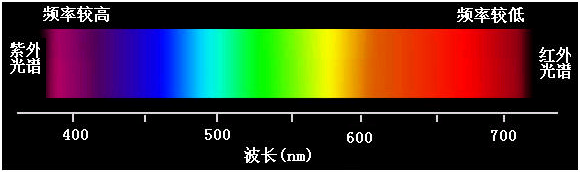
Color is the result of the perception of visible light by the human visual system. The perceived color is determined by the frequency of light waves. Light waves are electromagnetic radiation with a range of frequencies and a wide range of wavelengths. Only a small part of the electromagnetic radiation causes the eye to be excited and sensed, and its wavelength is between 380 and 780nm.

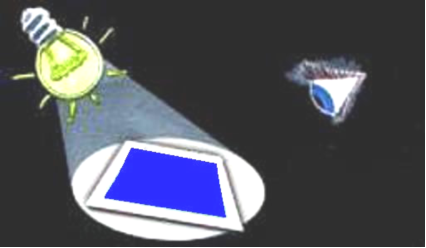
In order to observe color, three parties are required:
light source
object
observer
Three properties of color
Hue: Also known as hue, it refers to the appearance of a color, and it can more accurately represent the name of a certain color. A name or type of color used to distinguish a color. Hue is how the visual system perceives the color of an area. This feeling is similar to which of the three colors red, green and blue, or similar to the colors combined with them. It is the attribute that is easiest to distinguish colors from.
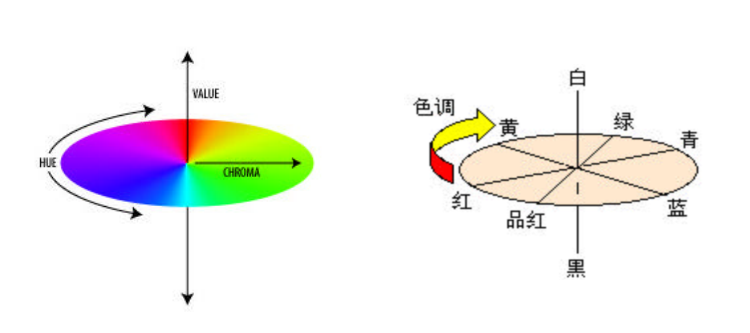
Saturation: Refers to the purity of the color. The higher the saturation, the more yellow, orange, and reddish-purple the color feels, and the lower the saturation, the closer to the gray series.
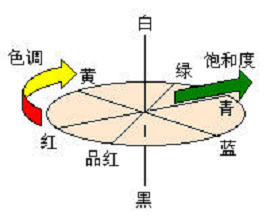
The different colors in the image below have the same hue and value, but they have different saturations, with the least saturated on the left and the most saturated on the right. A color without white penetration is a saturated color, called a pure color; when a pure color is mixed with black, white, gray or other colors, the purity will be reduced.

Brightness: Also called lightness. The intensity of light reflected per unit area of a colored object.
One extreme of lightness is black (no light), the other extreme is white, and between these two extremes is gray. In many color systems, lightness is often represented on a vertical axis.
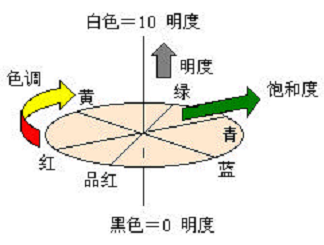
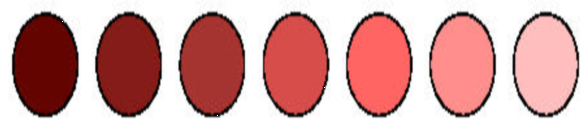
The seven colors shown in the picture, they have the same hue, but their lightness is different, the lightness at the bottom is the least, and the lightness at the top is the greatest.
The above is some small knowledge about Colorimeter and color, and I hope it can provide some references for relevant personnel in the industry.

- 1Summary of execution standards for 3NH Colorimeters
- 2CS-610 Applied to Cigarette Label Color Detection
- 3How Colorimeters Detect Tobacco Leaf Color
- 4Film Appearance Color Detection
- 5Introduction to Coating Color Detection
- 6Coating Color and color difference detection method
- 7The correct maintenance method for Colorimeter
- 8Colorimeter is widely used in the Coating Industry
- 9Application of Colorimeter
黄小维;朱振华;吴春明 - 《测色色差仪的应用》