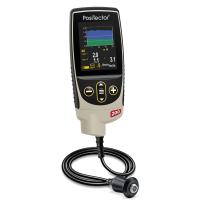
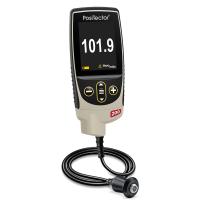
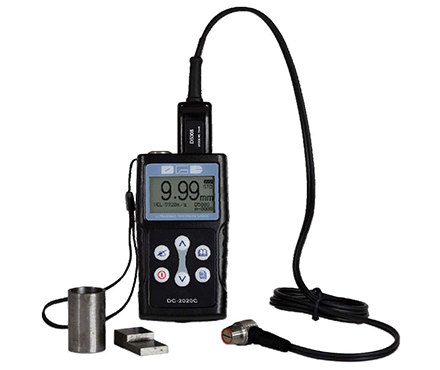
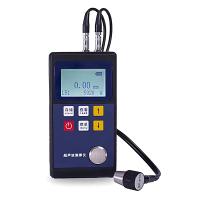
What causes the measurement of Ultrasonic Thickness Gauge?
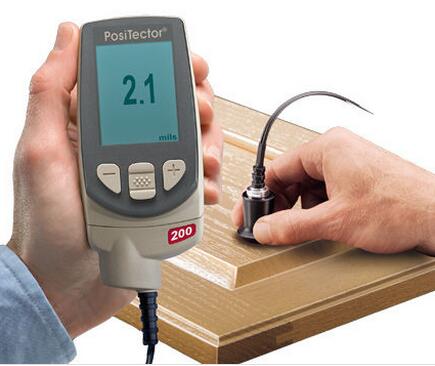 What reasons will affect the measured value of the ultrasonic Thickness Gauge? The reasons include that the surface of the object is too rough, which affects the coupling effect between the probe and the contact surface, and the reflected echo is too low to receive the echo signal. The radius of curvature of the object is too small, the contact surface of the probe commonly used in the figure is a plane, and the contact with the curved surface is a point or line contact, and the sound intensity transmittance is low. These factors will affect the test results of the ultrasonic Thickness Gauge. The specific analysis is as follows:
1. The surface roughness of the workpiece is too large, resulting in poor coupling effect between the probe and the contact surface, low reflection echo, and even failure to receive the echo signal. For surface corrosion and in-service equipment and pipelines with poor coupling effects, the surface can be treated by sanding, grinding, filing, etc. to reduce the roughness. At the same time, the oxide and paint layer can be removed to expose the metallic luster, so that the probe A good coupling effect can be achieved with the tested object through the couplant.
2. The radius of curvature of the workpiece is too small, especially when measuring the thickness of small-diameter pipes. Because the surface of the commonly used probe is flat, the contact with the curved surface is point contact or line contact, and the sound intensity transmission rate is low (poor coupling). A small-diameter special probe (6mm) can be selected, which can accurately measure curved surface materials such as pipes.
3. The detection surface is not parallel to the bottom surface, the sound wave will be scattered when encountering the bottom surface, and the probe cannot receive the bottom wave signal.
4. Castings and austenitic steels have serious scattering and attenuation when ultrasonic waves pass through them due to uneven structure or coarse grains. The scattered ultrasonic waves propagate along complex paths, which may annihilate echoes and cause no display. A special probe for coarse grains with a lower frequency (2.5MHz) can be selected.
5. The contact surface of the probe is somewhat worn. The surface of commonly used thickness measuring probes is made of acrylic resin. Long-term use will increase the surface roughness, resulting in a decrease in sensitivity, resulting in incorrect display. 500# sandpaper can be used for grinding to make it smooth and ensure parallelism. If still unstable, consider replacing the probe.
6. There are a lot of corrosion pits on the back of the measured object. Because there are rust spots and corrosion pits on the other side of the measured object, the sound wave is attenuated, resulting in irregular changes in readings, or even no readings in extreme cases.
7. There is sediment in the measured object (such as a pipe). When the acoustic impedance of the sediment is not much different from that of the workpiece, the value displayed by the Thickness Gauge is the wall thickness plus the thickness of the sediment.
8. When there are defects (such as inclusions, interlayers, etc.) inside the material, the displayed value is about 70% of the nominal thickness. At this time, an ultrasonic flaw Detector can be used for further defect detection.
9. The influence of temperature. In general, the sound velocity in solid materials decreases with the increase of its temperature. According to experimental data, the sound velocity decreases by 1% for every 100°C increase in hot materials. This is often the case for high-temperature in-service equipment. Special probes for high temperatures (300°C to 600°C) should be used instead of ordinary probes.
10. Laminated materials, composite (heterogeneous) materials. To measure uncoupled stacked materials, ultrasonic waves cannot penetrate uncoupled spaces and do not travel at a uniform velocity through composite (heterogeneous) materials. For equipment made of multi-layer materials (such as urea high-pressure equipment), special attention should be paid when measuring the thickness. The indicated value of the Thickness Gauge only indicates the thickness of the layer of material that is in contact with the probe.
11. The influence of couplant. The couplant is used to exclude the air between the probe and the measured object, so that the ultrasonic wave can effectively penetrate the workpiece to achieve the purpose of detection. If the type is selected or used improperly, it will cause errors or the coupling mark will flicker, making it impossible to measure. Because the appropriate type is selected according to the application, when using on a smooth material surface, you can use a low-viscosity coupling agent; when using on a rough surface, vertical surface and top surface, you should use a high-viscosity coupling agent. High temperature workpieces should use high temperature couplant. Secondly, the couplant should be used in an appropriate amount and applied evenly. Generally, the couplant should be applied to the surface of the material to be tested, but when the measurement temperature is high, the couplant should be applied to the probe.
12. Wrong choice of sound velocity. Before measuring the workpiece, preset its sound velocity according to the type of material or reversely measure the sound velocity according to the standard block. When the instrument is calibrated with one material (the common test block is steel) and then measured with another material, it will produce wrong results. It is required to correctly identify the material and select the appropriate sound velocity before measurement.
13. Effect of stress. Most of the in-service equipment and pipelines have stress, and the stress state of solid materials has a certain influence on the sound velocity. When the stress direction is consistent with the propagation direction, if the stress is compressive stress, the stress will increase the elasticity of the workpiece and accelerate the sound velocity; on the contrary , if the stress is tensile stress, the speed of sound slows down. When the stress and the propagation direction of the wave are different, the particle vibration trajectory is disturbed by the stress during the wave process, and the wave propagation direction deviates. According to the data, the general stress increases and the speed of sound increases slowly.
14. The effect of metal surface oxide or paint coating. Although the dense oxide or paint anti-corrosion layer produced on the metal surface is closely combined with the base material and has no obvious interface, the propagation speed of the sound velocity in the two substances is different, resulting in errors, and the error varies with the thickness of the covering. Also different.
The above is a summary of the analysis and summary of the influencing factors of the measured value of the ultrasonic Thickness Gauge, hoping to provide reference for relevant personnel in the industry.


- 1Principle, Function, Application and Selection of Multifunctional Ultrasonic Thickness Gauge
- 2Principle, Application and Type Selection of Ultrasonic Thickness Gauge
- 3Principle, Application and Type Selection of Ultrasonic Thickness Gauge
- 4Principle, Application and Selection of Ceramic Ultrasonic Thickness Gauge
- 5The Principle, Application and Precautions of Copper Plate Ultrasonic Thickness Gauge
- 6Principle and Application of Ultrasonic Thickness Gauge
- 7Measurement principle and influencing factors of high temperature ultrasonic Thickness Gauge
- 8Principle of Portable Ultrasonic Thickness Gauge
- 9How does an ultrasonic Thickness Gauge work?