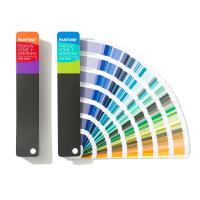
An industry insider tells you how to choose color chips?
1. How much do you know about Color Charts?
What is a Color Chart? What does it do? What are the characteristics? At the beginning of the article, I will give a brief introduction to the Color Chart.
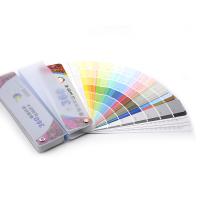
A Color Chart is a reflection of colors that exist in nature on certain materials (such as paper, fabrics, plastics, etc.). It is used for color selection, comparison, and communication. It is a tool for achieving uniform standards within a certain range.
A color swatch is a preset tool. Designers select colors and hand them over to printing manufacturers for physical production, so as to manufacture products according to the designer's original intention of color selection, which requires designers to preset product colors.
In layman's terms, a Color Chart is a reference to convey color information. The Color Chart allows you to intuitively see the products you want to buy or the various colors and patterns you produce.
Color cartoons are suitable for these industries: advertising, design, publishing, printing, plastics, electronics, toys, gifts, printing and dyeing products, bags, shoes, plastics, chemical coatings, ceramics, handicrafts, furniture production, etc.
2. What types of Color Charts are there in the market?
There should be many types of Color Charts, no one has made detailed statistics, but the commonly used ones are Pantone Color Chart (PANTONE), RAL Color Chart (RAL) in Germany, DIC Color Chart in Japan, ISO gray card and Chinese Color Chart in CHINA. Architectural Color Charts, Swedish NCS (Natural Color System) Color Charts, American Munsell Color Charts, and American X-Rite digital Color Charts are all commonly used Color Charts. Among the Pantone Color Charts, there is a special Color Chart called TPX/TCX for the textile industry, and there is also a CSI Color Chart printed on the fabric, but this is rare.
PANTONE Color Chart color matching system, the official Chinese name is "Pantone". It is a world-renowned color communication system covering printing and other fields, and has become the de facto international color standard language. Customers of PANTONE Color Charts come from the fields of graphic design, textile furniture, color management, outdoor architecture and interior decoration. As a globally recognized and high-ranking color information provider, the Pantone Color Institute has also become an important resource for influential global media.
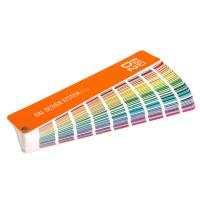
German European standard Color Chart is a Color Chart brand in Germany. This Color Chart is widely used in the world. It is also called RAL international Color Chart. Chinese translation is: Raul Color Chart. The RAL design system has been developed for professional color design and is especially useful for the construction industry. It contains 1688 colors arranged in a regular order. So the seven-digit color is divided into separate RAL colors. Unlike the RAL classical Color Chart, the color codes of the RAL design system are not arranged randomly. These seven-digit colors show chroma, brightness and chromaticity (color saturation degrees) technical measurements of HLC. Because the color number is based on the international standard CIE color solid, the code is clear and easy to understand, you can find any color you want to choose, it is an excellent tool for designers and other people related to the same color, using this system to coordinate the color combination will become very easy
NCS (Natural Color System) Color Chart , referred to as NCS Color Chart. The NCS Color Chart is a color design tool from Sweden, which describes colors in the way the eyes see them. The surface color is defined in the NCS Color Chart, and a color number is given at the same time. The NCS Color Chart can judge the basic attributes of the color through the color number, such as: blackness, chroma, whiteness and hue. The NCS Color Chart number describes the visual properties of the color, and has nothing to do with the pigment formula and optical parameters.
3. Why are the prices of Color Charts in the market different?
If you often buy Color Charts, you will find that the prices of Color Charts on the market are different, some are very expensive, some are also very cheap, and the prices vary greatly. What is the reason for these different prices? I will now analyze it for you from the following aspects:
1. Life cycle
The earlier the production year, the earlier the cardboard will age, and the cardboard will turn yellow when it ages, and the problem of color difference will appear. As a result, its sales volume will be affected to a certain extent, so the price will drop accordingly.
1. Warehouse inventory
The closer the production batch, the more accumulated inventory. Inventory backlog will promote low-price promotions, resulting in low-price sales.
3. Counterfeit and shoddy
In order to seek high profits and enhance market price competitiveness, some merchants produce fake products and reduce production costs, and compete in the market at prices that are 3 to 5 times lower than their counterparts.
4. How to distinguish the authenticity of the Color Chart?
Generally, the commonly used Color Charts are mainly Raul and Pantone. Let me introduce how to distinguish the authenticity of these two brand Color Chart products.
1. Identification of authenticity of Pantone Color Charts
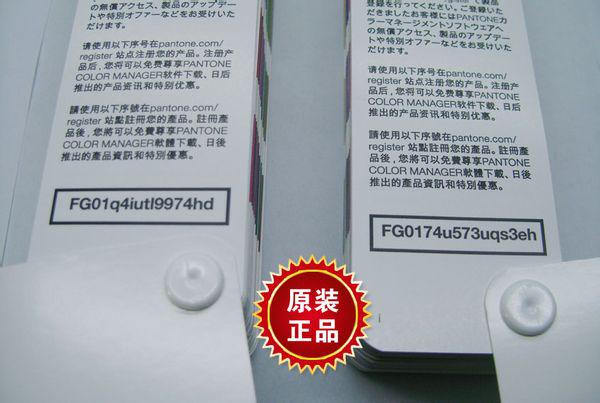
1) The PANTONE Color Chart has a verification code, which can be used to log in to the US PANTONE official website for query
2) Genuine PANTONE Color Charts are equipped with such a serial number, as shown in the figure:
2. Identification of authenticity of Raul Color Charts
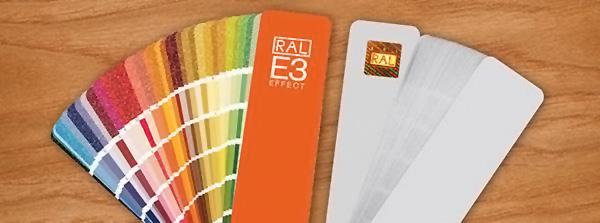
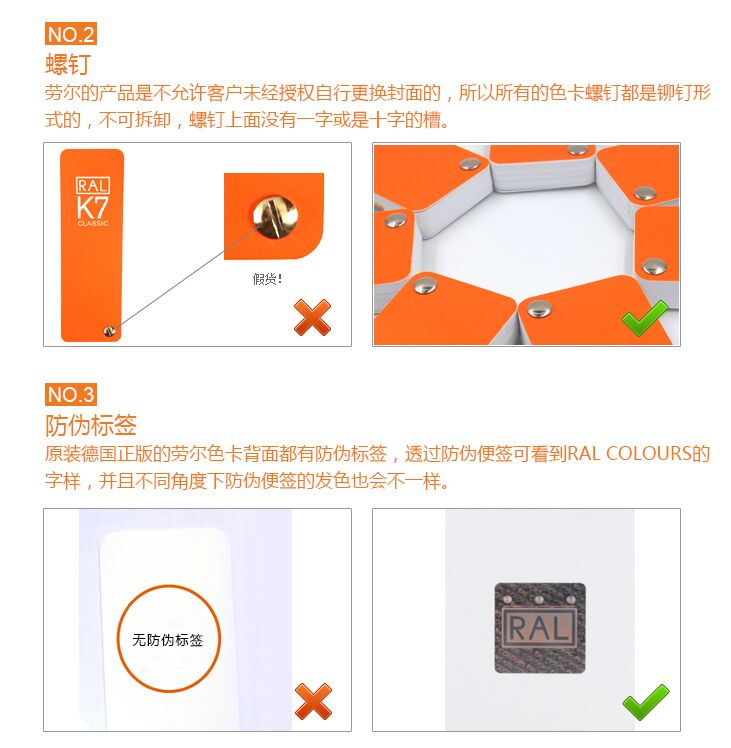
Above, Lauer uses holograms to combat counterfeiting
RAL cooperates with hologram company to use hologram to combat counterfeit products and protect genuine RAL color standards.
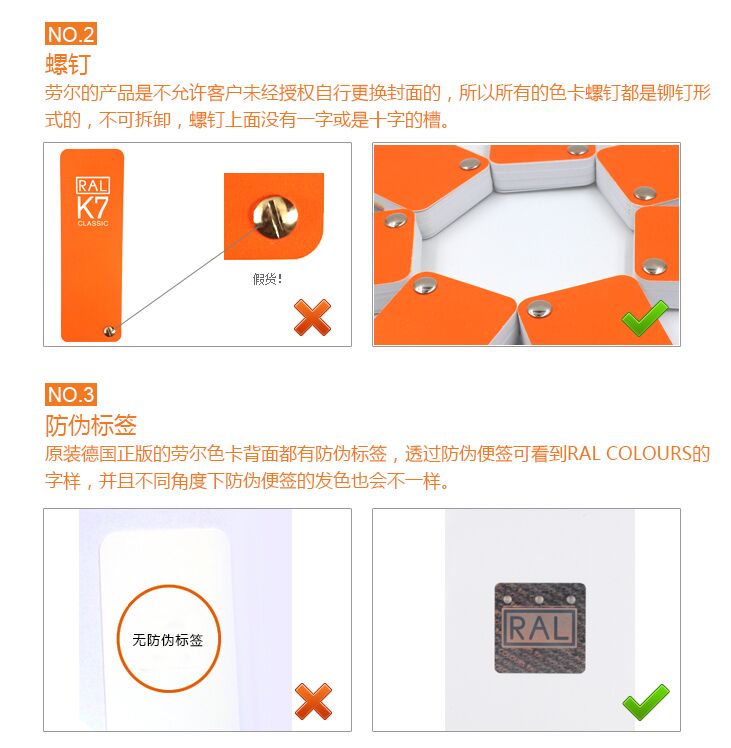
All RAL product lines will be equipped with a security system: the hologram, a counterfeit device as effective as a fingerprint. Holograms contain visible features such as three-dimensional pictures, elements of true color, and hidden features that can only be read with special technical reading devices.
Analysis as shown below:
5. How to choose suitable Color Charts and models for different industries?
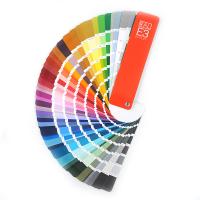
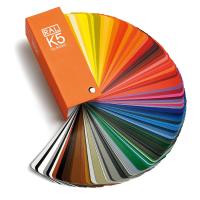
Regarding the industrial application of Color Charts, Pantone and Raul are generally used more. According to practical experience,Pantone Color Chart colors are printing colors, which are mainly popular in the printing and packaging industries. It is no exaggeration to say that printing is almost Pantone's world. But it is more troublesome to use it as a paint color. In contrast, Raul works on varnish, so the color matching is relatively simple. RAL is widely used in paint, industrial products, and coating industries. For example, the aluminum alloy door and window industry basically uses RAL Color Charts, mainly because the metal materials on the doors and windows need to be sprayed with a layer of paint. Among them, industrial products, especially coatings, generally use Raul Color Chart K7 products, and the pigment paste industry mainly uses Raul K7/K5 products.
To sum up, both have their own advantages. In the printing industry, I personally recommend Pantone, and in the paint industry, I recommend Raul.
-
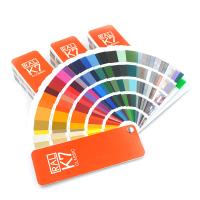
![Raul Formula Guide with 215 international standard Colors]()
-
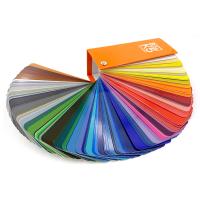
![Raul K5 Formula Guide Bright Type with 216 Raul Classic Color Fan Formula Guide]()
-
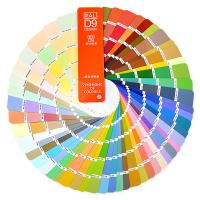
![D9 Raul Formula Guide Matte with 290 Raul Design Systems Color Sector Formula Guide]()
-
![German TEL D2 plus Lauer Formula Guide Semi-Matte with 1825 Lauer Design System plus Color]()
-
![Raul Formula Guide Solid Color Semi-Matte/Metallic Highlight with 420 Solid Colors and 70 Metallic Colors]()
-
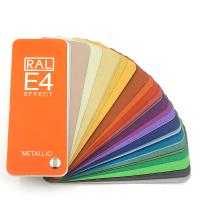
![Germany TEL E4 Raul Metallics Guide]() Germany TEL E4 Raul Metallics Guide$ 135.00
Germany TEL E4 Raul Metallics Guide$ 135.00 -
![D2 Raul Formula Guide Semi-Matte with 1625 Raul Design Systems Color Sector Formula Guide]()
-
![Germany TEL K5 Raul Formula Guide Semi-matte with 216 Raul Classic Color Sector Formula Guide]()
-
![Architectural coatings Formula Guide Q8 FKCC with 360 premium interior and exterior wall colors]()

- 1The Difference Between RAL Formula Guide K5 and K7
- 2Selection points of Color Chart reader
- 3Color card selection tool operation guide
- 4What are the characteristics of phenolic resin?
- 5What is Pantone color scheme (PMS)?
- 6Colormeter Color Difference Tester Realizes Color Card Query Color Number Video Tutorial
- 7Color difference meter applied to the appearance color difference detection of electric kettle
- 8Can the Colorimeter find the Raul Color Chart color number?
- 9Wall Coating Production Process