Printing ink coating surface performance analysis
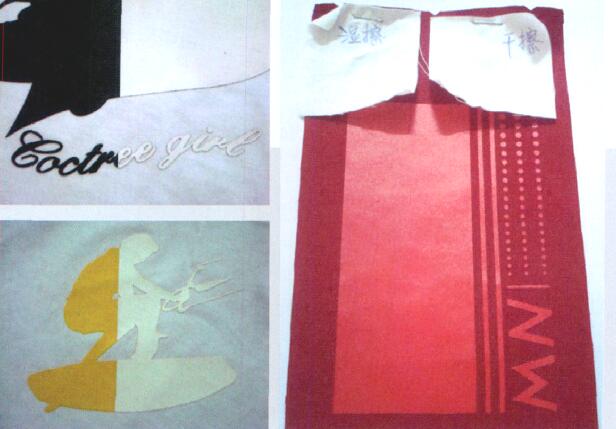 The difference in the surface properties of ink printing coatings is due to the needs of aesthetics and the requirements of printing materials. Of course, it is also closely related to the functionality of printed matter in many cases. As users of inks, people usually detect various properties of ink coatings to judge whether the inks meet the needs of printed products; as ink manufacturers, people usually design formulas to pursue certain coating properties. This paper introduces the detection methods, influencing factors and adjustment methods of the surface properties of ink coatings.
Adhesion
One of the most prominent problems with screen printing inks is the fixation fastness of the ink on the substrate after printing. On most printing materials, if the ink has no fastness, it means no printing. The problem of ink fixation fastness involves a series of factors such as the bonding mechanism of ink and substrate.
In the test method of adhesion, there are two commonly used detection methods for screen printing inks. One is to refer to GB/T 9286-1998 eqv ISO 2409:2007 "Scratch test of paint and varnish film", commonly known as "100-grid method", which refers to using a multi-blade cutting tool to draw a series of rules on the coating. For the small square, the adhesion is measured by the peeling ratio of the small square coating; the other is to refer to GB/T 13217.7-2009 "Test Method for Adhesion Fastness of Liquid Ink", use 600# adhesive tape to adhere to the coating, press Peel off the tape in two ways of 90° or 180° to check whether the coating is peeled off the substrate.
The main factors affecting the adhesion of ink to printing substrates are as follows:
1. The cleanliness of the substrate surface
Especially when there are oil stains, paraffin wax, silicone oil and other release agents on the surface of the substrate, and silicone additives, the surface polarity is very weak, and it hinders the direct contact between the ink and the surface of the substrate, and the adhesion will be seriously reduced. Cleaning, polishing and other surface treatment on the surface of the substrate can greatly improve the adhesion.
2. Effect of resin
Resin is the main component of ink binder, and the fixing effect of ink is closely related to the performance of resin. The molecular weight of the resin is high, the melting point is also high, and it is difficult to dissolve in the solvent, which is not good for the adhesion effect. If the molecular weight of the resin is too small, the cohesion and compatibility will be too poor, and the adhesion effect will be poor. In the formula design, the molecular weight selection of the resin is very important and needs to be suitable. In addition, the functional groups and branched chain structures in the resin molecules directly affect the fixing effect of the ink on the substrate. In fact, inks that can be prepared by using binary or ternary copolymer resins, mixed resins, and resin modification can effectively improve the adhesion of inks to substrates. For room temperature curing inks, the glass transition temperature of the resin should be very low, which is obviously beneficial to the adhesion effect. For heat-curing inks, the heating temperature should be higher than the glass transition temperature and lower than the heat distortion temperature of the substrate. Adhesion is related to operating (drying) temperature. The connecting material is sensitive to temperature during the diffusion process to the substrate. Increasing the temperature can promote the Brownian motion of macromolecules, which is beneficial to the speed and ability of diffusion, and is also beneficial to the adhesion fastness of the ink.
3. The effect of solvent
The solvent used to formulate the ink affects the fixation effect. According to the "similar compatibility principle", it is more appropriate for us to use solvents whose solubility and resin solubility parameters are similar, but we should also consider similar solubility parameters for substrates. Because the solvent in the ink and the binder (resin) are in contact with the substrate, the surface of the substrate is swollen and dissolved, so that the substrate and the binder in the ink diffuse each other to form a middle layer without a boundary after mixing, and finally The disappearance of the interface forms a firm combination of ink and substrate.
4. The influence of additives
A wide variety of additives will greatly improve the performance of inks. Additives that have an effect on the fixation effect include: crosslinking agents, coupling agents, plasticizers, etc.
5. Effect of Ink Performance
The wettability of the ink is good, and the fixation effect
If the effect is favorable, if the substrate has not been infiltrated and the ink has dried or cured, the fixing effect will be poor.
smoothness
Air bubbles in the coating are the main reason for affecting the finish of the printed matter. In the actual printing process, shrinkage cavities, pinholes, defects, fish eyes and other disadvantages often occur in the coating film. The existence of these disadvantages can easily affect the beauty of printed matter. Therefore, the problem of coating bubbles not only affects the protective effect of the coating film, but also affects the decorative effect of the coating film.
The main reasons for the generation of bubbles are as follows:
1. Substrate surface oxide, soluble
Substances such as salt are trigger points for coating blistering
Because the surface of the substrate is contaminated with wax, oil, dust, soluble salts and other substances, or there are water droplets or volatile liquids on the surface of the substrate, after the coating film dries, the coating in these places is not firmly attached to the surface of the substrate, and moisture Accumulates in areas of low adhesion, allowing liquid or gaseous phases to accumulate in these areas. When the temperature changes, the vapor pressure generated by its thermal expansion is the main reason for the formation of bubbles. At this time, the thicker the coating film, the greater the tendency of foaming. When the coating is thin and in a humid environment, osmosis will occur, and osmotic pressure is the main cause of bubble formation. Therefore, it is necessary to carry out surface treatment on the printing substrate before printing, such as degreasing and cleaning.
2. Residual solvent in the ink will soften the coating film
Since the solvent has a certain sensitivity to water, the residual solvent can increase the water absorption of the coating film and the transfer of moisture in the ink. If the ink is not firmly bonded to the substrate itself, its water resistance will decrease, causing loss of adhesion and blistering of the coating. Furthermore, as the temperature of the coating surface changes, the residual solvent itself will generate enough vapor pressure to cause the coating to bubble. The most serious is the penetration of moisture into the coating film, combined with residual solvents, causing the coating to blister.
3. Excessive surface dry temperature of the ink coating is simply air bubbles caused by solvent evaporation, which often appear shortly after printing. This phenomenon often occurs in high-temperature baking inks. The flashing time of the wet film is too short and during the drying and heating process, the initial temperature rises too fast or the printed wet film is too thick and the wet film dries too fast, resulting in The underlying solvent is not volatile. In addition, when multiple overprints are required, when the ink of the bottom printing is not dry, the printing of the quick-drying ink overlay will also seal the solvent in the bottom layer of the coating, resulting in solvent residue, which will cause air bubbles during the drying process.
4. Adsorption of gas or liquid on the surface of pigment or filler
Soluble pigments and fillers in inks are the cause of many blistering problems. Soluble pigments absorb moisture passing through the coating and become a solution. Due to osmosis, water will be drawn through the coating to the concentrated solution. In addition, if soluble salts contaminate any surface between the substrate or coating, the same phenomenon will occur. If the paint contains soluble substances, blistering is inevitable.
surface dryness
The degree of surface dryness mainly refers to the surface anti-sticking property. After cross-linking and curing of some formula coatings, the surface still sticks, and fingerprints will be formed when touched with fingers. After printing, a large number of printed products are easily stuck together and cannot be separated. These all show that the ink coating is Surface anti-adhesive is not satisfactory.
Analyze the reasons, the root causes and solutions of this kind of ills are as follows:
1. The degree of cross-linking and curing of the coating film is not enough
The drying temperature of solvent-based ink is too low,
The drying time of water-based ink is too short, the intensity of ultraviolet radiation in UV ink is not enough, etc., which will cause the cross-linking and curing to be not effective enough, resulting in sticky coating film. To this end, we can properly adjust the composition of fast-drying solvent and slow-drying solvent, coating film drying temperature and time, etc., to promote the cross-linking and curing reaction of coating film.
2. The viscosity of the main resin in the ink formulation is too strong
The main resin in the formula plays a very important role in the performance difference of the coating film. The viscosity of the resin is too strong, and the coating film is more likely to stick. We can choose more viscous resins in the formula design.
3. Improper use of surface anti-sticking agent
Adding a surface anti-adhesive agent can indeed improve the surface anti-adhesive properties to a certain extent, but there are many types of surface anti-adhesive agents on the market today, and there are many manufacturers. Get twice the result with half the effort.
4. The formula system is not coordinated
In printing thermosetting ink, if the combination of plasticizer and resin is improper, it is easy to cause the plasticizer to migrate to the surface of the coating during the curing process; if the surface anti-adhesive agent is improperly selected, the anti-adhesive agent will float on the surface of the coating film, and the hand touch That's it.
Gloss
The gloss of the ink layer refers to the ability of the printing ink layer to reflect light from a certain angle under the irradiation of a fixed light source. The gloss of the ink layer has a great influence on the appearance of the printed matter. Good gloss and bright colors can significantly improve the quality of the printed matter. The gloss of the ink layer is mainly affected by the leveling of the ink and the smoothness of the surface of the printing material. The better the leveling of the ink transferred to the material and the smoother the surface of the printing material, the better the gloss of the ink layer.
1. Ink Solvency and Viscosity
The stronger the solvent's ability to dissolve the ink,
The better the ink dissolves, the better the gloss of the ink layer. The viscosity of the ink is suitable, which is conducive to the leveling of the ink, and the gloss of the ink film is better. Ink deterioration, solvent imbalance, excessive dilution and solvent impact will not only affect the printing performance, but also destroy the ink structure, causing the separation of pigment and resin oil, often significantly reducing the gloss of the ink layer.
2. Binder
The binder not only plays the role of dispersing the pigment, but also plays the role of protecting the pigment and presenting luster. Adding an appropriate amount of varnish within the range allowed by the color concentration can improve the gloss of the ink layer to a certain extent.
3. ink drying speed
Generally speaking, appropriately reducing the drying speed of the ink is conducive to improving the gloss of the ink layer. If the ink dries too fast, the ink color after overprinting will turn white and appear dull. If the ink dries too slowly, failures such as adhesion will occur, which will make the ink layer lose its luster.
4. Squeegee
If the angle of the squeegee is too large or the squeegee is too sharp, the printed ink layer will lack luster. On the contrary, it is beneficial to improve the glossiness of the ink layer.
5. printing environment
在印刷过程中,溶剂挥发速度快,墨膜干燥也快,由于蒸发散热的作用,吸收墨膜周围热量而造成该处空气中水蒸气急剧冷凝,在印刷墨膜表面形成雾气,使墨层失去光泽,在高湿环境下这种影响会更明显。
光泽度一般采用光泽度计测定,可以采用30°或 60°的角度测定,60 °测定结果往往高于30°。相对于溶剂型油墨,光固化油墨较容易获得高光泽度固化表面,如果配方中添加有流平助剂,光泽度可能更高。溶剂型油墨因在成膜干燥过程中大量溶剂挥发,影响微观平整度,光泽度容易下降。随着人们审美观念的不断变化,哑光、磨砂等低光泽度的涂装效果越来越受欢迎。哑光效果可通过添加微粉蜡、哑光粉或消光树脂等获得。
硬度
固化膜硬度是评价漆膜质量的重要关键指标。检测固化涂层硬度的方法有摆杆硬度、铅笔硬度、邵氏硬度等。摆杆硬度为相对硬度,在实验研究上经常采用。铅笔硬度简单易操作,工业上应用较广泛。硬度主要受配方组分的制约,其中树脂是关键。树脂中含有较多刚性结构基团时,固化膜硬度也较高。合成树脂中采用多官能度单体,提高反交联度都是提高硬度的好方法。通常环氧树脂、聚氨酯、聚酯有着较好的硬度。另外,涂层厚度对固化膜硬度有较显著影响。
柔软性
许多印刷基材上都具有一定可变形性,对依附在其上的涂层要求具有相应的柔顺性,例如织物、软质塑料、皮革、纸张等。柔顺性优劣主要取决于油墨配方本身,一般可归纳为以下几点:
1.主体树脂 Tg 值(玻璃化温度)越高,柔软性越差;
2.颜填料越多,柔软性越差;
3.交联固化程度越好,柔软性越差。
一般而言,涂料固化膜的硬度与柔顺性是一对矛盾,即硬度的增加往往以牺牲柔顺性为代价。将印品具有涂层的部分被对折,检验涂层是否开裂或剥落,即可知道涂层的基本柔软性。柔顺性较好,但附着力不佳时,弯曲试验可能导致涂层剥离底材;柔顺性较差,而附着力较好时,弯曲试验可能导致涂层开裂。
另外,很多油墨可通过添加适当的柔软剂来改善涂层柔软性,例如:增塑剂、强溶剂等。
拉伸性能
Tensile properties are more concerned by fabric printing. Usually, textiles have strong elasticity and require higher tensile properties of coating films. The tensile properties of the cured film are closely related to the flexibility. The tensile force is continuously applied to the cured film on the material testing machine. The elongation of the film layer when it breaks is used to characterize its tensile properties. The tensile stress is converted into tensile strength. Higher elongation and tensile strength means better flexibility of the cured film. Film layers with good tensile properties are generally more flexible. Flexibility is an important indicator for evaluating the mechanical properties of cured coatings, while tensile strength is related to the coating's ability to resist mechanical damage. For the tensile properties of the coating film, we can only start with the ink formula and select a polymer resin with suitable properties to design the formula.
Friction resistance
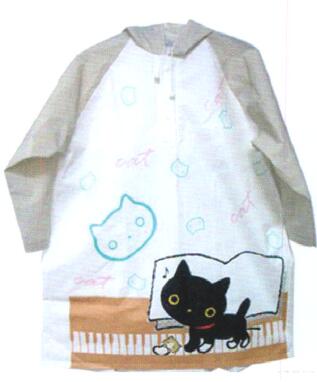 Coating wear resistance refers to the ability of the coating surface to resist a certain mechanical action. Usually, a certain weight is loaded, the coating is rubbed, and the degree of damage and discoloration of the coating film is observed to measure the friction resistance. For different application industries of ink, multi-print coatings have different friction resistance test standards, such as digital electronic product industry for plastic coating, clothing and textile industry for fabric coating, stationery industry and packaging industry for paper coating, etc. .
The wear resistance of the coating is mainly affected by the following aspects.
1. Pigment volume concentration in an ink formulation. Among them, the critical pigment volume concentration is represented by CPVC. The influence of the pigment volume concentration on the film performance is reflected in: when it is lower than CPVC, the pigment particles seldom contact, the pigment exists in the base material in the form of separation, the gap between the particles is filled by the base material, and there is no air, so the coating film The continuity and sealing performance are very good; when it is higher than CPVC, there is not enough base material to fully wet the pigment particles, and there is air in the gaps between the pigment particles, which makes the coating film have gaps and forms a porous coating film , so that the friction resistance will be reduced.
2. The degree of crosslinking of the coating. The degree of cross-linking increases and the wear resistance improves.
3. The effect of adhesion. The worse the adhesion, the easier it is to cause damage to the coating film during the friction process.
For the improvement of friction resistance, in addition to prescribing the right medicine for the above points, usually some surface slip agents are added during the formulation design process to reduce the friction coefficient of the cured coating surface, which is also a commonly used method to improve wear resistance, such as organic Silicon smoothing agent, wax powder additive, etc. These smoothing additives are easy to separate and gather on the surface of the coating after ink printing, and play a role in surface slipping after curing to form a film. In addition, adding appropriate inorganic fillers to the formula can often improve the wear resistance.


- 1Erosion behavior and mechanism of steel structure surface coating in aeolian sand environment
郝贠洪;邢永明;杨诗婷 - 《摩擦学学报》
- 2Study on Wear Resistant Coating on Resin Surface
- 3Tinned steel plate surface glossiness rolling transfer control
- 4Simple method of inspection painting surface treatment effect
- 5Painting Principles for choosing surface treatment methods
- 6Main content of surface treatment before lame plating
- 7The basis for the selection of painting surface pretreatment methods
- 8Content and significance of painting surface preparation
- 9Analysis of film surface distinctness of image and sheet metal defects