Electro-coatings Determination of ash content and color-to-base ratio
The pigment-base ratio in electrophoretic coating refers to the ratio of pigment and base material (resin) in electrophoretic coating, bath or coating film. The determination of pigment-base ratio includes solvent method and ash method. The pigments used in electrophoretic coatings are generally non-combustible inorganic pigments except carbon black, so it is often used to calculate the pigment content by measuring the ash content, and the method is simple.
Testing instruments and materials
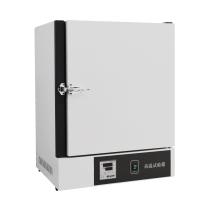
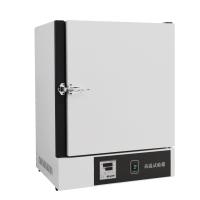
①Crucible and muffle furnace ②Constant temperature Drying Oven
test methods
① Weigh a quantitative (about 10g) paint sample or bath liquid sample into the weighed crucible;
②Dry at 110±5°C for 1 hour, then bake at 200-250°C for 1 hour, then bake at 400-450°C for 0.5 hour, then heat up to 800°C for 0.5 hour;
③Reweigh the crucible after cooling;
④Calculation:
Ash = (C-A) × 100/[(B-A) × (D/100)]
Yan-base ratio (P/B)=(C-A)/K[ D(B-A)-(CA)K]
In the formula:
A The weight of the crucible (g)
B crucible plus sample weight (g)
C Crucible plus sample weight after calcination (g)
D Paint sample solid content (%)
K is the carbon black correction factor, in black paint K= 1.15
- 1Determination of ash content of polyvinyl alcohol resin
- 2Characteristics and process of electro-coating
- 3On-site management of electro-coating
- 4Electro-coating limitations and benefits
帅长红 - 《电泳涂装新工艺新技术》
- 5Thickening (precipitation) mechanism of electro-coating film
帅长红 - 《电泳涂装新工艺新技术》
- 6Electro-coating and its principle
帅长红 - 《汽车车身涂装新工艺新技术》
- 7Main Features of Electro-Coatings
- 8Causes and treatment methods of common defects of films in electro-coating
- 9Maintenance and management of electro-coating ultrafilter