Coating film formation performance inspection method - film Color and Gloss
Method for Determination of Paint Film Color
1. definition
Color is a kind of vision. The so-called vision is the reflection caused in the brain after the light of different wavelengths stimulates the eyes. The color of the coating film is when the light is irradiated on the coating film, after absorption, reflection, refraction and other effects, its surface is reflected or projected, and enters the color of our eyes. The color of the coating film is determined by the light source, the nature of the coating film itself and the human eye.
2. Related standards
GB/T 9761-2008 Visual color comparison of paints and varnishes
3. Introduction to key points of inspection methods
3.1 Test scope and principle
This standard specifies a method for visual colorimetric comparison of the coating film color of paints and related products. The sample is compared with the standard sample. The standard sample can refer to the standard quilt or a newly prepared standard plate. The test can be carried out under natural sunlight or Performed under artificial light in a cuvette.
3.2 Instruments and equipment: color comparison box
3.3 Operation points
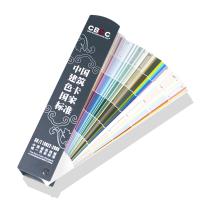
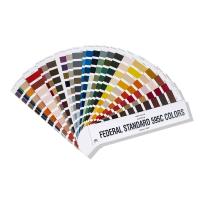
According to the regulations, the sample and the standard sample are made into panels at the same time. After construction and drying under the same conditions, visual inspection is carried out under natural scattered light. If there is no significant difference in color between the sample and the standard sample, it is considered to meet the technical tolerance range. It is also possible to compare the sample with the standard Color Chart after making the plate, or compare it under the artificial sunlight of the CIE standard light source D65 in the color comparison box.
3.4 Result presentation
The degree of discoloration can be evaluated visually by referring to the "color fastness fading sample card", or can be evaluated by directly measuring the difference value with a color measuring instrument.
Determination of paint film gloss
1. Definition, Purpose and Significance
Gloss is an optical characteristic of the surface of an object. Expressed by its ability to reflect light. The gloss of the paint film refers to the ability of the surface of the paint film to reflect the light irradiated on it in a certain direction, also known as the specular gloss.
2 related standards
GB/T 9754-2007 "Determination of 20°, 60° and 85° specular gloss of paint films of paints and varnishes without metallic pigments" (replaces GB/T 9754-1988)
3 Key points of inspection methods
This standard specifies the method for measuring the specular gloss of pigmented paint films with a reflectometer at a geometric angle of 20°, 60° or 85°. This method is not applicable to the gloss measurement of paint films containing metallic pigments.
The 60° geometry is suitable for all colored paint films, but for very high gloss and near-matt paint films, 20° or 85° may be more suitable.
The 20° geometry gives better resolution in the case of high gloss paint films (ie, films with a 60° specular gloss higher than 70 units).
The 85° geometry gives better resolution in the case of low gloss paint films (i.e. films with a 60° specular gloss below 10 units).
3.1 Test principle (omitted)
3.2 Instruments and equipment
Substrates for testing (for liquid paint samples), paint Film Applicators, gloss meters, etc.
3.3 Operation points
3.3.1 Sampling of painted substrates
It is only meaningful to measure gloss by the method specified in this standard on a surface with good flatness. Any curvature or local unevenness of the substrate will affect the test results.
3.3.2 Preparation of test panels
a. Liquid paint sample
The test film is applied by a prescribed or agreed method of application, preferably by one of the methods commonly used for the paint, to the film thickness normally used.
b. Paint film on substrate
For visible brush marks, raised wood grains, or similar regular grains, their orientation shall be parallel to the plane formed by the incident and reflected light of the Glossmeter.
3.3.3 Gloss measurement
After adjusting the gloss meter and calibrating
a. Measurement of paint film gloss of liquid paint
Test paint films on glass panels at different locations. Three readings are taken parallel to the direction of application and each series of tests is calibrated against a higher gloss working reference to ensure no drift during calibration. If the difference between the readings is less than 5 gloss units, record the average as the specular gloss value; otherwise take another 3 readings and record the average of all 6 values and the range of these 6 values.
For measurements on paint films on non-glass substrates, take 6 readings (3 in each direction at two right angles) and record the average and range of these values. Calibrate the reading of the higher gloss working reference after every 3 readings to ensure that the instrument has not drifted.
b. Measurement of the gloss of the painted substrate
Measure according to a, take 6 readings at different parts of the painted surface, or in different directions (except for the case where the paint film has directional texture, such as brush marks). Calibrate the reading of the higher gloss working reference after every 3 readings to ensure that the instrument has not drifted. Calculate the average. If the deviation between the maximum and minimum values is less than 10 units or 20% of the mean, record the mean and the range of these values. Otherwise, the test panel should be discarded.
3.4 Result presentation
Expressed in units of gloss at an angle.
3.5 Precautions
3.5.1 When measuring the gloss of varnish, black glass or a glass plate with rough edges coated with matt black paint should be used as the substrate.
3.5.2 The preparation method of the paint film will affect the measurement of gloss, and attention should be paid to the inspection requirements of the product (especially in the case of spraying).
- 1The Importance and Method of Gloss Measurement of Paint Film
- 2Film formation mechanism of coatings
- 3How to inspect film Color and Appearance?
- 4Coating film formation mechanism, non-transforming Coating and transforming Coating film formation
- 5Film Gloss measurement and influencing factors
郑顺兴 - 《涂料与涂装科学技术基础》
- 6Pigment generality
郑顺兴 - 《涂料与涂装科学技术基础》
- 7Coating film formation performance inspection method - film preparation
- 8Film Color and Appearance Determination (GB1729-79)
- 9Summary of film fog detection
