How does asperity affect the adhesion of Coated steel?
The following are the conclusions of three papers by Wang Lei, Sun Jie, and An Chengqiang from the School of Environmental and Chemical Engineering of Shenyang University of Technology for reference:
Color-coated steel sheet (referred to as color-coated sheet), which appeared in 1927, is based on metal strip steel, and the surface is pre-coated with polymer coatings of various colors, so it is also called pre-coated steel sheet.
Color-coated board products are widely used in construction, home appliances, automobiles and other fields. The research and production of color-coated sheets in my country started relatively late. Compared with the world level, there is still a big gap in product quality and new technology development of color-coated sheets in my country. The excellent processing and forming properties of color-coated sheets depend to a large extent on the coating adhesion (adhesion) [2]. Therefore, to study the influencing factors of color-coated plate adhesion to improve the coating adhesion has become a focus of current color-coated plate technology research. On this basis, the influence of the roughness of the color-coated plate substrate on the adhesion of the coating is studied in detail, and the mechanism of the effect of the roughness on the adhesion of the coating is discussed. The final conclusions are as follows:
1) The uneven surface of the substrate causes the paint film to interlock when it adheres to it. The greater the roughness, the stronger the interlocking force and the greater the adhesion.
2) The greater the surface roughness of the substrate, the larger its real surface area, and the stronger the adsorption force between the paint film and the substrate.
3) The corrosion products generated when the roughness of the substrate is corroded are not easy to diffuse, thus reducing the influence of the generated corrosion products on the reduction of adhesion.
- 1Purpose, method, principle and operation points of coating adhesion test
- 2Influence of surface roughness of parts
- 3Coating adhesion test
- 4Color plate gloss detection
- 5High-precision roughness instrument measures the surface roughness of plastic materials Case sharing [Video demonstration]
- 6Adhesion Factors of Paints and Coatings & Test Methods
specialchem
- 7How to measure concrete surface profile (roughness) quantitatively
Defelsko
- 8How good is the relationship between coating adhesion and coating cohesion? To what extent?
- 9Evaluation of steel surface roughness
-
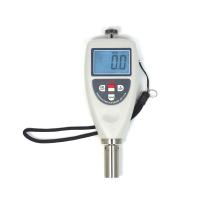
![Sand blasting shot peening Roughness Gauge AMITTARI AR-131A shot peening sand blasting, printing anti-corrosion and other industry tests]()
-
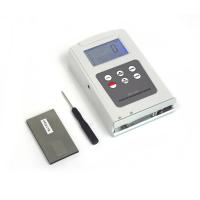
![Surface roughness instrument AMITTARI AR-132C Portable precision Surface Roughness Tester]()
-
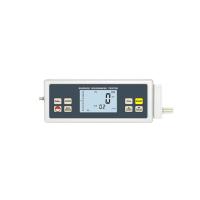
![Surface roughness instrument AMITTARI AR-132B digital Surface Roughness Tester]()
-
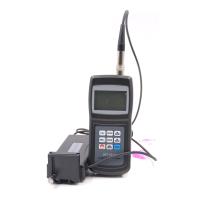
![LANDTEK SRT-6210S Roughness Gauge 5μm Radius Needle Data storage function]()
-
![LANDTEK SRT-6100 Surface Roughometer 10μm stylus measurement Ra and Rz values]()
-
![TQC DC9000 Hull Roughometer]() TQC DC9000 Hull Roughometer$ 10657.00
TQC DC9000 Hull Roughometer$ 10657.00