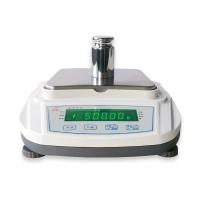
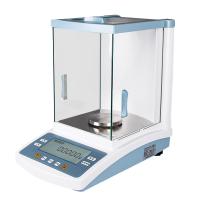
Analytical balance standard operating practice
1. Purpose
In order to ensure the normal operation of the instrument and ensure the reliability of the results, this operating procedure is specially formulated.
2. Scope of application
laboratory
3. Responsibility
Laboratory technicians should strictly follow the operating procedures, and the QC supervisor is responsible for supervising the implementation of the procedures.
4. Definition
none
5. Safety Precautions
none
6. Calibration procedures
6.1. Standard weight
Handling of weights: The weights used in daily use should not be directly touched by hands, use tweezers when taking small weights, and wear spun gauze gloves when taking large weights. Weights need to be kept in an airtight and dry environment and used only for adjusting the balance.
Grade of weights: the weights used for balance calibration need to be at least F2 level, the standard weights currently used in laboratories are F1 level, and should include 0.1g, 1g, 2g, 5g, 10g, 20g, 50g, The tolerances of 100g, 200g, 500g weights and F1 level weights are shown in the table below:

Calibration of weights: The standard weights are checked by Tianjin Metrology Institute once a year, and the calibration certificate should be retained.
The use of the balance: Before using the standard weight, check whether it has a certificate of conformity and whether it is within the validity period of the calibration. According to the different models of the balance, different types of standard weights are selected for daily inspection.
6.2. Balance daily self-check
Before doing any inspection or calibration of the balance, it is necessary to ensure that the balance is clean, level, and warmed up. The balance is usually in a standby state, and the power is generally not turned off. If restarted, the balance warm-up time is half an hour.
For different balance models, choose different standard weights. After the balance is stable, return the balance to zero, place the corresponding standard weight on the balance tray, and record the displayed value of the balance. The daily inspection of the balance includes reproducibility check, linearity check and four-corner error check.
6.2.1 Reproducibility check:
Check frequency: every Monday
Inspection method: After the balance is preheated, according to the weight specified in Table 1, put the weight on the tray of the balance after the balance is reset to zero, wait for the reading to be stable, read the reading and record it on the inspection record, then remove the standard weight , reset the balance to zero and then use the same standard weight for the second measurement. According to this method, a total of 5 measurements are made. Determine whether the reproducibility is qualified according to 5 readings.
Acceptance limit: The deviation between the maximum value and the minimum value of 5 readings should not be greater than 5 times the resolution of the balance. For multi-range balances like the AX205, high resolution should be used for reproducibility checks.
Table 1: Weights and acceptance limits used for reproducibility checks:

6.2.2 Linearity check
Check frequency: every Monday
Check method: After the balance is preheated, according to the weight specified in Table 2, after the balance is reset to zero, according to the difference of the balance resolution, put the balance, which is approximately equivalent to 1/4 of the full scale weight, on the balance tray to wait. After the reading is stable, read the reading and record it on the inspection record, remove the standard weight, reset the balance to zero, and then place a weight approximately equivalent to 3/4 of the full scale on the tray of the balance. After the reading is stable, read the reading and record it. Recorded on the inspection log. The linearity of the balance is judged on the basis of the results of the two readings.
Acceptance Limits: Both readings should be within 5 times the balance's resolution and the sum of the tolerances of all weights used. For multi-range balances like the AX205, low resolution should be used for reproducibility checks.
Table 2: Weights and acceptance limits for linearity checks:

6.3.2 Four-corner error check
Inspection frequency: Once a year
Inspection method: After the balance is preheated, according to the weight specified in Table 1, after the balance is reset to zero, place the weight between the positive and negative sides of the balance tray, read the reading after the reading is stable and record it on the inspection record, and remove it. Standard weight, reset the balance to zero and then use the same standard weight to measure at the "1" position. Follow this method to measure the positions 2, 3, and 4 in turn. Determine whether the reproducibility is qualified according to 5 readings.

Acceptance limit: The deviation between the maximum value and the minimum value of 5 readings should not be greater than 5 times the resolution of the balance. For multi-range balances like the AX205, a high-resolution four-corner error check should be used.
7. Balance use
7.1 The weighing pan, weighing spoon and the surrounding environment in the balance should be kept dry and clean.
7.2 When weighing, try to avoid polluting the balance. If any medicine is spilled on the balance, it should be removed in time.
Clean up so as not to corrode the balance or cause trouble to other weighers.
7.3 It is forbidden to weigh samples that are too cold or too hot. All weighed items need to cool to room temperature.
7.4 Weighing medicines, use weighing paper to weigh medicines, and do not make the objects to be weighed come into direct contact with the balance. Keep the sky platform and the ground clean. After the weighing paper is used up, it should be thrown into the wastebasket.
7.5 After the weighing is completed, return the balance to zero. No medicines and reagents shall be stored in the case. If the instrument is in normal condition, there is no need to fill in the records.
7.6 If any abnormality is found in the balance, the superior should be notified in time to negotiate a solution.
7.7 The balance should be calibrated by Tianjin Metrology Institute once a year.
7.8 After weighing, the weighing boat or weighing paper should be removed from the balance, and should not be placed on the balance tray for a long time.
7.9 After the balance is used, the door of the balance should be closed in time.
7.10 When weighing volatile or easily volatile items, a weighing container with a stopper should be used.
8. Reference
"AX205 Balance Operation Manual"
"AG204 Balance Operation Manual"
"PG8001 Balance Operation Manual"
"PG203-S Balance Operation Manual"
Use of CAP011/3 Analytical Balances
9. Distribution department
Quality Assurance Department
10. Revision history:




- 1How does the analytical balance work?
- 2Offset printing ink laboratory performance testing instrument scheme
- 3Construction and use of electro-optic analytical balance
- 4How do university labs properly use analytical scales?
- 5Edham Adam Luna series electronic analytical balance models
- 6How to calibrate analytical balances?
- 7How to avoid weighing errors in precision analytical balances?
- 8The choice of laboratory precision analytical balances is all about accuracy
- 9Factors Affecting the Weighing Accuracy of Precise Analytical Balances