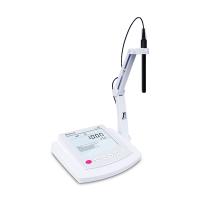
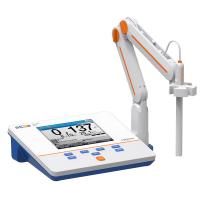
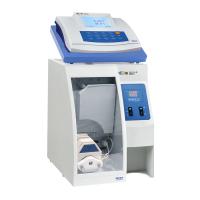
D10P-06 Desktop Sodium Ion Meter Manual
介绍
本方法适用于电厂锅炉水、蒸汽中的低钠测量。采用分开的半电池式8411BN钠离子工作电极和Ross参比电极800500U,实现了低钠的精准测量。

建议设备和溶液
1.搅拌电极(01X478101)或磁力搅拌
2.良好塑料烧杯(150mL)
3.塑料量筒(100mL)
4.移液枪和塑料枪头(0.5-5mL)
5.良好塑料容量瓶(1000mL)
6.pN4钠离子标准液(2300ppb)
7.pN5钠离子标准液(230ppb)
8.pN6钠离子标准液(23ppb)
9.分析纯二异丙胺
10.钠离子电极冲洗液(向100mL塑料容量瓶中加入1mL离子强度调节剂,用去离子水稀释到刻度线,摇匀。)
11.无钠的蒸馏水
校正标准液的准备
1.制备pN4钠离子标准液:精确称取5.85mg分析纯NaCl溶液,加入去离子水
溶解后转移至1000mL容量瓶,再用去离子水稀释至刻度线,摇匀。
2.制备pN5钠离子标准液:向1000mL容量瓶中加入100mLpN4钠离子标准液,
用去离子水稀释至刻度线,摇匀。
3.制备pN6钠离子标准液:向1000mL容量瓶中加入100mLpN5钠离子标准液,
用去离子水稀释至刻度线,摇匀。
电极的储存
半电池钠离子电极8411BN:将电极浸泡在稀释的电极储存液中(将电极储存液841101与蒸馏水按1:100的比例稀释),并浸没电极头和液接界。每周更换电极储存液,或当储存液出现结晶或者被污染时及时进行更换。
Ross参比电极800500U:干放。
测量注意事项
1.使用良好塑料或特福龙质地的实验容器。
2.每次使用新鲜的标准液。
3.各个标准液和样品分别使用不同的烧杯进行测量。
4.所有容器先用无钠的蒸馏水冲洗3遍,再用溶液冲洗3遍。
5.电极从一个测量溶液转移到另一个溶液时,先用冲洗液充分清洗,再用下一个溶液冲洗。
6.每100mL样品溶液或标准溶液中添加8-10滴二异丙胺。
7.为避免氢离子的干扰,请保证pH>10。
8.使用直接测量法时,应先测量低浓度溶液,再测量高浓度溶液。
9. If the measurement accuracy is high, it is recommended to use the known addition method. For details, please refer to the sodium electrode manual.
10. Make sure that the distilled water does not contain sodium ions: add 8-10 drops of diisopropylamine to 100mL distilled water, immerse the electrode, and record the measured millivolt value after 5 minutes. Use the calibration curve to derive the sodium ion concentration in the water from the corresponding millivolt value control.
11. Allow enough time (5-10 minutes) to get a stable reading.
12. Minimize exposure of the sample to air.
13. To avoid skin contamination of the sample, please wear gloves when handling.
equipment preparation
Electrode preparation
Sodium ion electrode 8411BN
1. Gently pull off the electrode protective cover and put it away for use.
2. Rinse the crystalline salt attached to the surface of the electrode with self-made sodium electrode rinse solution, do not use distilled water or remove
Rinse the sodium electrode with ionized water.
3. Soak the electrode in diluted sodium electrode storage solution 841101 (ie 1 part 841101 storage solution: 100 parts deionized water) for at least 2 hours.
Reference electrode 800500U
1. Open the plug of the electrode filling hole and fill the electrode with low sodium electrode filling solution 900012. The fill fluid level needs to submerge the end of the spiral glass tube and be at least 1 inch (2.5 cm) above the sample fluid level. The filling hole should be opened when the electrode is in use.

Calibration and Measurement
1. Make sure that all samples and standards reach the same temperature, because the measurement of ion concentration is very sensitive to temperature.
2. Calibrate with sodium standard solutions of pN6, pN5 and pN4 respectively, and stir the standard solutions at a constant speed and gently.
3. After rinsing the electrode and stirrer, immerse it in a beaker filled with pNa6 sodium standard solution, and completely immerse the electrode tip in the solution.
4. In the measurement mode, press the stirrer key to start stirring, and then press the f2 (cal) key to enter the calibration mode.
5. Press the ▲/▼ key to select the channel to be calibrated, and press the f2 (accept) key to confirm.
6. Press the f2 (accept) key to start calibration.
7. Wait for the ion concentration value to stop flashing, use the f3 (clear) key, number keys and decimal keys to input the correct ion concentration value, and press the f2 (accept) key to confirm.
8. Press the stirring key stirrer to turn off the stirring. Rinse the electrode and stirrer effectively with sodium ion electrode rinse solution, and gently blot the remaining solution on the outside of the electrode with a paper towel. Do not rub the electrode sensitive glass bulb.
9. Immerse the electrode and stirrer in the beaker filled with pNa5 sodium standard solution, and the electrode tip is completely immersed in the solution.
10. Press the f2 (next) key to enter the second point calibration. Press the f3 (start) key to start calibration.
11. Wait for the ion concentration value to stop flashing, use the f3 (clear) key, number keys and decimal keys to input the correct ion concentration value, and press the f2 (accept) key to confirm.
12. Press the stirring key stirrer to turn off the stirring. Rinse the electrode and stirrer effectively with sodium ion electrode rinse solution, and gently blot the remaining solution on the outside of the electrode with a paper towel. Do not rub the electrode sensitive glass bulb.
13. Immerse the electrode and stirrer in the beaker filled with pNa4 sodium standard solution, and the electrode tip is completely submerged in the solution.
14. Press the f2 (next) key to enter the third point calibration. Press the f3 (start) key to start calibration.
15. Wait for the ion concentration value to stop flashing, use the f3 (clear) key, number keys and decimal keys to input the correct ion concentration value, and press the f2 (accept) key to confirm.
16. Press the f3 (caldone) key to exit the calibration, and the meter will display the calibration status.
17. Press the f2 (log/print) key to save or print the data. The meter automatically returns to measurement mode.
18. Press the stirrer button to turn off the stirrer.
19. Clean the electrode and stirrer effectively with the sodium ion electrode rinse solution, and gently blot the remaining solution outside the electrode with a paper towel. Do not rub the electrode sensitive glass bulb. Then rinse the electrode with the sample solution to be tested.
20. Put the electrode and stirrer into the plastic beaker containing the sample solution, and the electrode tip is completely submerged in the solution. Press the measure button to start measuring, and then press the stirrer button to start stirring. Wait for 5 minutes and record the reading, then press the stirring key to turn off the stirring.
21. If you need to measure other samples, please repeat steps 19 and 20. After the measurement of all samples is completed, clean the electrode with sodium ion electrode rinse solution, and store the electrode as described in the storage of the electrode.


- 1Conductivity Meter and Ion Meter specific differences
- 2Flame photometer and ionometer
- 3Bante321 series Ion meter series selection table [selection]
- 4PH211 pH Ion meter operating instructions
- 5410P-13 Benchtop Fluorine Ion meter Operating instructions
- 6UTE Handheld PH_ Ion meter Description
- 7420P-01 Portable PH_ Ion meter Description
- 8Thermo Fly D10P-01 Dual Channel PH_ Ion meter Manual
- 9Centennial history of ion selective electrode and Ion meter
-
![Bante931-NH4 Laboratory Ion Meter Ammonium Ion concentration Detector]()
-
![Bante30 portable Ion Meter electrode]() Bante30 portable Ion Meter electrode$ 815.00
Bante30 portable Ion Meter electrode$ 815.00 -
![BANTE S30-Na Wireless Bluetooth Sodium Ion Meter 0.00001~ 1mol/L]()
-
![LEICI PXSJ-216F laboratory Ion Meter 0.001pX multiparameter Ion concentration detection]()
-
![LEICI DWS-51 sodium Ion Meter measurement pNa/Na + concentration value 0.00~9.00pNa]()
-
![LEICI DWS-296 Ammonia nitrogen analyzer Ion Meter test ammonia nitrogen concentration value]()