What are the types of drying equipment? How many heating methods are there?
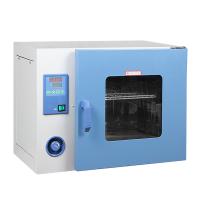
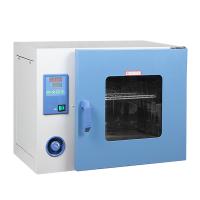
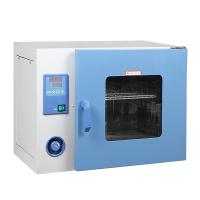
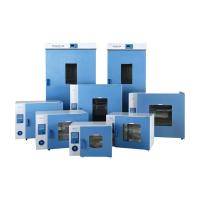
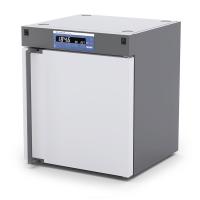
Drying equipment can be divided into several types such as oven, drying room, and channel type in terms of structure. According to the mode of operation, it can be divided into batch type and continuous type. Ovens and drying rooms with one-sided doors are all intermittent drying equipment. The workpieces that have been sprayed are sent into the room manually, and then taken out after drying. They are suitable for single-piece or small-batch production; continuous drying is also called tunnel drying. The conveyor chain is connected with the spray booth, and the painted workpiece is transported into the drying room by the conveyor chain. After drying, it comes out from the other end of the drying room and is replaced with an unpainted workpiece. This continuous cycle becomes a flow-type operation.
The drying room is generally made of double-layer iron plates, and the middle is filled with insulating materials such as perlite and asbestos. It can also be built with bricks, but there is also a need for insulation in the middle. The temperature outside the drying room should not be higher than 30~40°C.
Heating methods generally include convection drying equipment heated by hot air, thermal radiation drying equipment heated by thermal radiation, and induction drying equipment heated by electromagnetic induction. However, the current induction drying equipment has not been widely used.
Convection drying is manufactured by using the principle of heat transfer by convection. That is, the fan sucks the air and sends it to the electric heater, and the heated air is sent into the box, and the heat is transferred to the painted workpiece, and then sucked by the fan, so that it can be used repeatedly. Inside the electric heating box is an electric furnace wire made of chromium alloy as a heat source. Its disadvantage is that the direction of heat conduction is opposite to the direction of solvent evaporation. The surface of the paint layer is first heated and dried to form a film, so that the solvent under the paint layer is not easy to volatilize, the drying speed is slowed down, and it is prone to pinholes, foaming and other disadvantages. In addition, heat energy consumption is also large.
The heating method of radiant drying equipment is to convert thermal energy into radiation energy of electromagnetic vibration of various wavelengths, and the process is called thermal radiation. Dry the coating with a hot forehead shot.
Its heat transmission does not require any intermediate medium (such as air, liquid), but is conducted by electromagnetic waves. For example, the infrared radiation from the radiator directly irradiates the surface of the object and is absorbed and converted into heat energy. It has the advantages of fast drying speed, the inner layer of the coating dries outward, the solvent is easy to volatilize, the method layer dries evenly, and it is not easy to produce air bubbles, pinholes, etc. ills.
Far-infrared radiation is dry. It is a far-infrared radiation source coated with a layer of far-infrared radiation material on the surface of the infrared radiation source. Since the wavelength of far-infrared radiation is consistent with the molecular vibration frequency of the film-forming material of the coating film, it causes intense resonance phenomenon of the film molecules, so far-infrared drying can achieve better results than ordinary infrared drying, such as saving electricity, shortening drying time, Improve the output and quality, etc., the effect is very obvious after the test.
What needs to be emphasized here is that when the workpiece coating in the general drying room releases flammable and flammable vapors or gases during the drying and curing process, the working space and a certain area around it should be an explosion hazard area. Design according to GB14443-93 Coating Dry Room Safety Technical Regulations. At the same time, most of these flammable and flammable gases or gases are toxic and harmful substances, so they should be effectively treated and discharged up to the standard to protect the environment.
- 1Principle, application and selection of Electric Oven
- 2Principle, application and selection of Electric Oven
- 3Principle, application and selection of ozone sterilizing oven
- 4Principle, application and selection of tunnel oven
- 5Working principle and application analysis of laboratory oven
- 6Hot Air Oven FAQ and its solution
- 7Precision oven FAQ and its solution
- 8Oven FAQ and its solution
- 9How to calibrate the Drying Oven?