Coating viscosity concept and measurement method Baike
The viscosity of the paint is also called the consistency of the paint, which refers to a characteristic that the fluid itself has an adhesive force that hinders its relative flow inside the fluid. This indicator mainly controls the consistency of the paint, which meets the requirements of use, and it directly affects the construction performance of the paint, the leveling and sagging of the paint film. The viscosity of the coating has a major impact on the coating performance and is an important process control parameter for many coating methods such as spraying.
1. Viscosity and its related coating properties
In the spraying process, special attention should be paid to the selection of suitable viscosity coatings. Because paint with too high viscosity is not easy to atomize, it will cause paint film defects such as dry spray, orange peel, and pinholes. However, if the viscosity is too low, although the dosage is increased, it is prone to problems such as sagging. And the viscosity affects other properties of the coating to a great extent.
The viscosity of a liquid is the ability to hinder the relative movement between molecules due to the interaction between molecules when the liquid flows under the action of external force, and the resistance of the liquid flow. It can be used to explain the viscosity of the liquid. The greater the viscosity value, the greater the viscosity of the liquid, and the greater the internal resistance the liquid experiences when it flows.
2. Noun concepts related to viscosity
If under the condition of constant temperature, when the fluid flows under the action of shear force, its flow rate increases proportionally with the increase of external force, but its viscosity remains unchanged. This kind of fluid is called Newtonian type. fluid. Water, organic solvents, solvent-based varnishes, and low-viscosity paints (such as nitrocellulose paints) used in the paint industry are all Newtonian fluids.
The viscosity value of Newtonian fluid does not change with the change of shear rate, and maintains a constant value, such as water, honey, some thinner solvents, and silicone oil. Its rheological curve is as follows:

② Non-Newtonian fluid
If the viscosity of the fluid changes when it flows under the action of shear force, it is called non-Newtonian fluid. Specifically, it can be divided into several different situations. For example, flow occurs under the action of external force and as the external force (shear force) increases, its viscosity decreases, which is called pseudoplastic fluid, and if the viscosity increases, it is called pseudoplastic fluid. dilatant fluid. If a small shear force is applied, it does not flow, and only when the applied shear force exceeds a certain value (this value is called the yield point) does it begin to flow, and the viscosity decreases as the shear force increases called plastic fluid. Most paints used in the paint industry are non-flowing fluids, and many of these paints are pseudoplastic fluids. Since their viscosity can be reduced by shear shear agitation, the viscosity of such coatings is often reduced by agitation in the spraying process. Pseudoplastic coatings have high viscosity during storage and are not easy to stratify or settle. When spraying, the viscosity becomes smaller due to the shear force, which is conducive to atomization and leveling. , the viscosity increases sharply and the sagging of the coating film is inhibited, which is very beneficial to the spraying construction. Latex paint and water-based paint are dilatant fluids, and the more they are stirred, the higher their viscosity will be. In order to prevent their viscosity from increasing, which is not conducive to construction, try to avoid stirring and try not to use pumps, otherwise the viscosity will increase. The higher it is, sometimes it will even solidify and block the pipes and nozzles. Since the Spray Gun is also a source of shear force, the number of times the gun is pulled should be minimized to prevent changes in paint viscosity. In the paint delivery process, a pressure vessel is used instead of a booster pump to connect with the Spray Gun. The pipeline for conveying paint should be as large as possible in inner diameter and short in length, and pipe fittings made of stainless steel should be used when necessary. These measures are all in order to avoid changes in the viscosity of the coating caused by the shear force.
The viscosity of non-Newtonian fluids varies with shear rate, increasing or decreasing. According to the change characteristics of its viscosity, it can be divided into three types: shear thinning fluid, shear thickening fluid, and fluid with yield stress. Its rheological curve is as follows:

Ø Thixotropy
Thixotropy refers to the property that the viscosity of the fluid will decrease when it is sheared by an external force, and it can quickly return to the original viscosity after the shearing action disappears. Coatings are thixotropic, and thixotropic coatings are more conducive to construction. Studies have shown that the thixotropy of a fluid is often related to its molecular structure and intermolecular interactions. In a static state, due to the strong intermolecular interactions between molecules, it is in a state of high viscosity. Under this condition, the intermolecular interaction force is destroyed or weakened, which is manifested as a decrease in viscosity, and the intermolecular interaction force is restored after the agitation is stopped, which is manifested as high viscosity again. Coatings with good thixotropy are more suitable for spray application. On the one hand, it is not easy to precipitate and delaminate during storage. On the other hand, the viscosity has been reduced during the spraying process, so it is easy to flow and atomize, and the viscosity rises quickly after spraying on the surface of the object, reducing the viscosity. The emergence of disadvantages such as sagging.
The viscosity of fluid liquid is generally expressed by CENTI-POSE (cp). If you are not sure about the viscosity, please refer to the following chart:

It can be seen from the above chart that what we need to know clearly is the viscosity of several materials and the critical material. The viscosity of water is 1cp, the viscosity of salad oil is about 50cp, the viscosity of machine lubricating oil is 1000cp, the viscosity of strawberry milk is 8000cp, the viscosity of seasoning oil is 10000cp, the viscosity of honey is 50000cp, the viscosity of strawberry jam is 70000cp, and the viscosity of syrup is 130000cp. The viscosity of mayonnaise is 150,000cp, the viscosity of mustard is 200,000cp, and the viscosity of moisturizer is about 1,000,000cp.
Medium viscosity concept and unit conversion
The various fluids conveyed by the pump have a certain viscosity, that is, when there is relative movement between the various parts of the fluid, there will be internal friction to prevent this relative movement between the various parts of the fluid that are doing relative movement. The magnitude of this internal friction is proportional to the viscosity of the conveying medium.
According to Newton's law of internal friction:
T=UdV/dn, where: dv/dn is the velocity gradient, U is the dynamic viscosity, the unit is Pa.s (N/m2.s), and the international unit of dynamic viscosity is centipoise (CP). The relationship is: 1Pa .s=10P (poise)=1000CP (centipoise);
Kinematic viscosity V: the ratio of dynamic viscosity u to density p: v=u/p, the unit of kinematic viscosity is m2/s, the most inertial unit is: centistokes (mm2/s), the relationship is: 1m2/s= 10000St (Sin) = 1000000 (centis);
Engler's viscosity E:
其属性对粘度,它是200cm3被测介质液在某温度下,从恩氏黏度计流出所需时间t,与同体积蒸馏水在20C时所需时间t.(为51S)之比,即E=t/t。E与运动粘度V之间的换算关系:v=(7.31E-6.31/E)/1000000(m2/s)粘度与温度、压力的关系:u=u。Ebp(t。/t)k (u---表压力为p,温度为t时的动力粘度;u。---在一个大气压,温度为t。时的动力粘度;b,k---视液体种类而定的常数,对油液:k=2,b=0.014-0.03)
动力粘度换算:
动力粘度 1泊(P)=0.1帕·秒(Pa·s) 1厘泊(cP)=10-3帕·秒(Pa·s)
1磅力秒/英尺2(lbf·s/ft2)=47.8803帕·秒(Pa·s)
1千克力秒/米2(kgf·s、m2)=9.80665帕·秒(Pa·s)
三、几种黏度的含义
四、降低涂料黏度的常用方法
在涂料施工过程中往往需要降低其黏度,通常使用添加溶剂(稀释剂)、加热和剪切搅拌三种方法。三种方法各有利弊,采用时应注意。
1.加溶剂(稀释剂)
2.加热
3.剪切
四、10种粘度测量方法
1、手指试验

2、铲刀试验

3、Bostwick稠度计
It is used to measure ketchup and other viscous products, and does not require an accurate system. Viscosity can be judged by measuring the length of fluid flowing within a certain period of time.

The viscometer has the characteristics of low cost, easy operation and durability. No matter in the laboratory or the production site, it can quickly test whether the sample meets the standard viscosity, consistency and fluidity. It is a simple and accurate method for testing various fluids, and is widely used in the chemical, paint, cosmetics, and food industries.
4. Falling ball viscometer

Basic principle: The falling ball viscometer is based on the Hoeppler measurement principle to perform simple and accurate dynamic viscosity measurement of transparent Newtonian fluids. The core idea is to measure the time it takes for a falling ball to fall through a sample filling tube tilted at a working angle under the action of gravity. The sample fill tube is mounted on a center bearing that allows the sample tube itself to be flipped over quickly through 180 degrees, allowing immediate repeatable measurements. The measurement results are the average time taken for the falling ball to land in 3 measurements. A conversion formula is then used to convert the time reading to a final viscosity value.
5. Drop rod viscometer
The falling rod viscometer is mainly used to measure the viscosity of liquids such as ink.

6. Bubble viscometer

The bubble viscosity tube can be used to quickly measure the kinematic viscosity of known fluids such as resins and varnishes. The viscosity of the sealed liquid standard has long-term stability. The cleaning of the sample tube is fast and convenient. The glass tube has no orifice and will not cause clogging or leakage. It is an error measurement. In the case of temperature control, it is easy to take a reading with good reproducibility.
The time it takes for a bubble to rise is directly proportional to the fluid viscosity, the faster the bubble rises, the lower the viscosity of the fluid.
7. Flow cup
I won't say much about this, I believe everyone has used it.

8. Glass capillary viscometer

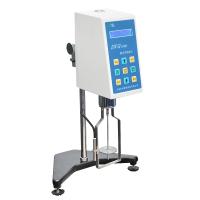

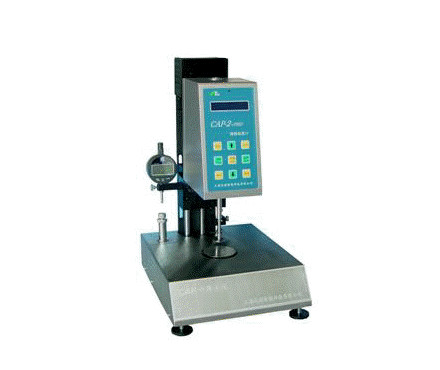



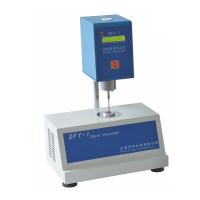


- 1Application of Rotational Viscometer in surface Coating viscosity measurement
- 2Application of Rotational viscometer in Coating Viscosity Detection
- 34 factors that affect paint viscosity
- 4Coating viscosity determination and viscosity influencing factors
- 5Effect of Carbon Black Pigment Characteristics on Coating Process
- 6Study on calibrating method of Coating viscometer
张蔚滨 - 《沈阳计量测试院》
- 7Discussion on viscosity measurement of non-newtonian fluid with NDJ series viscometer
黄守丽 邹水 - 《黑龙江成功药业有限公司》
- 8Four Types of Determination Methods for Coating Viscosity
郑顺兴 - 《涂料与涂装科学技术基础》
- 9Viscosity of paint