Application of Colorimeter in Thermal Transfer Industry
Thermal transfer printing, also known as thermal sublimation, is a technology that prints patterns on heat-resistant adhesive paper, and prints the pattern of the ink layer on the finished material by heating and pressing. Thermal transfer printing is widely used, and the products include thermal transfer cups, wallpaper, clothes and so on.
Due to the thermal transfer process, different batches of transfers often appear to the naked eye to have color differences, some are brighter and some are darker, etc. Even the same batch of transfers will have color differences. Chromatic aberration is seen through the eyes. Due to differences between human eyes, different viewing angles, and differences in light sources during the day and night, there will be uncertainty in the observation results. So to eliminate this uncertainty, the function of the Colorimeter is vividly and exquisitely reflected here.
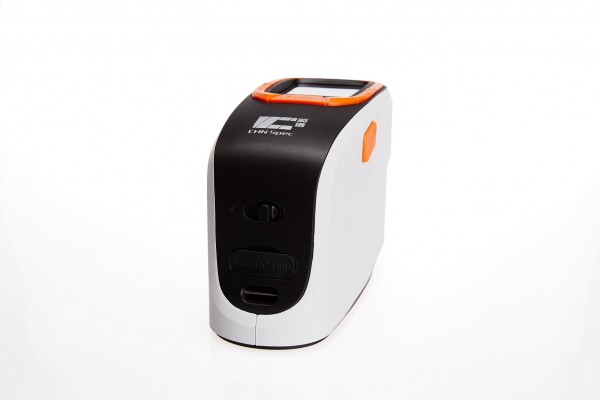
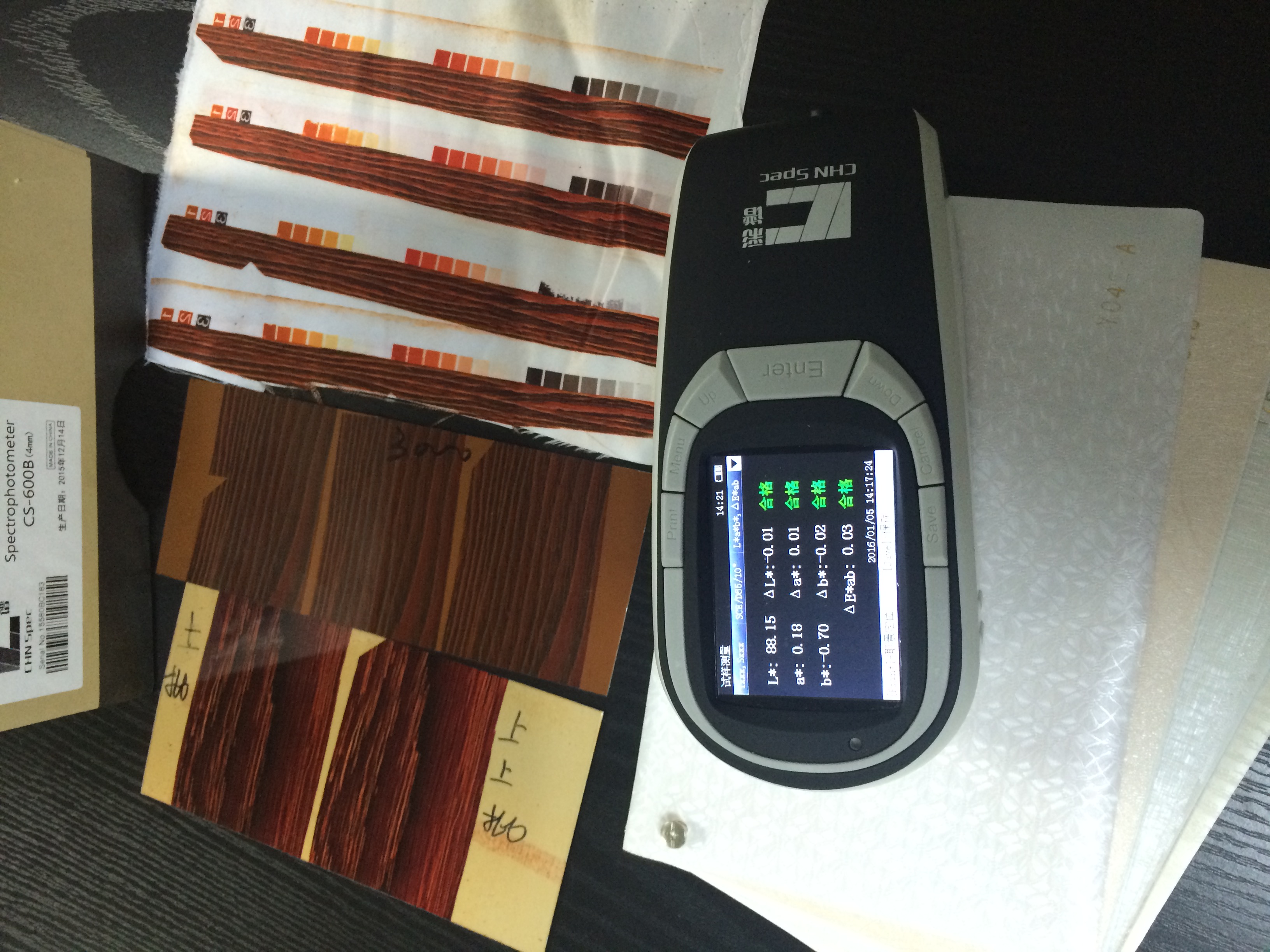
For heat transfer printing products, here we recommend Spectrophotometer CS-600B (4mm) with a small diameter specially used to measure color blocks on adhesive paper, not only can accurately measure the absolute value and color The difference can also be used to obtain the color bias of these color blocks. Transfer printing ink is generally divided into four colors: cyan, magenta, yellow, and black. Among them, the color difference between cyan and magenta can be judged according to the A value in the absolute value of △LAB. A positive value means reddish, and vice versa. The yellow color block depends on the change of B value. If the B value is positive, it means yellowish, and anyway it is blue. The black color block depends on the L value bias, the positive L value means brighter, and the negative means darker.
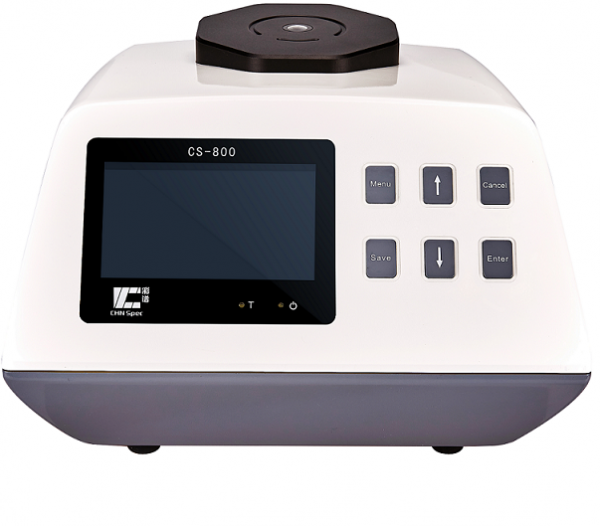
So how to use the Colorimeter to judge the problem of transfer color difference? The main factor is the color difference between ink batches, and the color spectral desktop Spectrophotometer CS-800 can place the slurry and ink device in the cuvette of the CS-800 measurement port for measurement, so it can strictly analyze the difference. Whether there is a color difference between batches of ink, whether there is a color difference between the ink barrels of the same batch, and whether there is a color difference between the bottom and the upper part of the ink in the same bucket. Only by controlling the source of the problem can the chromatic aberration be reduced as much as possible in the next transfer printing production process to achieve customer satisfaction.