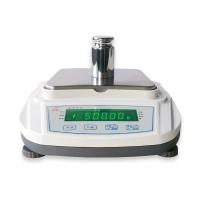
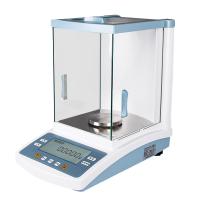
What are the general requirements for an Analytical balance room?
The precision analytical balance is to connect the weighing pan with the energized coil and place it in a magnetic field. When the object to be weighed is placed on the weighing pan, due to the downward gravity, an electromagnetic force will be generated on the coil, which is equal in magnitude and opposite to the gravity. At this time, the sensor outputs an electrical signal, which is rectified and amplified to change the current on the coil until the coil returns, and the current intensity is proportional to the gravity of the object being weighed. And this gravity is just produced by the mass of the substance, and the resulting electrical signal will display the mass of the object being weighed after passing through the analog system.
The installation process of the precision analytical balance is: remove the outer packaging of the precision analytical balance, such as a wooden box or a carton, and store the outer packaging and shockproof items for reuse. Inventory and precise analysis of the balance host and parts are complete, whether the appearance is good. Dust removal and cleaning of precision analytical balance host and parts. Install the precision analytical balance host, and adjust the precision analytical balance to a horizontal state by adjusting the leveling feet at the rear bottom of the precision analytical balance (you can observe the leveling device in the weighing chamber of the precision analytical balance). Install the moving parts such as the weighing ring and weighing pan of the precision analytical balance in place, and some weighing pans need to be rotated to be fixed. Loosen locking devices such as transport fixing screws or key buttons. Adjust the external power selection button of the precision analytical balance to the local power supply voltage. Insert the external power supply and plug into the external power socket, and turn on the power switch of the precision analytical balance to observe whether the display of the precision analytical balance is normal. If the display is normal, preheat according to the requirements of the manual. So, what are the general requirements for the balance room of the precision analytical balance? Specifically, there are five points as follows:
1. The precision analytical balance is a precision instrument and needs to be installed in a special precision analytical balance room for use. The precision analysis balance room should be kept away from the source of vibration and heat, and isolated from the environment that produces corrosive gas. The room should be clean and dust-free. The indoor temperature is preferably 18-26°C, and it should be relatively stable. Keep the room dry, and the relative humidity should generally not exceed 75%.
2. The precision analysis balance needs to be placed on a solid cement platform. If possible, the table surface can be stretched with a rubber cloth to prevent slipping and shock absorption. The location where the precision analysis balance is placed should avoid direct sunlight, and curtains should be hung to block the light, so as to avoid uneven heating on both sides of the precision analysis balance, deformation of the beam, or temperature difference in the precision analysis balance box to form airflow, thereby affecting weighing.
3. Do not store or transfer volatile and corrosive reagents (such as concentrated acid, strong alkali, ammonia, bromine, iodine, phenol and other organic reagents, etc.) in the precision analysis balance room. If you want to weigh these substances, it is advisable to use Glass airtight container for weighing.
4. Weighing is a very meticulous work, and the precision analysis balance room should be kept quiet and not noisy. Items not related to weighing should not be brought into the precision analysis balance room.
5. Do not bring wet utensils into the precision analysis balance room. When the aqueous solution needs to be weighed, it should be weighed in a well-sealed container (such as a narrow-necked pycnometer, a weighing burette, etc.), and the weighing time should be shortened as much as possible.



- 1How does the analytical balance work?
- 2Offset printing ink laboratory performance testing instrument scheme
- 3Construction and use of electro-optic analytical balance
- 4How do university labs properly use analytical scales?
- 5Edham Adam Luna series electronic analytical balance models
- 6How to calibrate analytical balances?
- 7How to avoid weighing errors in precision analytical balances?
- 8The choice of laboratory precision analytical balances is all about accuracy
- 9Factors Affecting the Weighing Accuracy of Precise Analytical Balances