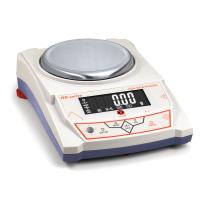
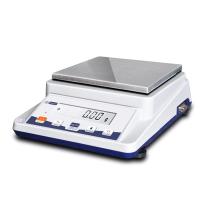
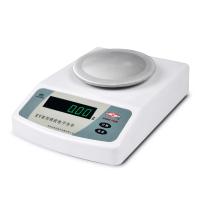
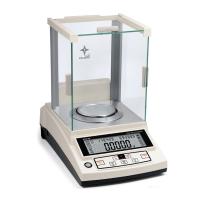
Several checks that should be done before using precision Electronic Balance
Precision electronic balances are usually used in laboratories to weigh samples, and are widely used. The use of precision electronic balances is as follows:
1. The basic conditions required to ensure the precision electronic balance room: a stable cement platform, shockproof, dustproof, and anti-shock measures, the temperature is between 16°C and 26°C, and the temperature difference within a day does not exceed 1°C; the humidity is between 50°C and 60°C % .
2. The precision electronic balance should be installed and repaired by professional technicians, and the precision electronic balance can only be used by a special person after confirming that the indicators and performance of the precision electronic balance are normal.
3. Pay attention to the use of precision electronic balances:
(1) Before use, check whether the precision electronic balance is normal and clean, and whether the precision electronic balance is level.
(2) After adjusting the zero point of the precision electronic balance, the symmetrical object should be roughly weighed on the precision electronic balance.
(3) Opening and closing the precision electronic balance door must be stable to prevent the precision electronic balance from swinging.
(4) When turning on the precision electronic balance, the force of rotating the lifting knob must be light, slow and even .
(5) When the precision electronic balance is not used, the lifting knob needs to be closed when taking and placing objects to be weighed, and adding and subtracting weights. Make the precision electronic balance half open before weighing .
(6) When adding or subtracting weights, the strength must be small. The principle of adding weights is "from large to small, add in half".
(7) The temperature of the weighing object should be consistent with the temperature in the precision electronic balance box, and hot or cold objects cannot be put into the precision electronic balance for weighing.
(8) Corrosive chemicals shall not be brought into the precision electronic balance room. The chemical to be weighed needs to be weighed in a weighing bottle, and cannot be weighed directly on the weighing pan.
(9) After the weighing is completed, put the used weights and weighing bottles back to their original positions, and check whether the zero point of the precision electronic balance can be restored.
As a precision instrument, to ensure the accuracy of weighing, it is not only necessary to pay attention to various problems during use, but also to check the electronic balance before use, which has a great impact on the accuracy of weighing . What inspections should be done before the electronic balance? The details are as follows :
1. Inspection of the mechanical part: (1) Check the switch (whether it is too tight, too loose, or the eccentric shaft does not rotate to the lowest point or exceeds the lowest point). (2) Inspection of the column part (verticality of the column, level, base plate). (3) Check the beam part of the precision electronic balance (whether the agate blade is worn, whether the sense weight and the balance weight have slipping phenomenon, whether the pointer is perpendicular to the beam). (4) Check the suspension system (whether the lifting lug is stuck, tilted, or swung, whether the damper is stuck or swung on the inner and outer tubes, and whether the weighing pan is tilted). (5) Whether there is any stuck phenomenon of the coder.
2. Inspection of the optical system: (1) Whether the bulb is not bright, the brightness is not enough or the light is always on. (2) Whether the light screen is normal (no light, not strong light, black red light or strip light). (3) Whether the scale is normal (whether the scale is clear, the scale is not visible, the scale is inclined, and the reticle is bent).
3. Inspection of measurement performance: (1) Whether the zero point of empty scale has changed. (2) Whether the empty scale sense is consistent with the full scale sense. (3) Use two full weights to test and compare the deviation of the precision electronic balance. After the two full weights are exchanged, eliminate the weight difference and calculate the deviation of the precision electronic balance. (4) Add the same small weight to the left and right discs respectively, and compare the difference in sensitivity between the two discs, that is, "biased sense".



- 1Proper Use of Electronic Balance
- 2What is the difference between 10,000-level and 100,000-level Electronic Balance?
- 3Selection scheme of solar cell slurry performance testing instrument
- 4Offset printing ink laboratory performance testing instrument scheme
- 5Method of using electronic balance and its structure
- 6How should the calibration weights of precision balances be handled and maintained?
- 7How to choose and use precision electronic balance test weights?
- 8How to choose a precision digital electronic balance?
- 9Edham Adam SAB & SPB Electronic Balance Structure