How to operate refractometer in practical experiments
scope
This method is suitable for the detection of soluble solids in raw fruit juice, concentrated fruit juice and sweetened fruit juice.
principle
Measure the refractive index of the sample liquid to be tested with a refractometer at 20°C and use the conversion table of the refractive index and soluble solid content to check or read the soluble solid content directly on the refractometer.
instrument
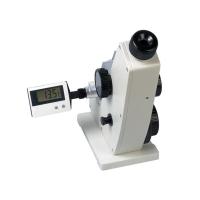
Abbe refractometer: measuring range 0% ~ 85%, accuracy ± 0.1%;
Electric constant temperature Water Bath: the constant temperature is 20±0.5℃.
Measurement steps
Place the refractometer on a clean table, install a thermometer and an electric constant temperature Water Bath flow pipe, and adjust the water temperature to 20±0.5°C. Separate the two prisms of the refractometer, first wipe them with absorbent cotton dipped in ether or ethanol, then dip a glass rod or use a clean dropper to absorb 1-2 drops of uniform sample solution, drop them on the prisms, quickly close them, and let them stand for a few seconds , so that the sample is uniform and free of bubbles, and fills the field of vision. Aim at the light source, observe from the eyepiece and turn the compensator screw to make the dividing line between light and dark clear, turn the screw of the scale pointer to make the dividing line between light and dark just at the intersection of the "X" line of the objective lens, and read the percentage or refractive index in the field of view of the eyepiece . If the eyepiece reading scale is a percentage, it is the percentage of soluble solids; if the eyepiece reading scale is refractive index, it can be converted into the percentage of soluble solids according to Appendix A.
Note:
① Calibrate the refractometer according to the instructions before measurement.
② If the temperature is not controlled by a constant temperature Water Bath, refer to Appendix B to correct the result.
Allowable difference
The difference between two measured values of the same sample shall not be greater than 0.5%. Take the arithmetic mean of the two determinations as the result, accurate to one decimal place.
- 1Take care of nutrition by controlling sugar in food
- 2Color measurement of tomatoes
- 3How to use a portable refractometer?
- 4How to properly calibrate a handheld refractometer?
- 5Refractometer User Guide
- 6Application of refractometer in honey moisture measurement
- 7 What is the application value of refractometer for grape planting?
- 8Experimental working principle and common refractive index of refractometer
- 9What is a refractometer?
-
![INESA WYA (2WAJ) Abbe refractometer for determination of refractive index and average dispersion]()
-
![INESA WZS 90A Handheld sugar meter 0~90% (1 ranges)]()
-
![INESA WZB S1 handheld digital refractometer salinity/refractive index/whiteness]()
-
![INESA WYA-2S digital Abbe refractometer]() INESA WYA-2S digital Abbe refractometer$ 1700.00
INESA WYA-2S digital Abbe refractometer$ 1700.00 -
![INESA WZS S1 Handheld Salinometer salinity Tester]()
-
![INESA WZS 80 Handheld sugar meter 0~80% (1 ranges)]()