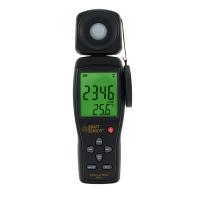
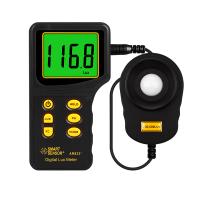
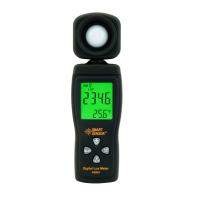
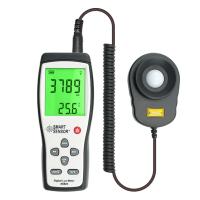
Ultraviolet radiation luminometer in domestic illuminance measurement standards
1. A market where multi-national standards coexist
At present, the domestic market share of radiometers produced in the United States, Germany, and Japan is still quite large. Relatively speaking, the instruments are also well-made, with good stability and long service life. But there is a big problem, even the standards of the same country can not be completely unified. For example, the US standard, UV irradiance, is traceable to NIST, but produces different measurements. The two most typical manufacturers of radiometers, EIT and International Light, also measure A-band instruments, and use national standards for verification. The indication error of EIT is 30%~70%, while the indication error of International Light is ok. It is controlled within 10%, which means it is basically consistent with the national standard. The same problem also exists in the instruments of Germany and Japan, both of which are consistent with the national standards, and also have instruments whose measurement results are far apart. For example, two instruments of different models from the same manufacturer in Germany have the same measurement band, but the measured results are quite different. This may be due to inconsistencies in the spectral response of the calibrated light source or instrument Detectors. In short, there is no uniform international standard for ultraviolet irradiance to restrain manufacturers, resulting in the coexistence of multi-national standards, which also brings difficulties to the measurement of ultraviolet irradiance.
Here it is necessary to talk about the situation of CHINA's ultraviolet irradiance standard in the international comparison. In December 2002, the National Institute of Metrology of CHINA (NIM) participated in the first international "International Comparison of Illumination Responsivity of UVA Detectors APMP PR-S1" held by the Asia-Pacific Metrology Planning Organization (APMP). The comparison results show that among the 7 participating laboratories, the value of NIM is the closest to the international reference value, and the deviations of the narrow-band UV365 illuminance responsivity and wide-band UVA illuminance responsivity from the international reference value are -0.57% ( k=2) and -0.53% (k=2). Under certain conditions, the uncertainty in the reproduction of the broadband ultraviolet irradiance was also improved from 10% (k=1) to 2.0% (k=1). It should be said that CHINA's existing UV irradiance standards are trustworthy.
2. Chinese UV Radiation Illuminance Standards
Ultraviolet illuminometers are often referred to as UV energy meters. With the development of the economy, more and more ultraviolet radiation illuminance meters (UV energy meters) are used in industry, and the traceability of ultraviolet radiation illuminance meters is becoming more and more important. Internationally, the division of ultraviolet bands is not uniform. At present, CHINA's division of ultraviolet radiation bands is divided into four bands: A1, A2, B, and C. The ultraviolet light sources corresponding to the above four bands include high-pressure mercury lamps, black light high-pressure mercury lamps and low-pressure mercury lamps.
CHINA's UV illuminance work benchmark is mainly composed of spectroradiometers, standard UV illuminance meters, and various UV light sources, which are used to store and reproduce UV irradiance measurements. However, since the above-mentioned standard was established in 1989, it cannot fully meet the traceability requirements of the modern market for ultraviolet radiatIon Meters. With the gradual increase of the introduction of such instruments from abroad, the calibration of ultraviolet irradiance meters has seen the coexistence of multi-national standards, which has caused troubles for the majority of users of ultraviolet irradiance meters.
3. Countermeasures and solutions
A good solution to this chaotic situation is to unify the standards. As far as the UV irradiance meters used in industrial production are concerned, most of them are used in UV curing and UV exposure to measure the irradiance or energy of UV furnaces or UV lamps. The wave bands are in UVA and UVB for measuring UV radiation energy. There are a little more instruments, commonly known as UV energy meters. For use and calibration we recommend:
1. The same company uses the same model of instruments from the same manufacturer as much as possible, so as to facilitate the unification of measurement values, and facilitate the company's internal records and comparisons. The measurement results may also be quite different when using different models of illuminance meters from the same company.
2. The irradiance of industrial UV lamps is not very stable and uneven, it is better to measure several times during measurement. Generally, it takes a period of time after the UV lamp is turned on before the light emission becomes stable.
3. For many instruments used to measure curing energy, in many cases, only one reading is concerned. For example, according to production experience, under the energy of 1000mJ/cm2 measured by a certain instrument, the curing is good. Maybe this instrument is very different from the national standard, but you As long as you know that the instrument measures 1000mJ/cm2, it is normal. At this time, you should only pay attention to the annual rate of change of the instrument, or add a correction factor to the instrument according to the data given in the calibration certificate, and record a reading again after correction.
4. Not all instruments can be calibrated according to the existing national standards, so when the instrument is detected to have a large measurement error, please confirm whether the measurement band of the instrument is consistent with the national standard, if not, or send it back to the original Factory inspection, or after correction according to the calibration certificate, use as reference.
5. Due to the particularity of the Detector material of the ultraviolet radiatIon Meter, the annual change rate is still relatively large (especially domestic instruments, foreign instruments are relatively good), coupled with frequent use, it is easy to produce value drift, If there is doubt about the value, it is better to send it for inspection in time.
6. Pay attention to the service life of the ultraviolet radiatIon Meter, especially for the ultraviolet radiatIon Meter that is close to the service life or used beyond the period, it should be used as a reference.
7. For some special radiometers that measure large range (such as W or J level) and special wave bands (such as UVV band visible light radiation), there is no verification procedure for the time being, and they can be sent to the original factory, the National Metrology Institute and other units for inspection calibration.
Finally, let me briefly talk about C-band instruments. This type of instrument is mainly used in the medical field, because short-wave ultraviolet rays have a sterilizing effect, and the measurement range is relatively small. Most of these instruments are domestically produced and have a high degree of consistency with the national standard.

- 1Forest UV Illuminance Meter FAQ
- 2MS6610 Digital luminometer operating instructions
- 3ST-86L luminometer manual
- 4ST-85 luminometer instruction manual
- 5ST-80C luminometer manual
- 6Precautions for the use of luminometers
- 7Luminometer principle, calibration, general requirements
- 8Ultraviolet Spectrophotometer inspection
- 9Fault Analysis and Removal of Ultraviolet Illuminometer