The concept of flash point, what is flash point
On the surface of flammable and combustible liquids and a few flammable solid surfaces, there is a mixture of certain flammable gases and air , which will burn when it meets the fire source. If the flammable gas volatilizes at a low rate, once it is burned, it is too late to replenish the new vapor, and this kind of combustion will go out in a flash, which is called flash combustion. The temperature at which a flash can occur is called the flash point.
The lower the flash point, the greater the danger. The flash point is the lowest temperature that may cause a fire (the flash point data of common dangerous substances in the painting workplace can be referred to in the table). There are many factors that affect the flash point. For similar liquids, the larger the relative molecular mass, the higher , such as methanol, ethanol, propanol and butanol, the relative molecular masses are 32, 46, 60 and 74 respectively, and their flash points are 17°C, 11 °C, 20 °C and 35 °C . The flash point of gasoline increases with the increase of the fractionation temperature . The flash point of the fractionation at 50~60 °C is -58 °C, and the flash point of 140~150 °C is 10 °C . The flash point of the mixed liquid is generally lower than The average value of the flash point of each liquid.
The flash point has practicality for fire protection technology and is a main technical data. According to the flash point of the substance, the fire hazard of various flammable liquids can be distinguished. For example, the flash point of kerosene is 40 °C . It is close to an open flame at a room temperature of 15-20 °C and cannot be burned immediately, because this temperature is lower than the flash point, and the evaporated oil vapor is very small, and it cannot flash or burn. Only when kerosene is heated to 40 °C can it flash. That is to say, when the temperature is lower than the flash point, it will not burn when it encounters the instantaneous action of the fire , and there is a danger of fire only when the temperature is above the flash point.
The flammability classification of flammable and combustible liquids is also determined according to the flash point, which can be divided into four classes. The first and second grades are called flammable liquids, and the third and fourth grades are called flammable liquids. The classification standards are shown in the table:
| category | level | Flash point/℃ | example |
| Flammable liquids | level one Secondary | <28 28~45 | Gasoline, ethanol, turpentine |
| flammable liquid | Level three Level 4 | 45~120 >120 | diesel fuel glycerin |
For organic solvents whose flash point is lower than room temperature, it is necessary to strictly control the exposure operation of these organic solvents . The gasoline commonly used in degreasing before painting has a flash point of -20°C. During operation, it is strictly prohibited to use it to wash hands, wash work clothes, and wipe the floor, because this is a common cause .



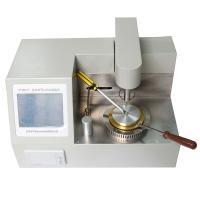

- 1Comprehensive analysis of flashpoint Tester: Definition, selection method and Application
- 2Determination of flash point of coatings
- 3Flash point measuring method and flash point measuring instrument