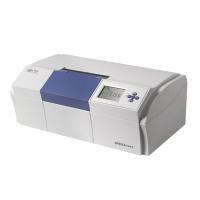
Determination principle of Polarimeter
A polarimeter is an instrument for measuring the optical rotation of a substance. Optical rotation is a property of matter. Through the determination of optical rotation, the purity of the substance, the concentration of the substance in the solution and the knowledge about the three-dimensional structure of the substance can be known.
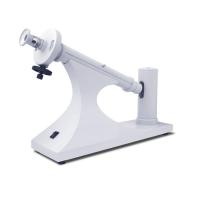
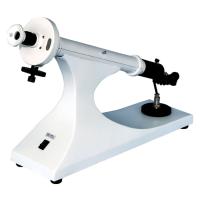
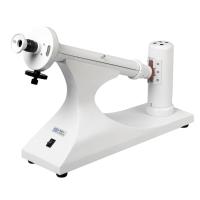
This paper takes the WXG-4 polarimeter as an example to introduce the measuring principle of the polarimeter as follows:
The polarimeter is mainly composed of two parts: polarizer and analyzer. The polarizer is commonly known as the first Nicol prism, which polarizes the visible light vibrating in all directions, and it is fixed at the front end of the instrument. The analyzer is used to measure the rotation angle of the polarization plane, called the second Nicol prism, which rotates with the dial.
For natural light, its light waves vibrate in all possible directions perpendicular to the direction of light propagation, but after passing through the polarized first Nicol prism, the plane polarized light that only vibrates in one direction is obtained. When the polarized light of the two Nicol prisms can pass through; when the main sections of the two prisms are perpendicular to each other, all the polarized light cannot pass through; when the angle between the main sections of the two prisms is between 0 and 90 ( °), the transmitted light intensity will be weakened.
When the main sections of the two prisms are perpendicular to each other, the field of view is dark, but when a glass light tube containing a solution of optically active substances is placed in the middle of the prism, the polarized light is rotated by an angle due to the solution, and a certain amount of light can be seen from the field of view. At this time, if the analyzer is rotated by an angle correspondingly, the field of view can be darkened again, and the angle of rotation of the analyzer is equal to the rotation angle of the polarization plane of light after passing through the solution. If it is necessary to rotate clockwise to restore darkness, it is called dextrorotation, otherwise it is called levorotation.
Because the naked eye has a large error in identifying the dark field of view, in order to accurately determine the optical rotation angle, a comparison method is often used, that is, the three-point field of view method. A narrow and long quartz plate is installed in the middle behind the polarizer, and its width is about 1/ of the field of view. 3. Because the quartz plate is also optically active, a three-point field of view appears in the eyepiece.
After rotating the corresponding angle, the light and shade in the three areas in the field of vision are equal, and the three-point field of vision disappears. In view of the fact that the naked eye is easy to judge this three-point field of vision with equal brightness and darkness, the optical rotation of the measured solution can be accurately measured.
This article is excerpted from "Operation Method of WXG-4 Polarimeter for Measuring Optical Rotation" by Zhong Hongmei and Hou Deshun.


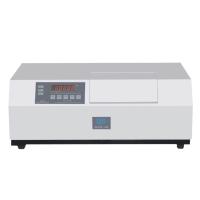
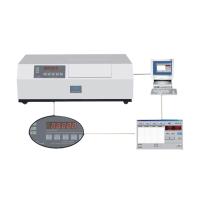
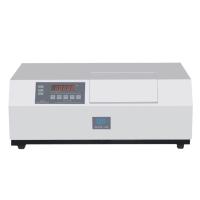
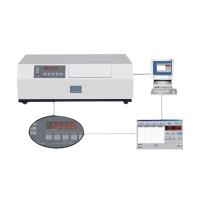
- 1Multi-wavelength high-speed polarimeter test application scheme
- 2How to Use WZZ-1S Automatic Polarimeter
- 3Application of Polarimeter in Food Analysis
何萍; 张京京 - 《辽宁化工》
- 4Zero Point Correction and Application of WXG-4 Polarimeter
钟红梅;侯德顺 - 《煤炭与化工》
- 5Polarimeter measurement principle
- 6Instructions for operation and use of Polarimeter
-
![BANTE WXG-4 Disc Polarimeter -180 °~ 180 °]()
-
![INESA WXG-4L Visual Polarimeter (LED Light)]()
-
![INESA WXG-4 Visual Polarimeter Disc Polarimeter (Sodium Lamp)]()
-
![INESA INESA WZZ-1 Automatic Polarimeter]() INESA INESA WZZ-1 Automatic Polarimeter$ 1340.00
INESA INESA WZZ-1 Automatic Polarimeter$ 1340.00 -
![INESA INESA WZZ-3 Automatic Polarimeter]() INESA INESA WZZ-3 Automatic Polarimeter$ 1700.00
INESA INESA WZZ-3 Automatic Polarimeter$ 1700.00 -
![INESA WZZ-2B Automatic Polarimeter]() INESA WZZ-2B Automatic Polarimeter$ 1450.00
INESA WZZ-2B Automatic Polarimeter$ 1450.00