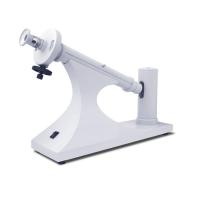
How does a visual disc polarimeter determine whether a substance is left-handed or right-handed?
Optically active solutions are divided into dextrorotatory solutions and levorotatory solutions. Looking at the incoming light, the solution that can rotate the polarization plane to the right, that is, the solution that rotates the dial clockwise (0°→90°→180°) is a right-handed solution, which is represented by the symbol "+"; Rotate left, that is, the solution that the dial turns counterclockwise (0°→170°→90°→0°) is a left-handed solution, denoted by "-". For the solution whose optical rotation direction is known, we can directly read the optical rotation of the solution according to the optical rotation direction. If it is known that glucose is a dextrorotatory solution, if the reading is 6.3° during measurement, it means that the optical rotation of the glucose solution at this concentration is +6.3° under this measurement condition. Another example is that fructose is known to be a left-handed solution. If the reading is 175.2° during measurement, the angle of rotation is 175.2°→-180.0°, which means that the optical rotation of the fructose solution is -4.8°.
The dial of the visual disc polarimeter commonly used in general laboratories is symmetrically 0°-180°. For unknown solutions, it is difficult to directly judge left-handed and right-handed. When measuring an unknown solution, if the measured value is φ (0°<φ<180°), it may be equivalent to rotating φ to the right, or it may be equivalent to rotating 180°-φ to the left, that is, one measurement cannot Determine its optical rotation direction, which requires further determination, generally there are two methods:
1) Reduce the concentration method. If the concentration of the tested solution is halved, the measured reading is φ′, if φ′<φ, the solution is a right-handed solution; if φ′>φ, the measured solution is a left-handed solution. The optical rotation is constant when the temperature and the wavelength of the incident light are fixed. According to the optical rotation calculation formula φ=α×c×d, the optical rotation φ is proportional to the concentration c, α represents the optical rotation, and d represents the length of the solution. If φ>φ′, it means that the measured solution should be 180°-φ instead of φ in the first measurement, so it is left-handed.
2) Liquid length (sample tube length) change method. Halve or double the length of the sample tube for a second measurement. For example, if the 200 mm sample tube is replaced with a 100 mm sample tube, if the reading after the change is φ′<φ, it indicates that the measured solution is a right-handed solution; if φ′>φ, it is a left-handed solution.


-
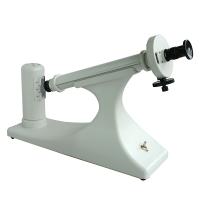
![BANTE WXG-4 Disc Polarimeter -180 °~ 180 °]()
-
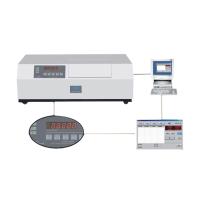
![BANTE POL-200 Disc Polarimeter]() BANTE POL-200 Disc Polarimeter$ 947.00
BANTE POL-200 Disc Polarimeter$ 947.00 -
![SUOGUANG WXG-4 Disc Polarimeter Measurement range +/- 180 °]()