Common faults and solutions of Polarimeter
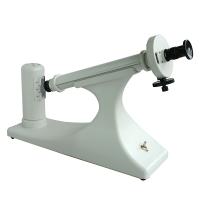
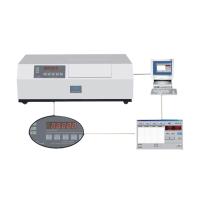
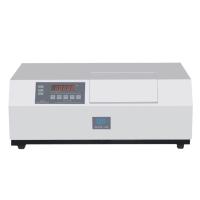
A polarimeter is an instrument for measuring the optical rotation of an optically active substance. It is mainly composed of sodium lamp, condenser, filter, polarizer, half-wave plate, analyzer, objective lens group, focusing handwheel, reading magnifying glass, dial and vernier, and dial rotating handwheel. When the instrument is in normal state, turn the dial and turn the handwheel to drive the analyzer to rotate, and the field of view should have the following states:
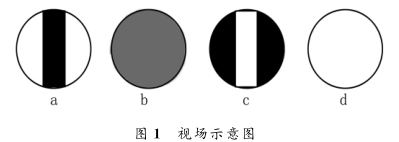
When measuring, read the measured value from the dial in the b field of view state.
Common malfunctions
The following phenomena often occur in the use of the polarimeter:
(1) When the dial is turned and the handwheel is turned, the field of view does not have the above four states and is always the brightest.
(2) The initial value of the instrument (when the solution to be tested is not placed, it is in the state of b field of view for many times) varies greatly.
Failure Analysis
Because the analyzer is connected with the dial and the dial rotation handwheel, when the dial handwheel is turned, the analyzer and the dial rotate together, and the reading on the dial is the angle of rotation of the analyzer. The polarizer and the analyzer are essentially two identical polarizing lenses that are glued to the two respectively. The polarizing lens in the analyzer is glued together with the movable film inside, and the movable film is connected with two screws. Fixed with the analyzer, adjusting the position of these two screws can change the relative angle between the analyzer lens and the analyzer.
The working principle of the polarimeter is: the light emitted from the sodium lamp sequentially passes through the condenser, the filter and the polarizer to become plane polarized light, and a three-point field of view is generated at the half-wave plate (as shown in a or c). Turn the dial handwheel, when the vibration plane of the polarizer is perpendicular to the vibration planes of plane polarized light with two different vibration directions generated from the half-wave plate, the field of view is a or c; when the vibration plane of the polarizer is When the plane is perpendicular to and parallel to the bisector of the angle between plane polarized light vibration planes in the two vibration directions, the field of view is in state b or d. Therefore, only two kinds of plane polarized light with different vibration directions hit the analyzer, and the above four fields of view will appear when the analyzer rotates.
Fault (1) The field of view remains the same and is the brightest, indicating that the polarizing lens has fallen off from the polarizer or analyzer.
When the initial value of the instrument is measured many times, that is, the reading value of the rotating analyzer from the dial under the b field of view differs greatly as described in fault (2), indicating that the polarizing lens in the analyzer falls off from the film, causing each When the analyzer is rotated for the first time, the analyzer glass and the analyzer do not rotate synchronously, but move relative to each other. In this way, the angle that the analyzer turns is not the angle that the analyzer turns.
Troubleshooting
repair
(1) The maintenance method for the polarizer is: remove the polarizer from the polarimeter, glue the fallen polarizing lens to it, and then install and reset the polarizer.
(2) The maintenance method for the polarizer is: remove the polarizer from the polarimeter, unscrew the fixing screws connecting the polarizer and the inner film, glue the fallen polarizing lens to the film, and then Tighten the film and the polarizer with screws, and finally install and reset the polarizer.
Adjustment
Since the peeled polarizing lens is bonded to the polarizer and analyzer again, after the two polarizers are reset, the shadow angle and zero position of the instrument cannot reach the good state when leaving the factory (because the shadow angle of the instrument is At about 3.5 degrees, the zero position means that the reading of the dial under the b field of view is zero degrees when there is no solution to be tested in the instrument), so the instrument needs to be readjusted to a good state when it leaves the factory.
(1) Adjustment of shading angle: Turn the polarizer so that the difference between the reading plate reading when the middle area of the field of view is the darkest and the degree of the dial when the areas on both sides of the field of view are the darkest is 3.5 degrees, and then tighten the polarizer at Fixing screw for lens barrel.
(2) Zero position adjustment: Loosen the fixing screw connecting the polarizer and its inner film, so that the polarizing lens can rotate in the polarizer. Without putting the object under test, turn the dial handwheel to make the reading of the dial zero; fix the dial still, rotate the polarizing lens in the polarizer until the b field of view appears, and immediately tighten the fixing screws of the polarizing lens and the polarizer , so that it is fixed with the analyzer and the dial, so that the zero position adjustment is completed.