How to choose a Gas Detector?
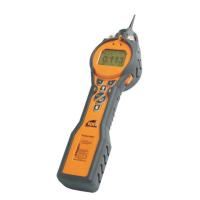
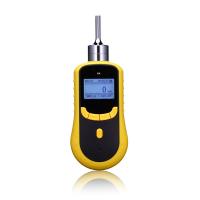
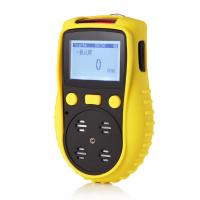
A Gas Detector is an instrumentation tool for detecting the concentration of gas leaks. There are two common types: portable and fixed. As a kind of instrument, Gas Detector needs to consider all aspects to choose a suitable instrument in the process of purchasing.
First of all, when purchasing a Gas Detector, pay attention to the following points:
1. Reliability
The longer the life of the Gas Detector sensor, the better. Generally speaking, the life of the sensor is 2-3 years, and the life of the flammable gas sensor is 3 years. The longer the mean time to error, the better. What is the accuracy and precision, the smaller the error value, the better. The product warranty period is generally 1 year.
2. Correction requirements
Correction method, duration, and ease. There are two calibration methods - laboratory and on-site calibration. On-site calibration is to exhale the oxygen sensor, the oxygen reading value of the instrument needs to drop and an alarm occurs.
3. Stability
What is the value of zero point offset and full scale offset of the Detector, the smaller the better.
4. Applicability
Enterprise professionals and experienced job supervisors or employees should identify and evaluate the hazardous gases in the limited space operation site to determine whether the sensor of the selected Detector meets the use requirements.
5. Convenience
Light weight, small size, easy and comfortable to wear, easy maintenance.
6. Legibility
Numeric or pointer Gas Detector. Generally speaking, the numerical type has the advantages of easy readability and less misjudgment. Is the display area large enough with backlighting and large fonts for easy reading and comprehension. Whether the siren is loud enough to be distinguished from the background noise. Generally, the efficiency above 90dB(A) is applicable. Whether the warning flashing light can be recognized from various angles. Can the signal be displayed continuously with the change of the measured gas concentration, and the alarm will be stopped after confirmation or countermeasures are taken.
7. According to the measurement object and measurement environment
Determine the type of sensor according to the measurement object and measurement environment. To carry out a specific measurement work, we must first consider what kind of sensor is used, which needs to be determined after analyzing various factors.
8. Response characteristics (reaction time)
The frequency response characteristics of the sensor determine the frequency range to be measured, and it is necessary to maintain undistorted measurement conditions within the allowable frequency range. In fact, the response of the sensor always has a certain delay. It is hoped that the delay time should be as short as possible.
9. Linear range
The linear range of a sensor is the range over which the output is proportional to the input. In theory, within this range, the sensitivity remains constant. The wider the linear range of the sensor, the larger its range and can guarantee a certain measurement accuracy.
Notes on the use of Gas Detectors:
1) Pay attention to the life of various sensors: all kinds of gas sensors have a certain service life, that is, life. Generally speaking, in portable instruments, LEL sensors have a longer service life, which can generally be used for about three years; photoionization Detectors have a service life of four years or longer; In one to two years; the life of the oxygen sensor is the shortest, about one year.
2) Pay attention to the concentration measurement range of the detection instrument: various toxic and harmful Gas Detectors such as ammonia Detectors and total phosphorus Detectors have their fixed detection ranges. Only when the measurement is completed within its measurement range can the instrument be accurately determined. If the measurement is carried out beyond the measurement range for a long time, it may cause permanent damage to the sensor.
3) Pay attention to the detection interference between various sensors: Generally speaking, each sensor corresponds to a specific detection gas, but any Gas Detector cannot be absolutely special. Therefore, when selecting a gas sensor, it is necessary to understand as much as possible the interference of other gases to the sensor, so as to ensure its accurate detection of a specific gas.
4) Pay attention to regular calibration and testing: the toxic and harmful Gas Detector is the same as other analytical and testing instruments, and is measured by relative comparison method: first use a zero gas and a standard concentration gas to calibrate the instrument , the standard curve is obtained and stored in the instrument. When measuring, the instrument compares the electrical signal generated by the gas concentration to be measured with the electrical signal of the standard concentration, and calculates the accurate gas concentration value. Therefore, zeroing the instrument at any time and frequently calibrating the instrument are necessary tasks to ensure accurate measurement of the instrument.
Sensors are the core components of Gas Detectors, and with the development of technology, the types of sensors are increasing. The following is an analysis of the advantages and disadvantages of gas sensors with several main principles:
1. Semiconductor gas sensor
The semiconductor gas sensor is manufactured by using some metal oxide semiconductor materials, and at a certain temperature, the electrical conductivity changes with the change of the ambient gas composition. For example, the alcohol sensor is prepared by using the principle that the resistance of tin dioxide will decrease sharply when it encounters alcohol gas at high temperature.
1) Advantages
Semiconductor gas sensors can be effectively used for the detection of many gases such as methane, ethane, propane, butane, alcohol, formaldehyde, carbon monoxide, carbon dioxide, ethylene, acetylene, vinyl chloride, styrene, acrylic acid, etc. In particular, the sensor has low cost and is suitable for the needs of civilian gas detection. The following semiconductor gas sensors are successful: methane (natural gas, biogas), alcohol, carbon monoxide (city gas), hydrogen sulfide, ammonia (including amines, hydrazines). High-quality sensors can meet the needs of industrial detection.
2) Disadvantages
The stability is poor, and it is greatly affected by the environment; especially, the selectivity of each sensor is not perfect, and the output parameters cannot be determined. Therefore, it is not suitable for use in places where accurate measurement is required.
2. Catalytic combustion gas sensor
This sensor prepares a high temperature resistant catalyst layer on the surface of the platinum resistor. At a certain temperature, the combustible gas is catalyzed and burned on its surface. The combustion is the temperature rise of the platinum resistor, and the resistance changes. The change value is the concentration of the combustible gas. function.
1) Advantages
Catalytic combustion gas sensors selectively detect combustible gases: the sensor does not respond to anything that is not combustible. The catalytic combustion gas sensor has accurate measurement, fast response and long service life. The output of the sensor is directly related to the explosion hazard of the environment, and it is a dominant type of sensor in the field of safety detection.
2) Disadvantages
In the range of flammable gases, there is no selectivity. There is a danger of ignition and explosion when working with dark fire. Most elemental organic vapors are toxic to sensors.
3. Thermal conductivity cell gas sensor
Each gas has its own specific thermal conductivity. When the thermal conductivity of two or more gases is quite different, the thermal conductivity element can be used to distinguish the content of one of the components. This sensor has been used sensorily for the detection of hydrogen, the detection of carbon dioxide, and the detection of high-concentration methane. This kind of gas sensor can be applied in a narrow range and has many limiting factors.
4. Electrochemical gas sensor
A considerable part of its flammable, toxic and harmful gases are electrochemically active and can be electrochemically oxidized or reduced. Using these reactions, gas components can be distinguished and gas concentrations can be detected. There are many subcategories of electrochemical gas sensors:
(1) Primary battery-type gas sensors (also called: Gavoni battery-type gas sensors, also known as fuel cell-type gas sensors, also known as spontaneous battery-type gas sensors), their principle is the same as the dry batteries we use, but the battery The carbon-manganese electrode was replaced by a gas electrode. In the case of an oxygen sensor, oxygen is reduced at the cathode and electrons flow through the ammeter to the anode where the lead metal is oxidized. The magnitude of the current is directly related to the concentration of oxygen. This sensor can effectively detect oxygen, sulfur dioxide, chlorine, etc.
(2) Constant potential electrolytic cell type gas sensor. This sensor is very effective for detecting reducing gases. Its principle is different from that of the original battery type sensor. Its electrochemical reaction occurs under the force of current, which is a kind of Sensor for true coulometric analysis. This sensor has been successfully used in the detection of carbon monoxide, hydrogen sulfide, hydrogen, ammonia, hydrazine, and other gases, and is currently the mainstream sensor for toxic and harmful gas detection.
(3) Concentration battery type gas sensor, the electrochemically active gas will spontaneously form a concentration electromotive force on both sides of the electrochemical cell, and the magnitude of the electromotive force is related to the concentration of the gas. The successful example of this sensor is the oxygen used in automobiles. sensor, solid electrolyte carbon dioxide sensor.
(4), limiting current type gas sensor, there is a sensor for measuring oxygen concentration, which uses the principle that the limiting current in the electrochemical cell is related to the carrier concentration to prepare an oxygen (gas) concentration sensor, which is used for oxygen detection of automobiles and molten steel Oxygen concentration detection.
5. Infrared gas sensor
Most gases have characteristic absorption peaks in the mid-infrared region, and the concentration of a certain gas can be determined by detecting the absorption at the position of the characteristic absorption peak.
This kind of sensor used to be a large analytical instrument, but in recent years, with the development of the sensor industry based on MEMS technology, the volume of this kind of sensor has been reduced from a 10 liter, 45 kg Big Mac to 2 ml (thumb size) approx. The use of an infrared Detector that does not need to modulate the light source makes the instrument completely free of mechanical moving parts, and is completely maintenance-free. The infrared gas sensor can effectively distinguish the type of gas and accurately measure the gas concentration.
This sensor is successfully used for: detection of carbon dioxide and methane.
6. Magnetic oxygen Detector
This is the core of the magnetic oxygen analyzer, but the process of "sensorization" has also been realized.
It is prepared using the principle that oxygen in the air can be attracted by a strong magnetic field.
This sensor can only be used for the detection of oxygen and has excellent selectivity. Only nitrogen oxides in the atmospheric environment can have a slight impact, but because the content of these interfering gases is often very small, the selectivity of the magnetic oxygen analysis technique is almost perfect!
The above are the points for attention in the selection of Gas Detectors, and the advantages and disadvantages of sensors with different principles.