Comparison of Coating Adhesion Test Methods and Discussion on Influencing Factors
Abstract: This paper introduces several typical adhesion test methods at home and abroad, analyzes the characteristics, differences and precautions of various methods through comparison, and briefly discusses the factors affecting adhesion.
0 Preface
Adhesion refers to the firmness of the paint layer and the surface of the painted object through physical or chemical forces. Coating adhesion is an important index to evaluate a coating or coating system. Paint is applied to the surface of an object to form a continuous coating that adheres firmly and has a certain strength. A coating with good adhesion has decorative, protective and other special effects, and is easy to maintain and update. Therefore, the determination of coating adhesion has attracted extensive attention from the paint and coating industry. Coatings are also a very important non-metallic material for . An aircraft will encounter various harsh environments during its service, such as alternating changes , hot and humid climate, acid rain and the intrusion of various corrosive media, so the protection function of the aircraft surface has become very important. In recent years, the development of new machines has put forward higher requirements on the performance of coatings, and the adhesion of coatings is the most important . This paper compares several typical adhesion test methods at home and abroad , analyzes the characteristics, differences and precautions of various methods, and briefly discusses the influencing factors of adhesion, and proposes for the test and improvement of adhesion. made some suggestions.
1 Overview and comparison of domestic adhesion test methods
At present, the domestic adhesion test methods generally adopt the following three types: the circle method (GB/T 1720), the cross-cut method (GB/T 9286) and the pull-off method (GB/T 5210). The following briefly introduces its content and precautions.
1.1 Circle adhesion test method
Determination overview: Adhesion test , and the adhesion is evaluated according to the integrity of the paint film within the scratch range of the circular rolling line, and the results are expressed in grades.
Instruments and test materials: circle adhesion Tester, rotating needle, 4x magnifying glass, soft brush.
Test procedure: prepare a sample on the tinplate, after the paint film is dry, measure the adhesion in a constant temperature and humidity environment. First check that the needle of the Tester remains sharp, and adjust the radius of gyration until the round rolling line is the same as the standard radius of 5.25 mm. Fix the test panel and move the lifting rod backward so that the tip of the rotating needle touches the paint film. Shake the handle clockwise at 80 ~ 100 r/min evenly to obtain a round rolling line with a length of (7.5±0.5) cm, use a soft brush to remove the paint chips on the scratches, check the scratches with a 4x magnifying glass and rate them .
Grading method: The adhesion is divided into 7 grades, and the integrity of the paint film at each part is checked in sequence. Adhesion decreases from grade 1 to grade 7, with grade 7 being the worst. Test with 3 samples, and the result shall be subject to the same level of at least 2 samples.
Precautions:
1) Be sure to ensure that the tip of the rotating needle is sharp, otherwise the judgment of the result will be affected and the difference between grade 1 and grade 2 cannot be clearly distinguished. Touch the needle tip with your finger to feel the sharpness before testing. Replace the needle as appropriate after measuring multiple samples;
2) Try to scratch a few times first, if the needle tip does not penetrate the substrate, you should add a French weight as appropriate, but the force should not be too large, so as not to increase resistance and wear the needle;
3) To ensure that the radius of gyration meets the requirements.
1.2 Overview of cross-hatch adhesion test
When the multi-coating is cut according to the grid pattern and just penetrates the coating to reach the substrate, the resistance of the coating to separation from the substrate, or the results are expressed in grades.
Instruments and test materials: 6-edged cutting knife, transparent pressure-sensitive tape, soft brush.
试验步骤:将样板置于坚硬而平的物面上,进行90°交叉划痕的垂直切割,切割刀具要以均匀的力和速率,在涂层上形成规定间隔的格阵图形。用软毛刷沿格阵的对角线方向往返轻刷几次,除去漆屑。将 75 mm透明压敏胶带的中心点放在网格上,方向与一组切割线平行,用手指将胶带在网格上的部位压平,指尖用力蹭压胶带以确保胶带与涂层良好接触,5 min 内,以接近 60°的角度,在 0.5 ~ 1.0 s 内平稳地剥离胶带。
评级方法:在良好的照明环境下,目视检查切割面涂层的脱落情况。附着力共分为 6 个等级,从 0 级至 5级涂层附着力依次递减,5 级最差。在样板的至少 3 个不同部位进行测试,如果结果不一致,差异大于 1 个级别单位,再另选 3 个部位重新测试。
注意事项:
1)According to所用底材和涂层厚度,正确选择划线间隔;
2) 切割刀刃保持锐利状态,必要时更换刀刃;
3)注意胶带黏附在涂层上的时间不宜过长,剥离角度尽可能接近 60°,快速平稳剥离。
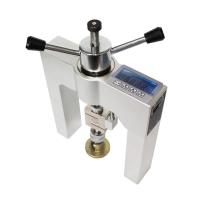
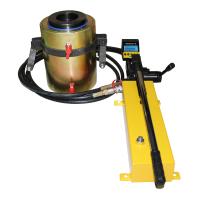
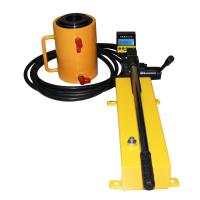
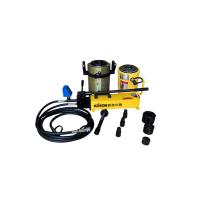
1.3 拉开法附着力测试
测定概述:在指定的速度下,在试样的胶结面上施加垂直、均匀的拉力,来测定涂层之间或涂层与底材之间附着力破坏时所需要的力,以 N/cm2 表示。
仪器及试验材料:拉力试验机、夹具、试柱、定中心装置、胶黏剂。
试样的制备:试样为 2 个金属试柱对接或组合件。试柱材料和表面处理应和产品实际相同。1 个试柱的表面按照被试涂料规范进行涂装,用胶黏剂与另 1 个试柱胶结,未涂装的试柱上均匀的涂上一层薄的黏胶剂,借助定中心装置同轴心胶结,按要求固化。
试验步骤:将试样放入拉力机的上下夹具,调至对准,使其横截面均匀受力。以 10 mm/min 的拉伸速度进行拉开试验,直至破坏,记录负荷值,并观察断面的破坏形式。
附着力计算方法:试样被拉开破坏时的负荷值除以被试涂层试柱的横截面积,即为涂层的附着力,单位为 N/cm2。
破坏形式:附着破坏表示为 A;内聚破坏表示为B;胶黏剂自身破坏或被测涂层的面漆部分被拉破表示为 C;出现 2 种或 2 种以上的破坏形式,应注明破坏的面积百分数,大于 70%为有效。
结果表示:每组被测涂层试验应不少于 5 对,至少3 对的算术平均值作为试验结果,以附着力与破坏形式表示。
注意事项:
1)应使用最小量的胶黏剂,以使在组合试样时产生一个牢固、连续、均匀的胶结面;
2)试柱周围一圈的漆膜及溢出的胶黏剂要除去,进而保证受力面积;
3)为提高胶结试柱的黏结力,可适当打磨试柱表面。
1.4 国内试验方法的比较分析
试验环境:对于非金属材料试验环境是非常重要的,进行附着力测试时,都应该将样板放在恒温恒湿条件下进行状态调节。国标上规定的标准试验条件为:温度(23±2)℃,相对湿度(50±5)%。
适用范围:划圈法适用于各种单一涂层附着力的测定,被广泛应用。划格法是用于测量厚度小于 250μm 的涂层,虽然也可以用于多涂层的测定,但由于不易判断是涂层与底材之间的附着力还是涂层之间的附着力,因此多用于单涂层的测定。拉开法适用于较厚涂层(如腻子),单涂层和多涂层体系均适用,但测定涂层之间的附着力时,可优先选用该方法。
优缺点:划圈法和划格法均属于间接测定法,得到的不是单纯的附着力,还含有涂层的变形和破坏时的抵抗力,但是操作简单快捷,被广泛应用。拉开法属于直接测定法,能用数字表示涂层附着力,是考察涂料配套性是否合理、全面评价涂层整体附着效果的好方法,通过附着力的检查,也可以检查涂料的组成,特别是树脂的使用是否合理。但是拉开法过程比较复杂,且需要等胶黏剂完全固化后才能进行试验。
2 国外附着力试验方法概述及比较
国外的附着力测试方法也有很多,其中 BSS 7225(胶带结合力试验)、FED 141D 6301.3 (浸水后湿胶带结合力)和 ISO 2409(交叉划痕试验)常被引用。
2.1 BSS 7225 胶带结合力试验
BSS 7225 胶带结合力试验方法是一种比较全面的涂层胶带结合力试验方法,在多个波音材料规范中被广泛引用。该试验方法共分为 3 型 5 类,3 型分别为 I型干附着力、Ⅱ型浸过水的上浆布湿附着力、Ⅲ浸水法附着力;5 类是指刻线类别,1 类为无划痕、2 类为平行划线、3 类为平行线加 45°划线、4 类为 90°交叉划线、5类为 45°交叉划线。
I 型干附着力:按照规范指定的类别,选择刻线的图形刻划试样,若指定为 1 类,无需刻划试样。按照方法要求的方向将胶带粘贴于试样的试验部位或刻线上,并用胶带自身的滚筒按压胶带,然后用滚筒在胶带上滚压 2 次。在试样贴好胶带 1 min 内,垂直于试样方向用力迅速撕去胶带,检查被试区域是否有涂层脱落。
Ⅱ型浸过水的上浆布湿附着力:在试验区域贴 1块 4 in×4 in 的、干净的、浸过去离子水的上浆布,用干净的聚乙烯薄膜覆盖后,用胶带封边。如果因尺寸或形状的原因不能使用以上尺寸的上浆布,可使用 1 个或多个 1 in×1 in 的浸水上浆布,试验部位为 2 ~ 4 个。将上浆布在试样表面保留规定的时间,在此过程中试样应始终保持湿润。到达时间后,移走上浆布,用干净的上浆布擦干试样表面。按照干附着力的步骤进行试验。
Ⅲ型浸水法附着力:将试样的全部或者部分浸入去离子水中,保留规定的时间,到达时间后,取出试样,用干净的上浆布擦干试样表面。按照干附着力的步骤进行试验。
结果评级:按照涂层的剥落情况对结果进行评级,共分为 10 个级别,按照次序从 10 级(完好)至 1 级(试样涂层全部脱落)附着力依次降低。到达时间后,取出试样,用软布擦干试样表面。从水中取出的 1 min 内,用切割工具划 2 条相距 1 in 的平行划痕,穿透涂层直达金属基底。
2.2 FED 141D 6301.3 浸水后湿胶带结合力
试验步骤:将试样浸入蒸馏水中保持 24 h,取出试样,用软布擦干试样表面。从水中取出的 1 min 内,用切割工具划 2 条相距 1 in 的平行划痕,穿透涂层直达金属基底。立即贴上 1 in 宽的保护胶带,胶带与平行划痕交叉,滚筒滚压胶带 8 次,迅速撕下胶带并检查涂层之间或涂层与基底之间的黏附性破坏情况。
2.3 ISO 2409 交叉划痕试验
ISO 2409 交叉划痕试验与 GB/T 9286 等效,这里就不作详细介绍了。该方法也被一些工艺规范引用,有时在耐水介质浸泡后进行划格即交叉划痕试验。
2.4 国外试验方法的比较分析及注意事项
3 种方法均可用于考察涂层之间或涂层与底材之间的附着力情况。BSS 7225 引入了湿上浆布法和耐水后的附着力试验,特别是湿上浆布法被广泛应用。FED 141D 6301.3 与 BSS 7225 的Ⅲ型 2 类试验相似,但它明确规定了试样进入水中保持的时间为 24 h。ISO 2409所采用的胶带是透明压敏胶带,宽度为至少 50 mm。 BSS 7225 中指明为 3M 公司的 250# 胶带,该胶带也满足 FED 141D 6301.3 用胶带的要求。与国内试验方法相比较,引入了覆盖湿上浆布或耐水后的划痕试验。
注意事项:
1)切割工具要保持锐利状态,当切割边磨损时,应重新打磨或更换;
2)刻线要穿透涂层直达金属基底;
3)用滚筒滚压胶带时,注意用的是滚筒自身的质量,额外施加的压力会使结果产生偏差;
4)在用切割工具刻划时,注意一次刻划至基底,不能补划刻线,必要时更换试验部位;
5)BSS 7225 采用垂直于试样方向用力迅速撕去胶带的方式,而 ISO 2409 则采用平稳剥离,剥离角度尽可能接近 60°。
3 附着力的影响因素
影响附着力的因素很多,According to吸着学说,附着强度的产生是由于涂膜中聚合物的极性基团(如羧基、羟基)与被涂物表面的极性基团结合所致。因此任何减少这种极性结合的因素均将导致涂层附着力的降低。
1)涂层表面的清洁度会影响附着力的好坏。例如,当被涂物表面有油渍、水分等其他污染物时,会导致附着力的降低,应尽量避免试样表面被污染,且试验前应仔细检查,用适当的溶剂或干净的软布将被试表面擦干净。
2)涂层表面的平整度。当采用胶带法附着力时,涂层表面平整光滑,胶带能够很好地粘贴于涂层表面,进行剥离时能够真实反映涂层的附着情况;一些特殊用途的涂层表面并不平整,胶带不能紧密地接触被涂物表面,剥离后观察到的结果并不能真实反映涂层附着力,所以不建议采用胶带附着力进行试验。
3)涂层的厚度。涂层的附着力测试需要在规定的厚度下进行,即使同一类产品的涂层,由于涂层的厚度不同,也会得到不同级别的附着力测试结果。
4)底材的类型和表面处理也是影响附着力的一个重要因素。同一种涂料在表面处理不同的底材上附着力也会产生差异。如果想要获得良好的附着力,涂装工艺是非常重要的。
5)涂层的干燥方式和固化程度也是影响附着力的一个重要原因。对于一般涂层,在标准环境条件下自然干燥,固化程度较好,得到的涂层附着力也较好。
6)施工因素。在施工时应严格按照标准控制施工环境、涂装工艺、干燥程度,正确进行施工,就能得到良好的附着力效果。
7)在施工良好的被涂物体表面,采用适当的测试方法进行附着力测试,正确评价附着力测试结果。本文针对提到的测试方法都提出了注意事项,应注意每一个细节的操作,就能够正确地测试并得到真实准确的附着力评级。
4 结语
The quality of coating adhesion directly affects the ability . The adhesion index is particularly important for evaluating the quality of the coating. The results of the adhesion test methods are independent, and there is no conversion relationship between them, and each has its own advantages and disadvantages. Coating adhesion depends not only on the selected paint, but also has a lot to do with surface treatment, construction and film maintenance. We should choose an appropriate method to measure the adhesion according to the actual situation, and continue to explore materials, processes, and methods so that the coating adhesion can play a good role in the application.



- 1Purpose, method, principle and operation points of coating adhesion test
- 2Coating adhesion test
- 3Talking about the cross-cut test of ISO 2409 Paints and varnishes
- 4Pull-up adhesion test steps and selection ideas
- 5Adhesion Factors of Paints and Coatings & Test Methods
specialchem
- 6How good is the relationship between coating adhesion and coating cohesion? To what extent?
- 7What is coating adhesion?
- 8What is the cause of poor coating adhesion?
- 9Coating structure and adhesion principle