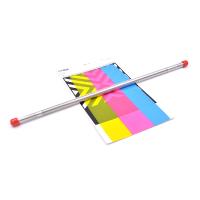
Should the coating bar be wired or formed?
1. What is a coating rod?
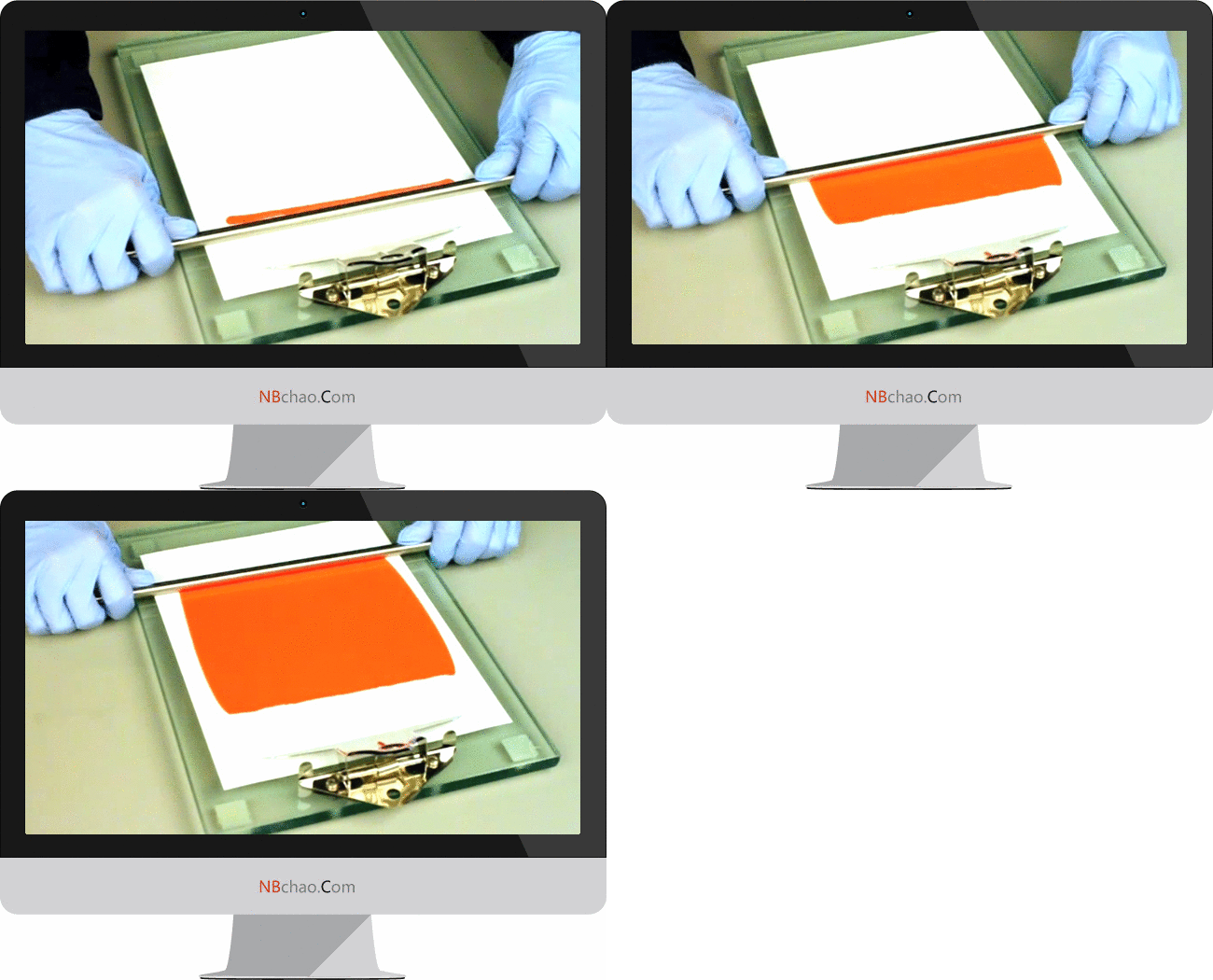
Mayer-Bar is one of the three mainstream coating methods in the world, and it is widely used by experimenters to prepare precise film layers. At present, in the Chinese market, there are more than ten brands of imported and domestic Myler rods. The more representative brands are the RDS wire-wound coating rods produced by the American RDS company, and the OSP extrusion coating rods produced by the Japanese OSG company. Cloth stick. In terms of sales in the Chinese market, RDS has been well-received for its craftsmanship and precision since it was introduced to CHINA for more than 30 years, so sales have been good. Today, with the help of this product, the editor will take you to talk about whether it is better to buy the extrusion type or the wire winding type. Of course, don't say I'm a headline party before that, the final conclusion is indeed: comma! No, typo! It is "all good"!
2. American RDS coating rod
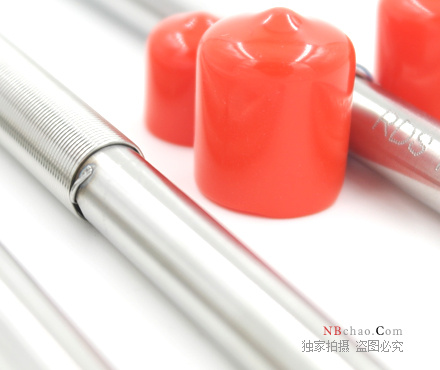
RDS in the United States was established in 1936. RDS coating rods have been introduced to CHINA for more than 30 years, and have been successfully used in more than 50 subdivided industries in CHINA. Relevant users, researchers and scholars have published dozens of papers on academic platforms. The RDS coating stick is adopted. Word of mouth is beyond doubt.
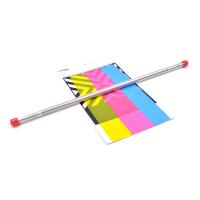
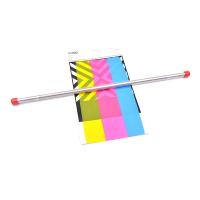
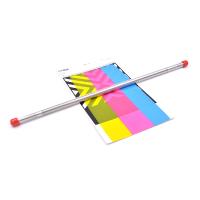
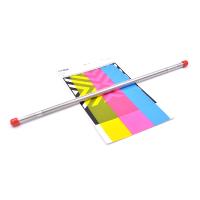
The overall appearance of the RDS coating rod is very delicate. Taking the wire-wound type as an example, the minimum winding diameter is only 0.08mm, which is similar to that of a hair. At present, such a small process of wire-wound coating rods cannot be produced in CHINA. This is from the industry. The entire product parameter system can be seen.
RDS coating rods have three different specifications according to the diameter of the main rod, which are 1/4 inch, 3/8 inch and 1/2 inch. At the same time, in addition to the wire winding process, RDS provides 1/4 inch diameter Extrusion (die-casting) process coating stick, customers can have more choices.
In terms of application, RDS coating rods are widely used. Coating rods, as standard coating rods for ultra-thin coating preparation, are widely used in many subdivided industries. It is especially widely used in coatings, paints, varnish inks, varnishes, pigment pastes, plastic films, packaging and printing, color steel plates, hardware and other industries as well as scientific research institutions.
In comparison, RDS coating rods have greater advantages over most wire-wound coating rods in terms of coating uniformity, precision, durability, and craftsmanship. In terms of technical defects, the American RDS coating rod is undoubtedly a good choice.
So, here comes the question, should I choose the extrusion type or the wire winding type?
3. Advantages and disadvantages of extrusion coating rod and wire winding coating rod
General users may ask another question besides the preparation requirements: is the wire-wound type or the extruded type better? Objectively speaking, any manufacturer's products cannot be reviewed comprehensively, accurately, and without any interest purpose. Through experiments, we found that it can be replaced in terms of leveling, precision, and preparation of a complete film layer .
From a technical point of view, the advantage of the extruded coating rod is that there is no possibility of broken wires, and it is easier to clean. The advantage of the wire-wound type is that it more strictly follows the mayer-bar test principle. The principle of forming grooves is different between the wire winding type and the extrusion type. During the experiment, the actual coating amount used may be different. Therefore, it is recommended that customers follow the type used in the past when choosing a wire-wound or extruded coating rod, so as to ensure the consistency of the experiment.
It is undeniable that there is no possibility of broken wires in the extruded type, which is advertised by most extruded type manufacturers, but objectively speaking, according to the data disclosed by the North and South Tide Mall, the RDS winding wire is due to various reasons (whether it is You broke it on purpose, or used it improperly) The possibility of breaking the wire is 2/1000 , which is awesome. We might as well make an assumption that everyone will buy electronic products (which have not yet reached the testing level), such as mobile phones. You buy 1,000 mobile phones and suddenly find that 2 of them cannot be returned or exchanged. Do you think it is normal? Therefore, whether it is wire winding or extrusion, whatever the customer used before, you can use whatever you want in the future. As for the advantage of easy cleaning of the extrusion type, it is indeed an advantage. However, another data disclosed by NBCHAO may allow us to judge more objectively: the average replacement cycle for customers using coating rods is 6.7 months , that is to say, most industry customers use coating rods (regardless of domestic, imported, wire wrapping or extrusion), and are replaced almost every six months. According to my experience, this is mainly caused by abrasion. Whether the cleaning is clean depends on the different cleaning methods used by the experimenter and different scraping fluids. Abrasion is the main factor that prevents you from accurately preparing wet films.
Everyone may wish to imagine that a steel wire as big as a hair, you grind it on a flat plate 100 times a day, nearly 2w times in half a year, you don’t know the reason why the iron pestle is ground into a needle, right? In this way, how much is the advantage of extrusion?
Also, what are the disadvantages of squeeze? Mayer's film production is based on the flatness of the substrate, and the linearity of the wire rod also needs to be guaranteed for the same reason. In this regard, the advantage of wire-wound rods is much greater than that of extrusion. The reason is that if the wire-wound is bent due to various reasons, the steel wire will be strained, deformed or even broken. You can easily tell if a wire rod is bent. But extrusion is not enough. Even if you bend it by 1°, you can’t see it with the naked eye, but the thickness of the film is very different.
4. Conclusion
To sum up, the fundamental reason for choosing extrusion or wire winding is not their advantages, but to return to the essence: what is your purpose of coating? Want a full film? Still want an accurate membrane? Or both, accuracy and flatness are the fundamentals. Imported products use more materials and higher precision. On the contrary, if it is just to make a film layer with low requirements, then it is better to choose domestic products. Yes, the price is doubled.
- 13 minutes to let you know several Spreader methods
- 2Why Do Film Applicators Need to Change Their Wires Regularly?
- 3Mayer-Rod (Mayer Rods) Preparative 2D Copper Nanosheets
- 4The overlooked role of Mayer Rods in laboratory wet-film preparation
- 5Advantages and Categories of Mayer Rods in Spreader wet-film prepative
- 6Mayer Rods: The right-hand man for hiding power tests
- 7Different types of coating rods
- 8How to effectively monitor and extend the service life of coating rods
- 9Application of coating rods on Direct Thermal Label Stock