How to measure the viscosity of epoxy Floor coatings?
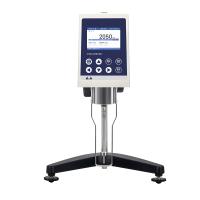
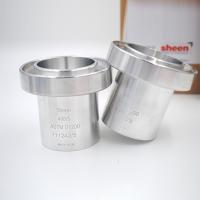
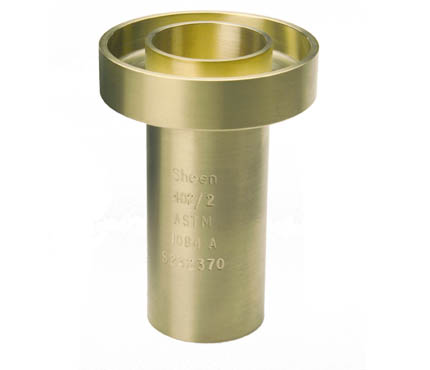
Common epoxy floor coating viscosity testing equipment includes cup viscometers (such as Ford cups) and rotary viscometers. The basic method of using the cup viscometer is to block the leak of the viscometer with your fingers first, fill the viscometer with epoxy floor paint, and use a glass rod or glass plate to scrape the excess epoxy floor paint sample with air bubbles into the viscometer. Measure the groove, quickly remove the finger, and start the stopwatch at the same time, and stop the stopwatch immediately when the flow of the epoxy floor coating sample is just interrupted. The stopwatch reading is the outflow time (s) of the sample, which can be converted into a viscosity value using the conversion table attached to the viscometer.

Based on the above factors, the cup viscometer can only obtain relatively approximate viscosity data. If the epoxy floor coating sample is a non-Newtonian fluid, the change in the shear rate will inevitably bring about a continuous and obvious change in the viscosity during the test. Therefore, the viscosity value measured by the cup viscometer is defined as the kinematic viscosity value. Dynamic viscosity, also known as absolute viscosity, introduces two parameters of shear rate and time into the measurement of viscosity, which can make corresponding measurements on the viscosity changes of non-Newtonian fluids. Rotary viscometer is a viscometer for testing dynamic viscosity. It is mainly divided into paddle type, cone-plate type (the rotor is a rotating cone, and the stator is a fixed plate) and concentric cylinder type (the rotor is a stainless steel rotating inner cylinder, and the stator is fixed on the rotor. Outer coaxial stainless steel outer cylinder) and other types. The epoxy floor coating sample to be tested is located between the stator and the rotor. Under the rotation of the rotor at a set speed, the sample is driven to rotate, and the dynamic viscosity can be measured by the resistance of the sheared liquid, using a rotary viscometer R&D personnel can obtain three extremely important experimental curves.
Although the cup viscometer is very convenient to use, it also has its limitations, because it can neither obtain the data of the shear rate nor control the change of the shear rate. In addition, with the increase of the liquid level of the epoxy floor coating sample during the test As the shear rate decreases gradually, the shear rate will also change due to the change of the static hydraulic pressure.
Viscosity curve as a function of time at a constant shear rate, viscosity curve as a function of shear rate and shear rate as a function of shear stress. "

- 1Rotational viscometer - principle, classification, application and calibrating
- 2Application of NDJ-8S digital Rotational Viscometer in viscosity measurement of cosmetic raw materials
- 3NDJ-5S digital Rotational Viscometer accurate measurement of natural oil viscosity
- 4Application of HBDV-1H swirl/spin High Temperature Viscometer in Viscosity Determination of Plastic Particles
- 5Rotational viscometer selection guide: How to choose the right viscosity equipment for you?
- 6Principle, type and accuracy control of Rotational Viscometer
- 7Which Viscometer to Choose for Licorice Extract Viscosity Testing? How to Test?
- 8Application of Rotational viscometer in Waterborne Polyurethane Adhesive
- 9Application of Rotational Viscometer in cellulose material