Preparation and Application of Liquid Marble Coatings
In recent years, with the vigorous development of the real estate industry, marble, granite and ceramic tiles in the interior and exterior wall decoration materials of buildings have been favored by various developers and owners for their solemn texture, durable quality and various colors. However, the disadvantages of these materials are also obvious: one is expensive, the other is complicated construction, the third is difficult to combine with thermal insulation materials, the fourth is large space occupation, and the fifth is low safety factor. At the same time, the mining of marble occupies mine resources, and the firing of ceramic tiles occupies land resources. Various unfavorable factors restrict the wide application of marble and ceramic tile materials, and limit the further market expansion of such materials. Whether to choose new materials, apply new technologies and new processes, and develop alternative products with the same effect as marble and ceramic tiles has become a new topic for people in the industry. During this period, products such as real stone paint and rock flake paint were expected by the market, but they were finally abandoned by the market due to their poor color stability, poor stain resistance, and low degree of simulation. As a result, water-based environment-friendly liquid imitation stone coatings emerged at the historic moment.
1 Experimental part
1.1 Main raw materials
Protective rubber powder, silicone acrylic emulsion, pigments and fillers, additives.
1.2 Test equipment
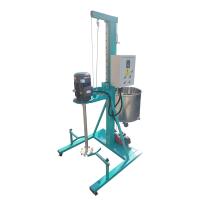
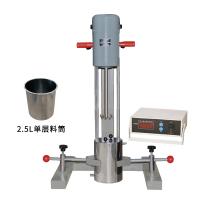
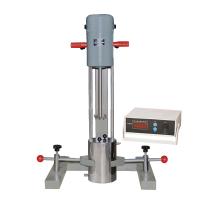
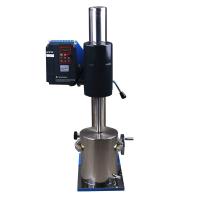
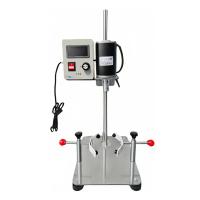
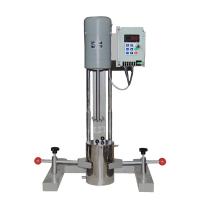
High-speed dispersing machine, self-made paddle-type dispersing disc, electronic scale, special Spray Gun for liquid imitation marble paint.
1.3 Preparation of liquid imitation marble coating
1.3.1 Production process
Production process: preparation of preparations→preparation of base paint→color mixing→granulation→configuration of finished paint→measurement and packaging.
1.3.2 Configuration of prepolymer
The protective rubber powder is added to water according to a certain ratio to prepare a colloidal aqueous solution for later use.
1.3.3 Preparation of base paint
1) Basic paint formula
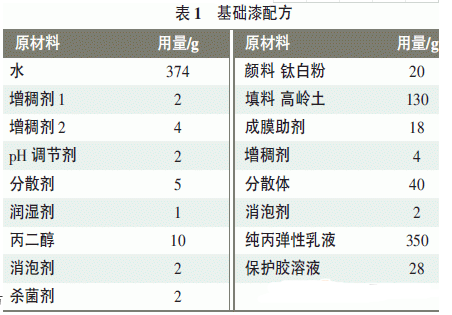
The base paint formula is listed in Table 1.
2) Preparation process
Select the various raw and auxiliary materials used; add water, thickener, pH regulator, dispersant, wetting agent, propylene glycol, defoamer, bactericide, titanium dioxide, Put the kaolin into the dispersing tank and disperse at high speed to a fineness of about 35 μm; reduce the speed and add the subsequent ingredients one by one, stir well and set aside.
1.3.4 Toning
Compared with the granite sample, use the base paint and commonly used water-based color paste to adjust the required colors; use the base paint and water-based color paste to adjust the best paint.
1.3.5 Granulation process
The size of the granulation is adjusted according to the customer's requirements, and the rotation speed is reasonably used. The rotation speed of the large particles is slow, and the rotation speed of the small particles is high; the size of the particle size can also be controlled by the aperture size of the screen; according to different customer requirements, it can be divided into monochrome granulation and multi-color granulation. Color granulation. Add the color paint to the protective colloid (the mass ratio of the protective colloid solution to the wetting agent is 100:0.5) in sequence according to the prescribed quantity of the formula for granulation.
1.3.6 Preparation of finished paint
1) Preparation of dispersion medium
The dispersion medium formula is listed in Table 2.
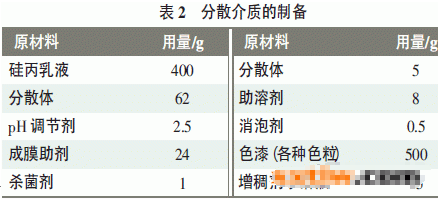
The preparation process of the dispersion medium: add the emulsion and additives sequentially according to the order of the formula (), and adjust the pH to 8.5 ~ 9.5 after the dispersion is uniform at a slow speed.
2) Finished paint
According to the mass ratio of 1:1, pour the dispersion medium and paint into the mixing tank with a paddle type dispersion disc, add the thickener drop by drop, adjust the viscosity to 65 ~ 70 KU, and ensure that the particles do not settle. Carry out product testing in accordance with relevant standards, measure and pack according to customer requirements and product requirements.
2 Application of liquid imitation marble coating
Many applications of this new type of liquid imitation stone coating in interior and exterior wall coatings cannot be replaced by ceramic tiles, granite, and marble. For example, the paint can be easily painted on irregular surfaces, which can greatly save space for interior wall tiling, and is also very convenient for painting on rough surfaces.
3 Conclusion
The preparation of liquid imitation marble paint adopts the technology of coating granules with colored particles, and incompatible molecular colloid copolymer particles are incorporated into the paint at the same time; the silicone acrylic resin system is used to make the paint have strong chemical stability, so it has excellent UV resistance and long-lasting weather resistance. The paint is a pure water-based formula, which effectively solves the "oil-in-water" practice of traditional colorful paints. It has extremely low VOC content, meets environmental protection requirements, and produces no pollution during construction. Only a single spraying can achieve the colorful stone effect of granite. The construction is simple and fast, which overcomes the construction workability and low simulation of conventional granite real stone paint that cannot be sprayed with multiple colors and multiple times, and greatly reduces the uncontrollable risk of granite paint construction. , is currently the most satisfactory decorative material for the integrated system of external wall thermal insulation.
- 1Application and classification of lame plating technology
- 2Briefly describe the difference between High Speed Disperser and Homogenizer
- 3Several Common Coating Dispersers
- 4High Speed Disperser shear force formula
- 5Difference Between High Speed Disperser Single and Double Axis
- 6What should I do if the High Speed Disperser cannot slow down?
- 7How much hydraulic oil is added to the High Speed Disperser?
- 8What is the reason why the High Speed Disperser can only go up but not down?
- 9How to change the sealing pad for High Speed Disperser?