Development of High Strength Polyurethane Waterproof Coatings for Railway
0 Preface
Due to its excellent physical and chemical properties, polyurethane materials meet the requirements of high-speed railway materials. Based on polyurethane, products that can be made include foam plastics, elastomers, coatings, adhesives, etc. , potting and other aspects have a wide range of applications.
With the rapid development of high-speed railways in recent years, polyurethane waterproof coatings are more and more widely used in high-speed railway engineering projects. The "Technical Conditions for Waterproof Layers of Railway Concrete Bridge Deck" strictly stipulates the tensile strength of polyurethane waterproof coatings directly used as waterproof layers. Strength ≥ 6.0MPa, elongation at break ≥ 450%. Based on the requirements of this standard, this paper discusses the influence of polyether, isocyanate, crosslinking agent and additives in polyurethane coatings on polyurethane waterproof coatings, and prepares a high-strength polyurethane waterproof coating that meets the requirements of the standard.
1. Test part
1.1 Raw materials
Polyether polyol (DL-1000D, DL-2000D, EP-330NG): Industrial grade, Shandong Bluestar Dongda Chemical Co., Ltd.; Toluene diisocyanate (TDI): Industrial grade, Bayer MaterialScience (CHINA) Co., Ltd.; Chlorinated paraffin (52#): industrial grade, Nanjing Rongji Chemical Co., Ltd.; calcined talcum powder (1250 mesh): industrial product, Yangshan County Huaxing Fine Powder Factory; dibutyl phthalate (DBP): industrial product , Guangzhou Zhuangda Chemical Co., Ltd.; 3,3'-dichloro-4,4'-diaminodiphenylmethane (MOCA): industrial product, Xiangyuan Special Fine Chemical Co., Ltd.; stannous octoate (T-9 ): Industrial grade, Shanghai Yutian Chemical Co., Ltd.; Anti-aging agent BHT264: Industrial grade, German YOUNGING (Yangying) Group.
1.2 Basic formula
The basic formula of A and B components.
1.3 Preparation process
Component A: Add polyether DL-1000D, DL-2000D, EP-330NG into a four-necked flask in a certain proportion, raise the temperature to 110°C and keep the pressure below -0.085MPa for dehydration for 2 hours, cool down to 80°C, add TDI to react 3h, cooling down and discharging.
Component B: Disperse chlorinated paraffin, DBP, EP-330NG, MOCA, talcum powder, etc. in a certain proportion, add them into a four-necked flask, heat up to 110°C for 2 hours, cool down to 50°C, add T-12, BHT264 can be discharged after stirring evenly.
1.4 Main Instruments
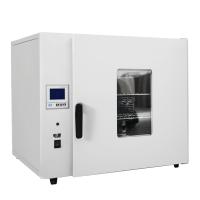
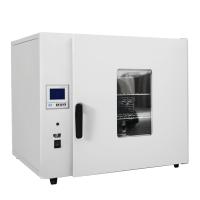
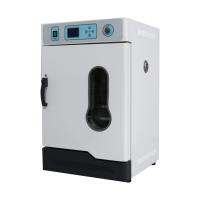
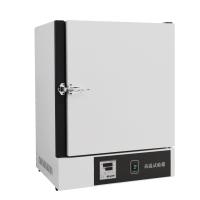
Electric Forced Air Drying Oven: DHG-9070, Shanghai Pudong Rongfeng Scientific Instrument Co., Ltd.; low temperature test box: DX-40, Tianjin Gangyuan Test Instrument Factory; standard curing box: JBY-30B, Cangzhou Keda Luqiao Test Instrument Factory; Electronic multifunctional Tensile Testing Machine: WDW-5 type, Guangzhou Aojin Industrial Automation System Co., Ltd.
1.5 Performance test
Mix components A and B at a mass ratio of 1:1 and stir for 3-5 minutes to form a film, then maintain and test under standard test conditions (temperature (23±2)°C, relative humidity (60±15)%).
Performance test The physical performance test is carried out according to TB/T2965-2011 "Technical Conditions for Waterproof Layer of Railway Concrete Bridge Deck".
2. Results and discussion
2.1 Main performance test results of coatings
Synthesize high-strength polyurethane waterproof coating according to the basic formula of components A and B above, and conduct physical property tests according to TB/T2965-2011.
The test results in Table 2 show that the physical performance indicators of the paint all meet the standard requirements, and the performance is good.
2.2 Effect of NCO content on coating properties
The formula of component B was fixed, and components A with different NCO contents were prepared, mixed with component B at a mass ratio of 1:1 to form a film, and its strength and elongation were tested.
It can be seen from Table 3 that when the NCO content increases, the rigid segment in material A increases, the polar groups increase, and it is easy to form hydrogen bonds. The crosslinking density after coating increases, the sample is harder, and the tensile strength is relatively large. However, the increase of the rigid segment limits the movement of the molecular chain during the stretching process, which reduces the elongation after coating. In order to make the comprehensive performance of the coating outstanding, the NCO content of component A in the test should be controlled at 8.0%~8.5%.
2.3 Effect of polyether polyol on coating properties
Under the condition that the substance ratio of polyether diol DL-1000D and DL-2000D is constant, the substance ratio of different diols and triols is used to synthesize material A, keeping the NCO content in the prepolymer unchanged, The effect of the molar ratio of the two polyethers on the properties of the coating film.
It can be seen that with the increase of the molar ratio of the substances, the strength of the coating film decreases and the elongation at break increases. The reason is that the polyether diol is mainly straight chain, which mainly improves the elongation performance. When the polyether triol reacts with TDI, it acts as a crosslinker, which mainly increases the strength of the coating film. Therefore, when the formula is optimized, the mass ratio of n (dihydric alcohol)/n (trihydric alcohol) is controlled at 14~15, and the coating film performance of the prepared coating is good.
2.4 Influence of Curing Agent MOCA Content in Component B on Coating Properties
MOCA can be used as a chain extender and curing agent in the production of polyurethane and polyurea products. The B component prepared with different MOCA content and the A component with 8.0% NCO content were formed into films at a ratio of 1:1, and the coating film properties of the coating were measured.
It can be seen that with the increase of MOCA content, the reaction is accelerated, the surface dry time is shortened, the tensile strength is increased, and the elongation at break increases first and then decreases. The reason is that the modified MOCA crosslinking agent contains 4 active hydrogen atoms, high activity, high crosslinking density after reaction, and the benzene ring is a rigid segment. As the amount increases, the rigid segment increases and the strength increases. The elongation at break increases to a certain extent and then begins to decrease. As a formula optimization, the MOCA content should be controlled at 12%~14%, and the prepared coating has excellent film performance.
2.5 Effect of Antioxidant Content in Component B on Thermal Aging Properties of Coatings
After the polyurethane waterproof coating is formed into a film, under the action of light and heat, some straight chains and groups in the molecule will decompose and break, resulting in a decrease in the performance of the coating film. Adding a certain amount of antioxidants into the formula can effectively slow down the aging process of properties. At present, the commonly used antioxidants in polyurethane coatings are hindered phenols. The effect of the content of antioxidant BHT264 in component B on the heat treatment performance of coatings.
It can be seen that with the increase of the antioxidant content, the heat treatment strength retention rate and heat treatment elongation of the coating film increase, which greatly improves the heat resistance of the polyurethane coating film. When the content of the antioxidant increases to 2.0%, the heat treatment performance changes Not too much, as a preferred formula, BHT264 should be controlled at 1.5%~2.0%.
- 1Tensile machine application in various industries
- 2Technical analysis of key parameters of Tensile machine: Scientific selection from force measurement accuracy to Power system
- 3Tensile machine purchasing guide [dry version]
- 4Talking about the performance test of epoxy resin film coated on PET
- 5Principle, application and selection of vertical Electric Forced Air Drying Oven
- 6Principle, application and selection of electric heating air Drying Oven
- 7Working principle and application analysis of pointer Electric Forced Air Drying Oven
- 8Principle, characteristics and application of laboratory Electric Forced Air Drying Oven
- 9High temperature blast Drying Oven FAQ and its solution


