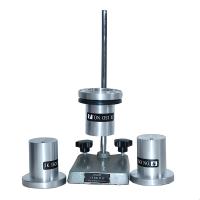
Coating viscosity determination
The viscosity of liquid coatings refers to the ability of their intermolecular interactions to hinder the relative movement of their molecules, and measures the resistance of liquid flow. For coating production control, its relative viscosity and conditional brightness are generally measured.
Relative viscosity is the ratio of the absolute viscosity of the liquid to the absolute viscosity of the standard liquid under the same conditions.
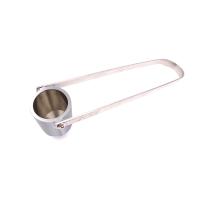
Conditional viscosity refers to the time, in seconds, for a certain amount of paint to flow out of a hole of a specified diameter at a certain temperature. This is true of both GB/T 1723-93 and GB/T6753.4-86. The former is a process event that currently uses fixed coatings no greater than 150s. The latter regulations apply only to irregular fluids.
In both standards, the flow time measured by DC can be converted into kinematic viscosity value, mm ²/s.
With T-4 cup, the conversion formula is as follows:
t=0.223v+6.0(23s≤t≤150s)
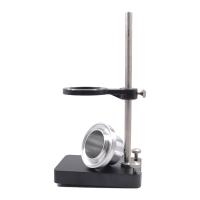
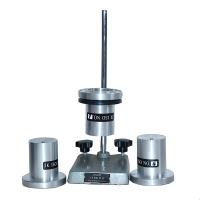
With ISO Flow Cup (there are 3 kinds), there are correction curves in the standard to convert into kinematic viscosity.
GB1749 and ASTM D562 two standard test methods for determining the consistency of coatings. Regarding the consistency of coatings, it can be said that it is another concept that expresses the viscosity of coatings. But it is for coatings that have become semi-cured state. Such as putty. The national standard stipulates that: take a quantitative volume sample, and after a certain event under a fixed pressure, it is expressed by the diameter of the sample's spread diffusion.


- 1Difference between relative viscosity and absolute viscosity
- 2Rotary ink viscosity measurement
- 3Definitions of four different viscosities
- 4The difference between different viscosity cup viscosity
- 5Differences in Viscosity of Different Standard Flow Cups
刘登良 - 《《涂料工艺》》
- 6Determination of paint viscosity
- 7Coating viscosity determination method and related standards
- 8Detailed introduction of various Flow Cups
- 9How is Architectural coatings Viscosity measured?