How to replace the reagent of the microMoisture Meter
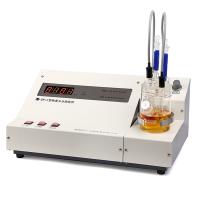
When the electrolyte cannot be used when using the trace moisture analyzer, the reagent of the trace moisture analyzer needs to be replaced. How to better operate and replace the reagent of the trace moisture analyzer? Next, Jilin Haimai Technology will introduce to you how to replace the reagents of the trace moisture analyzer
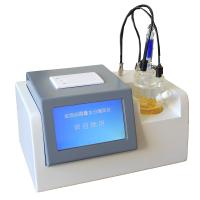
1. Prepare a clean filter paper, remove the two drying tubes of the electrolytic cell and put them on the filter paper; take out the electrolytic electrode, pour out the electrolyte in the cathode chamber (electrolytic electrode), and then put the anode chamber (electrolytic cell bottle ) of the electrolyte slowly poured out (be careful not to pour out the stirring bar).
2. Under normal circumstances, it is not necessary to clean the electrolytic cell. After being polluted, it needs to be cleaned according to (3) strict operation.
3. Cleaning: The electrolytic cell bottle, drying tube, sealing plug, and measuring electrode can be cleaned with anhydrous methanol and other anhydrous solvents, and can also be cleaned with water if necessary; the cathode chamber (electrolysis electrode) should not be cleaned with water as much as possible. , Be sure to dry effectively. After cleaning, put it in an oven at about 60 degrees Celsius for 4 hours, and then cool it naturally in the oven. Note: When cleaning, the two plugs, wires and rubber caps should not touch the cleaning solution.
4. Apply a layer of vacuum grease evenly on the grinding mouth of the measuring electrode, two drying tubes, the sampling cock, and the sealing port, and install it on the corresponding position, and turn it slightly to make it better sealed. Use a funnel to inject about 100-120 ml of electrolyte solution into the cathode and anode chambers of the Moisture Meter respectively, so that the liquid levels in the cathode and anode chambers are consistent, and the liquid level is only as high as the scale line under the electrolytic cell, then seal the plug and dry it. After the tube is installed, turn it slightly to make it better sealed.
5. Insert the measuring electrode plug of the electrolytic cell into the measuring socket of the host, and insert the electrolytic electrode plug into the electrolytic socket of the host. Shake the pool a few times, turn on the electrolysis and stirring keys, if it is in the iodine state at this time, use a 50μ1 sampler to draw an appropriate amount of pure water into the electrolytic cell (the needle should be inserted into the liquid surface), and observe the color of the electrolyte at any time until it starts count. Turn off the stirring, shake the electrolytic cell evenly, so that the moisture in the air in the electrolytic cell and the electrolyte fully react, and then turn on the stirring, so that the instrument reaches the end point again, and then the sample injection test can be carried out.
6. The preserved color of the electrolyte is brownish red or brownish black. The color is light yellow in normal use.
7. Failure of the electrolyte: two of the following three conditions may fail. (1), the electrolyte has been used for more than one month; (2), the color of the electrolyte becomes darker (in a non-iodized state); (3), it is difficult to reach the end of the electrolysis process [according to step 5, shake the electrolytic cell repeatedly and evenly After several times].
8. When it is difficult to reach the end point during use due to high ambient humidity, hot air, frequent sample preparation, air leakage from the silica gel pad at the injection port, or insoluble solid samples, press (5) to shake the electrolytic cell evenly.
9. Note: Be careful when changing reagents. Do not inhale or touch the reagents with your hands. If you come into contact with the reagents, rinse them off with water. Because the reagent has a strong smell and contains toxic ingredients, the laboratory should be well ventilated.


- 1JLHM-207 Automatic Trace Moisture Meter Manual
- 2Analysis of the use method of trace Moisture Meter
- 3Moisture meter common faults
- 4How to compare the true cost performance of trace Moisture Meters
- 5Introduction to the related problems of the trace moisture determination test
- 6Moisture meter electrolysis solution how to replace
- 7Technical characteristics of micro Moisture meter
- 8How often is it appropriate to maintain the trace Moisture Meter?
- 9Influence Factors of Temperature on Trace Moisture Meter