Choice of Spreader Method: Several Important Influencing Factors
To choose a coating method, you must first understand the factors affecting coating, including the number of layers coated, wet coating thickness, viscosity (viscoelasticity), required coating accuracy, coating support or web, coating speed.

1. Coating layers
Most coating methods apply one layer at a time. To apply several layers means to apply multiple coats, or to pass through multiple coating points at once, that is, to apply another layer after one layer is dry. There are three coating techniques that can coat more than one layer at a time: (1) slot or extrusion coating head usually has only one slot, but can also have more than two slots: (2) slide coating, wide Apply thousands of color film coatings, they usually have at least 9 layers, and the number of layers that can be designed to be coated is almost unlimited; (3) Curtain coating, the coating head is a slide coating head, which flows coating, this method is also coated with ten layers of color film.
2. Coating wet thickness
Coating wet thickness constitutes a major factor in determining the coating method. Thin layers are more difficult to coat, but some methods such as gravure coating cannot coat thick layers. The properties of the product depend on the dry coating thickness. The dry thickness is not the same as the coating method, only the wet thickness and the properties of the wet coating are important in coating. This important property can be altered with concentrated or diluted coating solutions.
3. Viscosity (viscoelasticity)
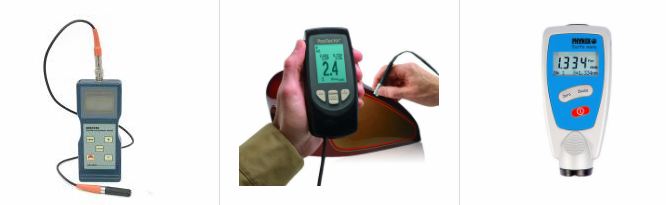
The rheological properties of the coating fluid are an important variable. The term rheology encompasses viscosity (including viscosity as a function of shear rate) and viscoelasticity. As explained in the Pre-Metering·Chapter, the viscosity of all prolate solutions is related to the shear rate. Although this fact explains the importance of understanding the shear rate versus viscosity at which the coating fluid is subjected, we usually only know one viscosity because the instruments for measuring viscosity as a function of shear rate are relatively expensive. In addition, the shear rate of the fluid during the coating process is usually not fully known, and even good estimates are rough. Finally, the shear rate required in coating is often very high, and general industrial instruments cannot measure the viscosity in this range.
The viscoelasticity of a fluid is also important, but we don't know much about it than the shear-thinning properties of polymers. Large and low-concentration properties) are even less understood, since viscoelasticity is difficult to measure, and even more difficult to describe and model. We know that all polymer solutions exhibit viscoelasticity within a certain range of shear rate or stretch rate. A little viscoelasticity in the fluid can help improve some coating runs, but too much viscoelasticity can cause coating ills such as vertical streaks.
4. Accuracy of coating amount
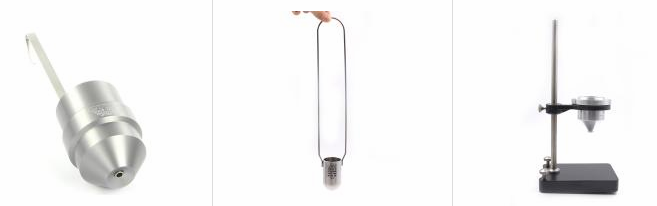
If it is not necessary to control the coating accuracy, we can use almost any coating force method. However, some coating force methods provide better coating control than others. Gravure coating, precision slit coating, slope flow coating, and curtain coating can be used to achieve the accuracy of coating amount of ± 2% of the required covering rate. This accuracy can also be achieved with reverse roll coating using sticky rolls and air bearings. Other coating methods have poorer precision control.
Any coating method can have a wide range of control, depending on the structure and operation of the coating device. If the system is optimized very carefully, good results can be obtained: sloppy operation will result in poor results.

Predetermined coatings, such as slot, slide, and curtain coating, are well controlled because all incoming fluid is applied to the web at the desired coating width. Most of the others use the method of coating, and the amount of coating depends on the nature of the fluid, the geometry of the roller and the speed of rotation.
5. Coating support
The nature of the coated support is a factor that is strictly considered when selecting the coating force method, and it will affect the properties of the coating after the domain. The support can be either impermeable (so the coating solution remains a complete layer on the support) or permeable (so the coating solution penetrates the support and affects the uniformity of the coating solution left behind) . Usually, a uniform final coating can be obtained by closing the pores of the porous support. The wetting properties of the surface must also be considered. The smoothness or roughness of the texture. Coating liquids with high surface tension cannot be coated on supports with low surface tension.
These factors, plus, - the nature of the desired final coating contribute to the choice of application method C. This method will give a smooth surface, but will not be able to coat the desired rough surface with uniform flakes. coating. There are ways to help the fluid penetrate and penetrate the web, but this effect may or may not be desirable.
6. Coating speed
The required coating speed is also one of the most important factors in choosing a coating method. Some coating parties think that they limit the coating speed within a certain range. While most methods can coat at low speeds, and all methods have a high-speed limit, some methods are better at high speeds. Curtain coating requires a minimum flow to maintain the curtain itself. This area we require coating thin} clouds, which limits the higher coating speed. In multilayer slide coating, when the coating is very thin, interface instability will occur. Higher vehicle speeds, higher flow rates, and thicker coatings help avoid interface instability. Air is easily displaced by coating fluid during the coating process with porous or rough substrates. It can therefore be coated at higher vehicle speeds than on smooth, non-porous substrates.
7. Other factors
Other factors also play a role in determining the application method, including
.Coating Dry Thickness
.solvent system
.Response of Viscosity to Temperature
.Selected coating temperature
.Adhesive system
.solid content
.surface treatment
However, these factors are often of little importance. For example, the solvent system has a greater impact on drying than the choice of coating method, while the volatility of the solvent and the components and flammable components affect the closed structure around the applicator.
8. Dry
All applicators have dryers after the applicators, so the coating is dry and usable at the end of the process. Therefore, the characteristics of the dryer become particularly important. A short drier with a low rate of solvent removal will limit the coating process, while a higher rate of solvent removal will broaden the range of coating techniques used.
- 1Application of Mayer Rods in protective coating prepative
- 2Application of Mayer Rods in 2D Single Crystal Copper Nanosheet Films
- 33 minutes to let you know several Spreader methods
- 4Application of Mayer Rods in composite coating prepative
- 5Several Common Experimental Spreader Methods and Their Applications
- 6Application of Mayer Rods in Water-based ink Moulding
- 7Technical method and application of preparing nanometer silver wire thin films with Mayer Rods
- 8The experimental case of OSP Mayer Rods at inks Moulding [with video]
- 9Why Do Film Applicators Need to Change Their Wires Regularly?