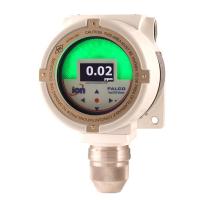
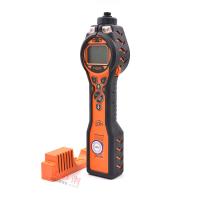
Principle and classification of TVOC gas
The Chinese name of TVOC is: Total Volatile Organic Compounds (TVOC). Adhesives and various artificial materials, etc.
TVOC can smell and smell, exhibit toxicity, irritation, and some compounds are genotoxic. TVOC can cause imbalance of the body's immune level, affect the function of the central nervous system, and cause dizziness, headache, drowsiness, weakness, chest tightness and other subjective symptoms. It may also affect the digestive system, such as loss of appetite and nausea. Methane, naphthalene, diisocyanate hematopoietic system, allergic reactions, etc. In home decoration, it is necessary to consider the amount of TVOC contained in raw materials to prevent harm to the human body!
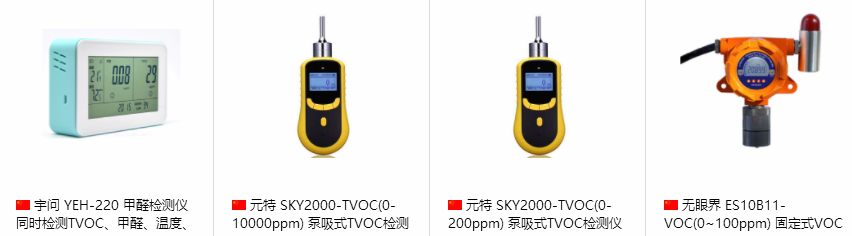
TVOC is one of the three kinds of pollution (physical pollution [such as dust], chemical pollution [voc], biological pollution [such as mold]) that affects indoor air quality more seriously. TVOC refers to the organic matter whose saturated vapor pressure exceeds 133.32pa at room temperature. Its boiling point is between 50°C and 250°C. Harmful, affects skin and mucous membranes, causing acute damage to humans. The World Health Organization (WHO), the National Academy of Sciences/National Research Council (NAS/NRC) and other institutions have always emphasized that TVOC is an important class of air pollutants. The U.S. Environmental Agency (EPA) defines VOC as: carbon-containing compounds other than carbon dioxide, carbonic acid, metal carbides, carbonates, and ammonium carbonate that participate in photochemical reactions in the atmosphere.
TVOC classification: alkanes, aromatics, alkenes, halocarbons, esters, aldehydes, ketones and others.
The main components of TVOC: hydrocarbons, halogenated hydrocarbons, oxygen hydrocarbons and nitrogen hydrocarbons, including: benzene series, organic chlorides, Freon series, organic ketones, amines, alcohols, ethers, esters, acids and petroleum Jing compounds, etc. .
Sources of TVOC: The main source of TVOC is outdoors, mainly from fuel combustion and transportation: indoors, it mainly comes from combustion products such as coal and natural gas, smoke from smoking, heating and cooking, construction and decoration materials, furniture, household Emissions from electrical appliances, cleaning agents and the human body itself, etc. There are nearly a thousand kinds. In the process of interior decoration, VOC mainly comes from paints, coatings and adhesives. According to reports, the indoor TVOC concentration is usually between 0.2mg/m3 and 2mg/m3, and it can even be dozens of times higher in improper decoration construction. A variety of indoor aromatic hydrocarbons and alkanes mainly come from automobile exhaust (76%-92%). Generally, the TVOC content of paint towels is 0.4-1.0mg/m3. Wan Lili and others pointed out that due to the strong volatility of TVOC, under normal circumstances, 90% of the TVOC can be volatilized within 10 hours after the paint is applied, while the TVOC in the solvent only releases 25% of the total amount during the paint drying process.
Since benzene and benzene series are important components of TVOC, some people only detect TVOC, but not benzene, and benzene series: However, there are also only detection of total benzene, but not TVOC: there are also some units that use both detection. It mainly depends on requirements and conditions. The technical equipment requirements for detecting TVOC are relatively high, and gas chromatography is usually used, but Fourier transform infrared spectroscopy, fluorescence spectroscopy, ion chromatography and reflection interference spectroscopy are also used. They all occur in minute and trace levels, so are easy to miss. They mainly come from: organic solutions: such as paints, aqueous coatings, adhesives, cosmetics, detergents, caulk; building materials: such as wood-based panels, foam insulation materials, plastic sheets; interior decoration materials: such as wallpaper, others Decorations, etc.; fiber materials: such as carpets, tapestries and chemical fiber curtains; incomplete combustion of household fuel and tobacco leaves, human excrement.