Why detect oxygen concentration? What should I pay attention to when using an oxygen Detector?
Oxygen and its detection
The normal human body only needs a certain concentration of oxygen, and the concentration of oxygen is too high or too low to be harmful to humans. Too low a partial pressure of oxygen can lead to hypoxia, and too high a partial pressure of oxygen can cause oxygen toxicity. GB 8985-88 "Safety Regulations for Oxygen Hazardous Operations" defines a state where the volume fraction of oxygen in the air is lower than 18% is hypoxia. Hypoxic accidents often occur in limited spaces. The so-called limited space refers to the space where a small number of openings are determined for entry and exit during design. Due to poor natural ventilation, dangerous air pollutants , so that personnel cannot continue to work. Due to the different conditions in the confined space , the causes of hypoxia are also different. The causes of hypoxia can basically be divided into two categories, one is the consumption of oxygen in the air; the other is the replacement of air by other gases. In an oxygen-deficient environment, in order to maintain sufficient oxygen intake, the human body breathes faster to increase ventilation. At normal pressure , when the concentration of oxygen exceeds 40%, the possibility of oxygen poisoning will occur. There are two main types of human oxygen toxicity: ①Pulmonary type. When the inhaled oxygen concentration is 40% to 60%, it can lead to pulmonary edema and asphyxia; ② neurological type. Inhalation of oxygen concentration above 80% can lead to coma, respiratory failure and death.

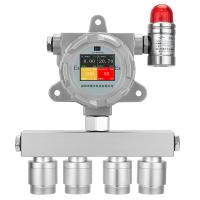
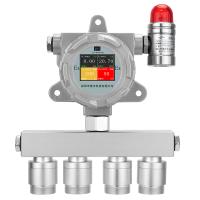
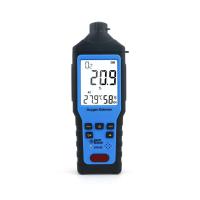
The detection of hypoxia in the working environment generally uses a Galvanic battery sensor , which is a kind of electrochemical method. Using a portable oxygen Detector to detect the oxygen concentration can prevent the working environment from hypoxia and oxygen enrichment. Usually, the oxygen concentration in the Detector is expressed by volume fraction. Generally , the hypoxia value set by the alarm is 18%, and the oxygen-enriched value is 23%. Fire and explosion accidents are also prone to occur in an oxygen-enriched working environment.
Problems needing attention when using gas detection alarm
(1) Gas Detectors and alarms used in petroleum and petrochemical enterprises must purchase explosion-proof types.
(2)便携式气体检测仪和固定式检测仪一样, 每年至少进行一次标定, 而且要随时对仪器进行校零,这可进而保证仪器测量的准确性, 因为有毒有害气体检测仪是用相对比较的方法进行测定的。
(3)注意各类传感器的寿命。一般来说, 在便携式仪器中, LEL 传感器的寿命较长, 一般可以使用 3年左右; 电化学特定气体传感器的寿命相对短一些,一般在 1~2 年; 氧气传感器的寿命最短, 大约在 1年左右。电化学传感器的寿命取决于其中的电解液是否干涸, 所以如果长时间不用, 将其密封放在较低温度的环境中可以延长一定的使用寿命。
(4)注意检测仪器的浓度测量范围。各类有毒有害气体检测仪都有固定的检测范围。只有在其测定范围内完成测量, 才能保证仪器准确地进行测定。而长时间超出测定范围进行测量, 就可能对传感器造成长久性的破坏。比如, LEL 检测仪, 如果不慎在超过 100%LEL 的环境中使用, 就有可能有效烧毁传感器;而有毒气体检测仪, 若长时间工作在较高浓度下使用也会造成损坏。
(5) Attention should be paid to the state of the gas to be detected. It is very important to fully understand the relationship between dust , temperature, humidity and the characteristics of the Detector for the correct determination of the gas concentration. For example, detecting dust and smog in the environment can deteriorate the sensitivity of components and sensors; because temperature, humidity ( over or below the range specified in the instrument manual) and gases other than the detection object will deteriorate the performance of the sensor, in the absence of An alarm is issued when the gas to be detected is detected , but no alarm is generated when the gas to be detected is touched.
(6) The response time of detection should be considered. The gas suction port of the Detector should be placed at the detection point so that the detection can be performed within the response time. The suction port moves so fast that it is unclear where the test is taking place. For pump-aspirated Detectors , if the suction volume is low, the response time will be long. In short, during the test, it is found that the test value of the display screen is stable and no longer changes before it can be used as the final test data (if the Tester alarms or the test value rises rapidly and is about to exceed the test range, it should be taken out of the scene immediately).
(7) If the instrument sensor is exposed to high-concentration gas, the reliability of the instrument will be reduced due to the adsorption of gas on the pipe wall and other places. The pipeline of the instrument must not enter water drops, otherwise it will block the air intake passage, and the air intake and exhaust ports must not be stuck with sludge to prevent blockage.

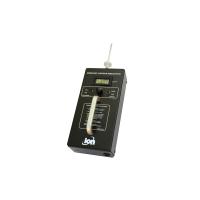


- 1Basic principle and application scenario analysis of oxygen concentratIon Meter
- 2Does my lab need an oxygen Detector?
- 3How to perform Gas detection analysis in limited space operations?