Division and Detection Principle of Toxic Gases and Combustible Gases
Combustible gases and their detection
Combustible gas is the most dangerous . It is mainly organic gases such as alkanes and some inorganic gases.
When the mixture of combustible gas (steam, dust) and air (or oxygen) reaches a certain volume fraction, it will explode when encountering a fire source. The range of the volume fraction where the gas explodes when it encounters a fire source is called the explosion limit of the gas, and the minimum explosive concentration required for the explosion is the lower explosion limit, which is represented , which is the abbreviation of Lower Explosive Limit. The highest explosive concentration is the upper limit of explosion, which is expressed by UEL, which is the abbreviation of Upper Explosive Limit. The explosion limit concentration is usually expressed by the volume fraction of combustible gases . The LEL and UEL of different combustible gases are different. For example, the LEL and UEL of methane (CH4) are 5.3% and 15%, respectively, and the LEL and UEL of hydrogen sulfide gas (H2S) are The UELs were 4%, 46%, respectively.
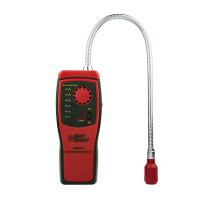
The portable Gas Detector we usually use uses LEL% as the measurement unit (so the combustible Gas Detector is also referred to as the LEL Detector, that is, the explosion Detector), that is, the lower limit of the explosion of a certain combustible gas is the full scale (100%), It should be noted that the 100% displayed on the LEL Detector does not mean that the volume fraction of combustible gas reaches 100% of the gas volume, but that it reaches 100% of the LEL. For example, the LEL of methane is 5.3%, 100%LEL=5.3% volume fraction (VOL), that is, 1% LEL is equivalent to 0.053% methane. For the sake of safety, the LEL Detector generally sends out an alarm when the volume fraction of combustible gas is 10% and 20% of LEL.

Toxic gas and its detection
Toxic gases and asphyxiating gases will cause harm to the human body after they invade the human body, so they are collectively called harmful gases, but in gas detection, we often call them toxic gases, such as carbon monoxide (CO), hydrogen sulfide (H2S), ammonia ( NH3), methanol (CH3OH), etc. They are risk factors that cause great harm to the staff. This hazard includes not only immediate short-term harm, such as physical discomfort, disease, death, etc., but also long-term harm to the human body, such as disability and cancer.
The degree of harm of harmful gases to the human body is related to the type and quantity . In order to ensure that workers will not have acute and chronic occupational hazards during production and labor , CHINA adopts the highest allowable mass concentration (MAC, mg/m3 ) as the hygiene standard, and we often see TLV as the standard in the manuals of gas detection instruments. TLV (Threshold Limit Values) is formulated by the American Council of Governmental Industrial Hygienists (ACGIH) and is an American standard. There are three types of TLV:
①TWA (8h statistical weighted average value), mg/m3 ;
②STEL (15min short-term exposure level), mg/m3 ;
③IDLH (immediate lethal dose), 10-6 .
With different types of gases, their TWA, STEL, IDLH, and MAC values will be different to a certain extent. The threshold limits of several common harmful gases are shown in Table 1.

For the toxic gas portable detection and alarm instrument, it can usually display the peak value of toxic gas concentration, TWA value and STEL value data to provide specific guidance for workers' health and safety. The true value of toxic gas concentration is often expressed by 10-6, that is, the volume fraction of the gas in the total volume of 1 million parts of gas. The maximum allowable mass concentration in CHINA's health standards is in mg/m3, and the conversion relationship between these two units is:
The maximum allowable concentration = the true value of the mass concentration of toxic gases × M/24.25 In the formula: M is the relative molecular mass of toxic gases, 24.25 is a constant, which is the molar volume of toxic gases at 25°C and 101.33kPa.
Since the detection of toxic gases does not have , a corresponding gas sensor is required for each gas. For toxic gases, the method that is widely used and has a good comprehensive index is currently used. It is a constant potential electrolysis method, which belongs to a kind of electrochemistry. When choosing a Detector, you must first indicate which gas to detect, whether there may be other toxic gases etc., and choose a different one according to the site conditions. Gas Detectors, petrochemical enterprises should generally be equipped with CO, H2S, NH3, CH3OH and other toxic Gas Detectors. For the alarm value set by the instrument, the warning alarm and danger alarm are different for each toxic gas.
Classification of toxic gases and flammable gases
When purchasing an instrument, the purpose of use should be clarified, whether it is for flammability detection or toxicity detection. Due to the bloody lessons of explosion accidents caused by many combustible gases, people attach great importance to the detection of combustible gases, and they are not interested in introducing chronic gas. Insufficient attention has been paid to the detection of poisoned gases . Most of the dangerous Gas Detectors are LEL Detectors , which cannot truly protect the safety and health of workers.
It is undeniable that most of the volatile dangerous gases are combustible gases, such as CO, H2S, SO2, etc. However, the catalytic combustion LEL Detector is not a good choice for the detection of all combustible gases. It is specially designed for the detection of methane, and its detection performance for other substances is relatively poor, so they detect combustible gases other than methane. The lower limit concentrations of gases are much higher than their permissible concentrations. For example, the lower explosion is 15%, and the lowest alarm volume fraction of NH3 that can be detected by LEL is 10%LEL=10%×15%=1.5×10⁻² , which is higher than the allowable volume fraction of NH3 of 2.5 ×10- 5 is about 600 times higher,
Therefore, according to the different gases to be detected, it is safer and more reliable to choose a specific toxic gas Detector alarm than to simply choose an LEL Detector and alarm .





- 1Principle, function, application and future development trend of combustible Gas Detector
- 2Principle, characteristics and application of combustible gas alarm Detector
- 3How to choose the correct installation location for combustible Gas detection instruments?
- 4Limits and toxicity of flammable gas explosions
- 5Gas Detectors should be installed like this!
- 6How to choose the right Gas Detector?
- 7DORUI DR-BX200 Combustible Gas Detector Operation Instructions and Troubleshooting
- 8Precautions for the use of combustible Gas Detectors
- 9Explosion limits of various combustible gases