Coating viscosity determination method and related standards
0 Preface
Viscosity is an important index in the performance of coatings, which has a great influence on the storage stability, construction performance and film-forming performance of coatings. For example, for latex paint, the shear stress τ0>10 dyn/cm2 of the paint in the storage process is beneficial to prevent sedimentation, and the viscosity of 15~30 Pa·s can ensure the appropriate amount of paint; the viscosity of 2.5~5.0 Pa·s ensures the brush Paintability and good film properties. If the viscosity can be >250 Pa·s after brushing, the sagging can be well controlled, so measuring the viscosity of the paint has become a routine item in the production and inspection of paint.
1 Definition of viscosity
Viscosity can be thought of as the internal resistance a liquid has to flow. Dynamic viscosity refers to the ratio of the shear stress applied to the liquid to the velocity gradient. Its international unit is Pascal·second (Pa·s), and the conventional unit is centipoise (cP), 1 cP = 1 mPa·s. By comparing the changes in viscosity at different shear rates, we can classify fluids into Newtonian fluids and non-Newtonian fluids. In the national standard GB/T 6753.4-1998, the fluid flow types are divided into Newtonian flow and irregular flow. Newtonian flow, when the ratio of shear stress to velocity gradient does not change with time or with the velocity gradient, the flow type presented by this material is called Newtonian flow. When this ratio changes very little, mechanical disturbances (such as Stirring) has a negligible effect on viscosity, and such materials are said to have approximately Newtonian flow. General varnishes and low-viscosity paints belong to this liquid. Irregular flow, when the ratio of shear stress to velocity gradient changes with time or with shear rate, the type of flow exhibited by this material is called irregular flow.
2 Determination of paint viscosity
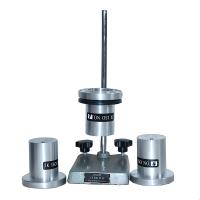
There are many methods for measuring coating viscosity, including outFlow Cup, Stormer viscometer, falling ball viscometer, Rotational Viscometer, capillary viscometer, cone-plate viscometer and so on.
2.1 National Standards for Determination of Coating Viscosity
2.1.1 outFlow Cup method
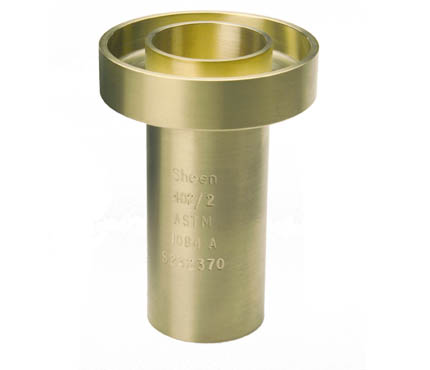
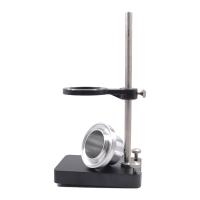
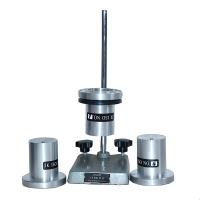
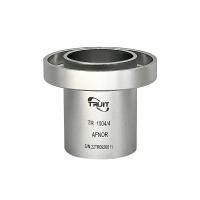
The outFlow Cup is the most easily available coating viscosity measuring instrument in laboratories, production workshops and construction sites. Due to the large volume of the Flow Cup and the short and thick outflow hole, it is convenient to operate and clean, and can be used for opaque paint. The viscosity measured by the Flow Cup viscometer is kinematic viscosity, which is the time for a certain amount of sample to flow out of a hole with a specified diameter at a certain temperature, expressed in seconds. This is a commonly used method for measuring the viscosity of paints. Because it can be used conveniently on many occasions, it is widely used all over the world.
In the national standard, there are GB/T 1723-1993 paint viscosity measurement method and GB/T6753.4-1988 paint and varnish with outFlow Cup to measure outflow time. In GB/T 1723—1993, Tu-1 cup and Tu-4 cup are used,
Tu-1 cup is used to measure the paint products whose outflow time is not less than 20s, and Tu-4 cups is suitable for measuring the paint products whose outflow time is less than 150 s. The difference between the two measured values is not more than 3% of the average value, and the average value of the two measured values is taken as the measurement result. In GB/T 6753.4-1988, four kinds of outFlow Cups with similar size and outflow hole diameters of 3 mm, 4 mm, 5 mm and 6 mm are used to determine the liquid flow out of the outflow hole of the outFlow Cup accurately. Experimental material for breakpoints. For the experimental materials whose outflow time exceeds 100 s, due to the delay effect, the breakpoint is difficult to determine and the repeatability is poor.
2.1.2 Rotational viscometer method
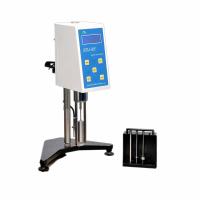
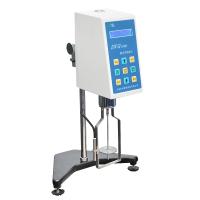
The viscosity of the thixotropic paint measured by the outFlow Cup method is too large, and a Rotational Viscometer is required, including a rotating paddle viscometer, a coaxial drum Rotational Viscometer, and a cone-shaped plate viscometer. Among the national standards, the methods for measuring the viscosity of coatings by Rotational Viscometers are commonly used in GB/T 9269-1988 Determination of Viscosity of Architectural Coatings Stormer Viscometer Method and GB/T 9751-1988 Viscosity of Coatings at High Shear Rates Determination. GB/T 9269—1988 is applicable to the determination of the viscosity of architectural coatings, and can also be used to determine the viscosity of suitable coatings. It is represented by the load required to produce a rotational speed of 200 r/min, and the unit is grams (g). It is also possible to obtain the conversion between the load and the Krebs unit (KU) required to generate a speed of 200 r/min by checking the table in GB/T 9269-1988. Krebs unit (KU) is a logarithmic function of the load required to produce a rotational speed of 200 r/min, and is generally used to express the viscosity of coatings for brush and roller application. In GB/T 9751—1988, under the shear rate of 5 000~20 000 s-1, the dynamic viscosity of the coating is measured. When comparing the viscosity of various coatings, the shear rate should be roughly the same. This criterion applies to all brush-applied paints, whether Newtonian or not. Rotational viscometers and cone and plate viscometers can be used in this standard. The relative error between the two measured values obtained by the same experimenter using one device in the same laboratory should not be greater than 5%.
Table 1 Comparison of 4 paint viscosity determination methods
2.2 International Standards for Determination of Coating Viscosity
ISO 2431 in the international standard solves the problem of the influence of individual differences in outFlow Cups in different national standards on the measurement results by introducing a series of international standard outFlow Cups. The Flow Cup viscometers used in countries all over the world have different names. In my country, there are mainly coated cup viscometers and ISO cup viscometers; in the United States, there are Ford (FORD) cup viscometers; in Germany, DIN cup viscometers. They are all divided into different models according to the pore size, and each type of Viscosity Cup has its own good measurement range. If it is lower or higher than the outflow time range, the measured data will be inaccurate. Therefore, when using a Flow Cup to measure viscosity, it is necessary to select a suitable type of viscometer according to the viscosity of the sample. In the middle of the range, and indicate which type of viscometer was used to measure. Generally, viscometers such as Tu-4 cup, DIN-4 cup and ISO-4 cup are often used to measure the viscosity of paint. The immersion viscometer is commonly used in paint production workshops or painting construction sites, and Ford Cup and Zahn Cup are mostly used at home and abroad.
2.2.1 International Standard for Measuring Viscosity of Paint by Outflow Cup
① ISO 2431—1993 Paints and varnishes.
Determination of flow time with Flow Cup (using ISO outFlow Cup) is used to test the outflow time of Newtonian or near-Newtonian liquid, and the result is expressed in s.
② ASTM D 5125—1997
Standard test method for viscosity of coatings and related materials by ISO Flow Cup method (using ISO outFlow Cup) for testing the outflow time of Newtonian or near-Newtonian liquids, and the results are expressed in s.
③ ASTM D 4212—1999
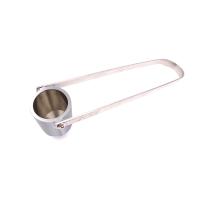
The test method for measuring viscosity by immersion type Viscosity Cup, the viscosity is measured by immersion type Viscosity Cup, and the result is expressed in s.
2.2.2 International Standards for the Measurement of Coating Viscosity by Rotational Viscometer
① ASTM D 562—2001
Standard Test Method for Viscosity of Coatings Using a Stormer-Type Viscometer in Krebs Units. The standard specifies the method for measuring the viscosity of coatings with a Stormer viscometer, and the results are expressed in grams and Krebs (Krebs) units (KU).
② ASTM D 4287—2000
Standard Test Method for High-Shear Viscosity by Cone and Plate Viscometer. The standard stipulates the method of measuring the viscosity of coatings using a cone-plate viscometer under high-speed shear conditions (12 000 s-1), and the results are expressed in mPa·s.
③ ISO 2884-1-1999
Paints and varnishes, viscosity determination with Rotational Viscometer. Part 1: Cone and plate viscometers for use at high shear rates. The standard stipulates the method of measuring the viscosity of coatings using a cone-plate viscometer under high-speed shear conditions, and the results are expressed in mPa·s.
④ ISO 2884-2-2003
For paints and varnishes, viscosity is measured with a Rotational Viscometer. Part 2: Disc or ball viscometers operating at specified rates. The standard stipulates the method of measuring the viscosity of coatings using a disc or ball viscometer, and the results are expressed in mPa·s.
3 Conclusion
To sum up, the measurement methods of coating viscosity can be divided into two categories, namely outFlow Cup method and Rotational Viscometer method. The 4 methods in the national standard (GB/T 1723-1993 Coating Viscosity Determination Method, GB/T6753.4-1988 Paints and Varnishes Determination of Outflow Time with Outflow Cup, GB/T 9269-1988 Determination of Viscosity of Architectural Coatings) The Tomer viscometer method and GB/T 9751-1988 (determination of viscosity of coatings at high shear rates) each have their own advantages and disadvantages. The viscosity values obtained by these methods can be converted into each other by certain methods, but the conversion relationship is somewhat based on experience. The formula cannot reflect the viscosity of the paint well, so the appropriate method should be selected according to the actual situation to measure the viscosity of the paint.

- 1Testing Principle, Advantages and Disadvantages of Capillary Viscometer
- 2Working Principle, Classification and Application of Capillary Viscometer
- 3Principle Differences of Different Viscometers and Their Applications
- 4Coating viscosity determination by Flow Cup method
- 5Viscosity cup introduction and selection guide
- 6How to measure Coating viscosity with ISO cup
- 7Stormer Viscometer (KU): Accurate measurement and multi-domain applications
- 8Paints and varnishes Flow Cup measurement
- 9Determination of viscosity of architectural coatings: application of the Stormer Viscometer method