Museum environment monitoring U12-012
Located in Dallas' historic Dealey Plaza area over six floors, John. President Kennedy was shot, and the museum on the sixth floor of Dealey Plaza houses various documentary material surrounding the November 22, 1963 assassination. More than a million people come to the sixth floor each year to learn more about the tragic day through original photographs, newspaper clippings, letters, films, and FBI reports.
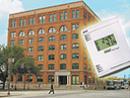
While the museum's first priority is to make these artifacts accessible, it also needs to ensure that each object is protected from harmful environments and preserved in conditions. These include pulsating temperature and relative humidity (RH) levels, and excessive light intensity.
"Our collection includes components composed of a wide range of materials," explained Les Bollinger, coordinator of the museum's collections on the sixth floor. "We have a scale model of the Bureau of Investigation's Dealey Plaza from the U.S. National Archives, on loan from the Warren Commission to analyze bullet trajectories. The model has glass walls, Plexiglas, and architectural paper that are used to simulate the environment, so it is very sensitive to light. We also have wooden objects (such as Caroline Kennedy’s footstools) and textiles. With so many different types of materials, it can be a challenge to maintain the proper environment for our collection.”
As part of the indoor environmental control strategy, temperature, RH, and light intensity U12-012 were continuously monitored from the beginning by relying on the Sixth Floor Museum HOBO® data logger U12-012 . HOBO loggers are battery powered, self-contained devices with a built-in microprocessor, memory data storage, precision temperature, RH, and light sensors, and user-replaceable batteries. The logger U12-012 interfaces with a computer and utilizes a software program to activate the logger and allow the user to view and analyze the collected data.
On the sixth floor, HOBO data loggers are magnetically attached to various metal ceiling beams throughout the facility. Beam, Bollinger explained, helped keep the former Texas warehouse to look like the textbook custodian of the museum before it was converted in 1989. Each logger will record temperature, RH, and light U12-012 every 12 minutes. "In general, we try to keep temperatures between 67 and 73 degrees Fahrenheit in most areas, 50-55 percent humidity, and light intensity between 50 foot-candles, depending on measurements for specific objects in the area. "
Two weeks after the data was collected, Bollinger retrieved the data using the episodes provided by U-DT-1 . This pocket device can be unloaded and stored from each data logger U12-012 , which Bollinger then retrieves to a computer for graphing and analysis of the data using the HOBOware® Pro software. The software instantly converts the collected data into easy-to-read graphs that clearly display temperature, humidity, and light readings for two weeks. For documentation purposes, Bollinger can create custom diagrams and print them out for use in meetings. Since purchasing the data loggers in 2001, they have been operating 24/7 without any issues. By continuously monitoring environmental conditions on the sixth floor, the loggers are helping preserve members of an important and controversial piece of American history.
Bollinger concludes, "The important feature that we like about HOBO is that they determine when an event occurs, like when an air handler shuts down, and from that we can judge cause and effect. This is more difficult with chart Recorders. We also People like loggers can easily hide in the exhibition area, and visitors don't notice them."