Vitamin producers ensure mass with UX100-003 temperature mapping
A manufacturer of vitamin and mineral supplements recently installed ONSET's HOBO® temperature and humidity loggers in a climate-controlled storage facility to monitor seasonal fluctuations in temperature and optimize product freshness.
To comply with stringent FDA quality regulations, and to comply with its own internal product quality standards, the company has implemented a seasonal temperature mapping program at its vitamin storage facilities across the country. Because many of its products are temperature and humidity sensitive, seasonal fluctuations such as extreme summer heat or changes in humidity can quickly compromise product quality. For example, soft gels are affected by higher temperatures, while hard sheets are sensitive to humidity, absorbing water to make them soft.
"We're dealing with organics here, so they can go bad really fast," says an engineering project manager with the company. When you have 30-foot storage facilities and a warehouse racking system, heat can be trapped. You can't allow huge temperature swings, so we need to make sure our air handling units are adequate to keep the product within a temperature range of +/- 5 Fahrenheit, and a humidity range of ±3%.
A New Monitoring Method UX100-001, UX00-003, UX100-011, UX100-023 In the past to track warehouse environmental conditions, the company had relied on a programmable sensor that was expensive and cumbersome. Looking for a more optimized solution, engineering staff found Happening Online and found the company's line of HOBO UX100 series temperature and humidity Recorders.
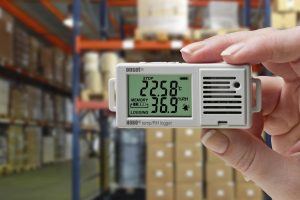
These matchbox-sized devices bridge the gap between traditional ones, usually without LCDs, limited in accuracy and memory, and larger, more expensive data loggers that are often difficult to use and maintain. The logger's built-in LCD screen makes it easy to view real-time current temperature and relative humidity levels, providing indicators for logging status, battery usage and memory consumption. Logger with ONSET's Hoboware® software for mapping, analysis and reporting of environmental data.
Vitamin producer ensures quality with temperature mapping
A manufacturer of vitamin and mineral supplements recently installed ONSET's HOBO® temperature and humidity loggers in a climate-controlled storage facility to monitor seasonal fluctuations in temperature and optimize product freshness.
To comply with stringent FDA quality regulations, and to comply with its own internal product quality standards, the company has implemented a seasonal temperature mapping program at its vitamin storage facilities across the country. Because many of its products are temperature and humidity sensitive, seasonal fluctuations such as extreme summer heat or changes in humidity can quickly compromise product quality. For example, soft gels are affected by higher temperatures, while hard sheets are sensitive to humidity, absorbing water to make them soft.
"We're dealing with organics here, so they can go bad really fast," says an engineering project manager with the company. When you have 30-foot storage facilities and a warehouse racking system, heat can be trapped. You can't allow huge temperature swings, so we need to make sure our air handling units are adequate to keep the product within a temperature range of +/- 5 Fahrenheit, and a humidity range of ±3%.
A New Monitoring Method UX100-001, UX100-003, UX100-011, UX100-023 In the past to track warehouse environmental conditions, the company had relied on a programmable sensor that was expensive and cumbersome. Looking for a more optimized solution, engineering staff found Happening Online and found the company's line of HOBO UX100 series temperature and humidity Recorders.
These matchbox-sized devices bridge the gap between traditional ones, usually without LCDs, limited in accuracy and memory, and larger, more expensive data loggers that are often difficult to use and maintain. The logger's built-in LCD screen makes it easy to view real-time current temperature and relative humidity levels, providing indicators for logging status, battery usage and memory consumption. Logger with ONSET's Hoboware® software for mapping, analysis and reporting of environmental data.
To test the loggers UX100-001, UX100-003, UX100-011, UX100-023 in a warehouse temperature mapping project, the engineer deployed multiple temperature and humidity data loggers in a 33,000 sq ft facility. Prior to installing the loggers, the accuracy of the data loggers was placed in an environmental chamber, plugged into them, set within temperature and humidity ranges, and then monitored to ensure the loggers stayed within those ranges.
Through the accuracy verification test, record configuration hoboware software to measure and record temperature and humidity levels on a 24/7 basis every 30 minutes. Alert notifications are set up so warehouse workers can be notified of problems immediately. For example, if a temperature or humidity condition exceeds a set threshold, that event will trigger the logger to beep and display an alarm notification on the LCD.
In this particular project, HOBO's loggers were deployed in a vertical column fashion at three different heights in the 30-foot storage area. Loggers were placed in top (25 ft), middle (15 ft) and bottom (1 ft) storage racks, and, where possible, mounted on air supply and return. Data recording was carried out for three weeks - temperature mapping - to the manufacturer's standard time, and then offloaded to a graphics and analysis computer.
Utilizing data from UX100-001, UX100-003, UX100-011, UX100-023 at the end of the three-week monitoring period, staff were able to easily create graphs of the temperature/humidity distribution and incorporate slide presentations to update the company's leadership team . Detailed reports and good visuals help the engineering team to make suggestions on any issues.
"If we find that the temperature or humidity has gone out of range, we'll go to the HVAC guy and have the control system adjust, so there's more air supply and less air supply," says one engineer. Or they might change the air speed with a variable frequency drive, or install a fan to run better and back again. "
If any of the building systems are changed, the engineering team will map the environmental conditions within three weeks to another, using qualification documentation to track the process.
With HOBO temperature and humidity loggers, the company's engineering HVAC personnel now have more confidence in their temperature mapping capabilities. They are now able to keep closer tabs on the performance of their control systems, and have a proven method to safeguard inventory and meet federal requirements, as well as their own high standards of quality assurance. For more details, contact Northern Great Rivers Onset.
will test the logger
In a warehouse temperature mapping project, engineers deployed multiple temperature and humidity data loggers in a 33,000 square foot facility. Prior to installing the loggers, the accuracy of the data loggers was placed in an environmental chamber, plugged into them, set within temperature and humidity ranges, and then monitored to ensure the loggers stayed within those ranges.
Through the accuracy verification test, record configuration hoboware software to measure and record temperature and humidity levels on a 24/7 basis every 30 minutes. Alert notifications are set up so warehouse workers can be notified of problems immediately. For example, if a temperature or humidity condition exceeds a set threshold, that event will trigger the logger to beep and display an alarm notification on the LCD.
In this particular project, HOBO's loggers were deployed in a vertical column fashion at three different heights in the 30-foot storage area. Loggers were placed in top (25 ft), middle (15 ft) and bottom (1 ft) storage racks, and, where possible, mounted on air supply and return. Data recording was carried out for three weeks - temperature mapping - to the manufacturer's standard time, and then offloaded to a graphics and analysis computer.
Using the data at the end of the three-week monitoring period, staff were able to easily create graphs of the temperature/humidity distribution and incorporate slide presentations to update the company's leadership team. Detailed reports and good visuals help the engineering team to make suggestions on any issues.
"If we find that the temperature or humidity has gone out of range, we'll go to the HVAC guy and have the control system adjust, so there's more air supply and less air supply," says one engineer. Or they might change the air speed with a variable frequency drive, or install a fan to run better and back again. "
If any of the building systems are changed, the engineering team will map the environmental conditions within three weeks to another, using qualification documentation to track the process.
With HOBO temperature and humidity loggers, the company's engineering HVAC personnel now have more confidence in their temperature mapping capabilities. They are now able to keep closer tabs on the performance of their control systems, and have a proven method to safeguard inventory and meet federal requirements, as well as their own high standards of quality assurance.
- 1What are the measurement methods of temperature and humidity?
- 2蝙蝠疾病的揭秘-U12-006(UX120-006M)温湿度记录器
- 3Building EQ Evaluation - U12-012 Temperature and Humidity Light Recorder
- 4Onset UA-002-64 detection of coral reef growth environment in Micronesia
- 5ONSETHOBO U30-NRC/RX3003在沙漠中绿化屋顶研究
- 6Integrated Pest Management IPM Simplified RX3000-U30-GSM
- 7Differences in IAQ indoor environment in different regions U12-011/UX100-011
- 8Temperature and humidity monitoring at the Dracula Exhibition Hall
- 9ONSETHOBO ZW Series Wireless Temperature and Humidity Recorder Wireless Monitoring of Temperature and Humidity at the National Archives in Washington