Vineyard frost protection U30-GSM
As America's first wine region, New Mexico has been at the heart of the country's grape culture since 1629 when the Spanish first planted vines with grapes for winemaking. The original wine grape - also known as "wine grape" - is grown in the San Antonio area due to its mild climate, dry growing season, and mild winters.
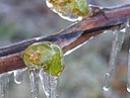
While wine grapes flourished in southern New Mexico, it didn't show up in the northern part of the country. Grapes' susceptibility to freeze damage, which can occur in late fall, winter and early spring, poses a huge challenge for vineyards in northern New Mexico.
Grand Hacienda Thank you Vineyards is a great example. Located about 40 miles northwest of Santa Fe, the vineyards experience weather renewal several times a year. Despite the risk of frost, thanks to the large estate, which is just starting its second planting season, it is committed to developing high-quality wine grapes. "We're pushing the envelope when it comes to wine grape growing in northern New Mexico," said Michael Trupiano, owner of Hacienda Thanks. "Many of the vineyards in our part of the country plant the American-French hybrids, which are basically a cross between American and French grapes and quite vigorous than wine grapes. These hybrids are probably closer to vinefera in taste , but they are not really wine grapes. If we can make it through the various frost cycles, I believe we can produce fruit that will lead to very good wines in the future."
To increase his chances of success, Trupiano chose plants, Pinot Noir, a vinefera with a short growing season, that tend to grow in fields such as Abiquiu that experience warm days and cold nights.
“We know of many successful Pinor Black vineyards in nearby Albuquerque, and realize that we too can be successful if we apply the right viticultural practices.”
Trupiano, who wears a variety of hats on the estate including viticulturalist, organics professional, weeder, plumber, recently installed a HOBO® Weather Station U30-GSM/RX3000 (RX3003-00-01) with SolarStream® Satellite Wireless transceivers are designed to become more proactive in frost monitoring and preventing damage.
The battery's 15-channel lHOBO weather station U30-GSM/RX3000 (RX3003-00-01) is configured to measure and record temperature S-TMB-M002, S-TMB-M006, S-TMB-M017, soil moisture S-SMC- M005, S-SMD-M005, rainfall S-RGA-M002, S-RGB-M002, S-RGC-M002, S-RGD-M002, wind speed S-WSB-M003, wind direction S-WDA-M003, S-WSET -B, S-WCA-M003, S-WCF-M003, atmospheric pressure S-BPB-CM50, S-BPA-CM10, air temperature and relative humidity S-THB-M002, S-THB-M008, photosynthetically active radiation (PAR ) S-LIA-M003, total solar radiation S-LIB-M003, leaf humidity S-LWA-M003, etc. Each "smart sensor" plugs directly into the weather station and automatically recognizes complex wiring, programming, or calibration needs.
Upward Innovations, produced by Solar Transceivers, Inc.) features an Internet-based software platform that allows Trupiano to monitor conditions in the vineyard with a web browser, and send alert messages via email and text message when the freezing point is approaching. The system transmits signals through the Orbcomm® satellite network, then routes them to a secure online data center, email address and mobile phone.
Before installing the equipment, Trupiano monitored the climate using a combination of Internet weather services and nearby USGS weather stations. While these sources provided reliable regional weather data, Trupiano quickly realized that more accurate, site-specific data was needed in order to protect his crops.
Initially, a weather station GPRS cellular system was built on the site. However, depending on the remote location of the vineyard, the system was not able to generate a reliable signal.
"Since my main application for remote monitoring is real-time frost alarms, reliability is important," Trupiano said. "I realized that for the reliability we needed, we needed a satellite-based solution."
The new system provides Trupiano with the site-specific climate data he needs. It is powered by internal and external solar panels SOLAR-6W, and is configured to upload data every 25 minutes per day. It provides real-time temperature S-TMB-M002, S-TMB-M006, S-TMB-M017, soil moisture S-SMC-M005, S-SMD-M005, rainfall S-RGA-M002, S-RGB-M002, S -RGC-M002, S-RGD-M002, Wind Speed S-WSB-M003, Wind Direction S-WDA-M003, S-WSET-B, S-WCA-M003, S-WCF-M003, Atmospheric Pressure S-BPB-CM50 , S-BPA-CM10, air temperature and relative humidity S-THB-M002, S-THB-M008, photosynthetically active radiation (PAR) S-LIA-M003, total solar radiation S-LIB-M003, leaf humidity S-LWA -M003 etc. SolarStream also enables Trupiano to remotely handle various weather station U30-GSM/RX3000 (RX3003-00-01) management tasks, such as adjusting sampling rates and performing diagnostics to ensure that the weather sensors are working properly.
"Having real-time data helps me determine when I should start my frost protection regime," Trupiano explains. "For frost protection, we have about 1,800 low-pressure sprinkler heads sitting on top of the vines that turn on when the temperature drops to about 32°F. We basically let the water run to above-zero temperatures and come back."
He added, "Without frost alerts being provided through the equipment, there is a good chance that I could lose some or all of my crop. This is obviously an economic issue. In the future, we would like to be able to use data with predictive software to analyze the impact of insects and diseases." It's in the vineyard."
Grand Hacienda Thanks Vineyards carries a long tradition in the American Southwest, only now with professional techniques. Satellite network overhead is helping to ensure successful vineyards, grapes used for wine canopy
- 1蝙蝠疾病的揭秘-U12-006(UX120-006M)温湿度记录器
- 2Building EQ Evaluation - U12-012 Temperature and Humidity Light Recorder
- 3Turbine Construction feasibility study
- 4ONSETHOBO ZW Series Wireless Temperature and Humidity Recorder Wireless Monitoring of Temperature and Humidity at the National Archives in Washington
- 5Jamaican Coffee Storage U12-011
- 6Process monitoring of drying building solutions ONSETHOBO U12-011/UX100-003, UX100-011
- 7ONSETHOBO U12-012 for storage of Marilyn Monroe logo gowns
- 8Discovery of prehistoric fish UTBI-001
- 9Coral Reef Health Research U22-001