Coral Reef Health Research U22-001
Onset's HOBO® Water Temperature Loggers U22-001, UA-002-64, UA-002-08, UA-001-64, UA-001-08, UTBI-001, U12-015-03 are helping the US National Park Service Personnel understand the impact of water temperature on the Coral Reef Health Service's field station in St. John's, U.S. Virgin Islands. More specifically, the researchers are using data loggers to establish a link between rising water temperatures over time and coral bleaching, or the whitening of corals due to the loss of life-sustaining algae. Coral Bleaching – This phenomenon in recent years related to global warming causes corals to become colorless, brittle and susceptible to various environmental stressors.
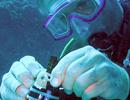
"We've witnessed a large number of bleaching events involving verrucous corals in this region, to the extent that the coral is almost an endangered species," explained Rob Waara, biotechnologist and director of the National Park Service's Inventory and Monitoring Program. "While there are many environmental factors that contribute to these events, such as sedimentation and low salinity levels, the rise in ocean temperature between winter and summer can play a role. Therefore, we need a reliable way to continuously monitor water temperatures so we can be more to better understand the real impacts on the health of these fragile ecosystems."
To monitor water temperature, Waara Strategies and his team have put HOBO data water temperature loggers U22-001, UA-002-64, UA-002-08, UA-001-64, UA-001-08, UTBI-001, U12- 015-03 at several representative sites in St. John's, including the reef region of Lamshur Bay and Hawksnest Bay. Each data logger, which is housed in a durable plastic case for extended deployment in the water, samples the water temperature every 30 minutes.
After three months of data collection, Waara water temperature loggers U22-001, UA-002-64, UA-002-08, UA-001-64, UA-001-08, UTBI-001, U12-015-03 and Other researchers retrieve the data and use the high-speed infrared (IR) offload data communication port. The port was later connected to a computer running the resulting data graphing and analysis software program, which instantly transformed the collected data into easy-to-understand graphs, marking peaks and drops in water temperature over a given three months. Temperature is reported with ±0.2°C accuracy in the measurement range 0º50°C.
According to Waara, the data collected could help the National Park Service build a comprehensive picture of changes in average water temperature over time. "While the question of what happened, coral reefs may be a simple example that has many answers," he explained. "There are many variables. However, we know that water temperature is an increasingly important piece of the cake. We have data from HOBO logging water temperature loggers U22-001, UA-002-64, UA-002-08, UA-001-64, UA -001-08, UTBI-001, U12-015-03 data moves us closer to understanding how these temperature changes are affecting our coral reefs."
- 1蝙蝠疾病的揭秘-U12-006(UX120-006M)温湿度记录器
- 2Building EQ Evaluation - U12-012 Temperature and Humidity Light Recorder
- 3ONSETHOBO ZW Series Wireless Temperature and Humidity Recorder Wireless Monitoring of Temperature and Humidity at the National Archives in Washington
- 4Jamaican Coffee Storage U12-011
- 5Process monitoring of drying building solutions ONSETHOBO U12-011/UX100-003, UX100-011
- 6ONSETHOBO U12-012 for storage of Marilyn Monroe logo gowns
- 7Discovery of prehistoric fish UTBI-001
- 8Vineyard frost protection U30-GSM
- 9Vitamin producers ensure mass with UX100-003 temperature mapping