Process monitoring of drying building solutions ONSETHOBO U12-011/UX100-003, UX100-011
On average more than one million buildings in the United States experience water damage, resulting in billions of dollars in insurance claims each year. As a result, many insurance companies have also begun to require more efficient and comprehensive documentation of dry building procedures.
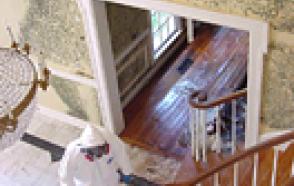
While there may be no visible traces of moisture leaving the dry building process, high humidity that slips into the material can cause moisture and/or mold problems.
Many water damage professionals today understand the effects of moisture, restore projects after a "hang", and are becoming smarter at using technological tools that can validate the dry building process.
"Modern dryness and good documentation are more important today than ever," said Ken Green, general manager of Therma-Stor, a Madison, WI-based company specializing in water damage restoration solutions. "Good contractors are serious about documentation, so that if something goes wrong the liability is in the future, and they can demonstrate that the dry build was done efficiently and correctly."
According to Green, portable data loggers are useful high-tech tools for accurately drying construction documents.
A data logger is a pager sized device that can measure and record temperature and electronic temperature and humidity logger U12-011/UX100-003, UX100-011 Relative Humidity (RH) on a 24/7 basis over an extended period of time. Most data loggers interface with a PC and utilize accompanying software to activate the logger and view/analyze the collected data. Some professional data logging software packages include tools to convert temperature and relative humidity data into per-pound grain data. A standard unit of measurement used by the grain restoration industry is the amount of moisture contained in the air after drying buildings per pound. Data loggers can help verify proper dry building procedures for inadvertent buildings. To understand how to use a data logger in a typical dry building application, consider the following scenarios.
Water damage restoration services are required at a manufacturing plant where sprinkler failures occur. Insurance companies worry about secondary damage to moisture-sensitive materials in the finished inventory area because it could double or triple the loss.
On-site, drying equipment, and finished product areas are isolated and the required dehumidification is calculated. A dehumidifier is then placed in that area to protect the inventory. In order to show the effectiveness of the drying process and document the steps taken to protect the inventory items, data loggers in each area monitor the humidity conditions. Temperature and Humidity Logger U12-011/UX100-003, UX100-011 will record temperature and RH every 15 minutes. Data loggers are also used to monitor dehumidifier performance, identifying "grain depression" (water removal) by comparing the dryer inlet and outlet conditions per pound of grain.
A few days later, when the dry building is completed, the temperature and humidity Recorder U12-011/UX100-003, UX100-011 is transferred to one for data collection and analysis. A graph of the main damage area shows that after the first 24 hours, the RH drops to 40% and continues to drop by 25%, at which point it flattens out.
The second figure, the detail condition area of the finished product, shows a descending curve at the same level as the main damage area achieved. The data clearly show that the area has been protected from secondary damage, and that issues of responsibility for all parties to help protect should arise in the future.
This is just an example, how to use the temperature and humidity logger U12-011/UX100-003, UX100-011 to record the drying process of the building. In reality, every application is unique and has its own individual needs and challenges.
Overall, Therma-Stor Green feels that the main benefit of the water usage data of the Temperature and Humidity Logger U12-011/UX100-003, UX100-011 Damage Repair Professional really boils down to the efficiency of the moisture conditions that can be proven.
"Data logging, analysis and documentation is much easier and faster than the old chart Recorders many in the industry used to rely on," he said. "You don't have to worry a lot about calibrating instruments, changing graphs, or interpreting data."
He added, "It doesn't hurt that the data loggers are very small and can be placed in areas where they won't be noticed or possibly even stolen."
- 1蝙蝠疾病的揭秘-U12-006(UX120-006M)温湿度记录器
- 2Building EQ Evaluation - U12-012 Temperature and Humidity Light Recorder
- 3ONSETHOBO ZW Series Wireless Temperature and Humidity Recorder Wireless Monitoring of Temperature and Humidity at the National Archives in Washington
- 4Jamaican Coffee Storage U12-011
- 5ONSETHOBO U12-012 for storage of Marilyn Monroe logo gowns
- 6Discovery of prehistoric fish UTBI-001
- 7Coral Reef Health Research U22-001
- 8Vineyard frost protection U30-GSM
- 9Vitamin producers ensure mass with UX100-003 temperature mapping