Jamaican Coffee Storage U12-011
It's powerful. It is expensive. It's not always easy to find.
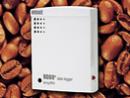
But with a cup of Jamaican Blue Mountain coffee, you can understand why it has earned a reputation as one of the best coffees on earth.
The outdoor climate conditions on the steep slopes of Jamaica's Blue Mountains have been plentiful with the unique, robust flavor of the coffee, as will the beans' indoor climate warehouse storage prior to export.
"After harvesting and processing, Blue Mountain coffee beans are dry to about 12 percent moisture and the storage environment needs to be stable in order to maintain humidity," explains Gail Nelson, a researcher with the Jamaican coffee industry, a government agency created in the 1950s to ensure Coffee quality standards are met. “Satisfactory conditions, the warehouse temperature should be between 20°C and 25°C with a relative humidity in the range of 60% to 70%.”
Unlike many modern warehouse facilities found in the United States, many storage warehouses in Jamaica are older and do not have automatic climate control systems. Warehouses also vary in the materials used during construction: some are built entirely of concrete, while others are built with zinc and other materials.
Understanding indoor climate change From warehouse to warehouse, the Coffee Industry Board has begun a series of "trials" of indoor environments with various coffee storage warehouses across the island.
"We compared different warehouse conditions and saw how those conditions might affect humidity," Nielsen said. "If too much moisture is being lost, that can have a negative effect on the taste."
Using HOBO data logger temperature and humidity logger U12-011/UX100-003, UX100-011 from Massachusetts-based Onset Corporation, monitors every half hour, uninterrupted, in six different warehouses. Nelson downloads the data collected every two weeks, and creates time-stamped graphs of climate conditions using the accompanying software.
"The software allows us to compare graphs of all warehouses and see climate fluctuations," Nielsen said. "From this, we can make some conclusions about the storage conditions of each facility and take corrective measures if necessary, such as sealing off the roof or installing better environmental controls."
She added, "Ultimately, we want, we can automatically track the condition in transit, ensuring quality all the way to the consumer."
- 1蝙蝠疾病的揭秘-U12-006(UX120-006M)温湿度记录器
- 2Building EQ Evaluation - U12-012 Temperature and Humidity Light Recorder
- 3ONSETHOBO ZW Series Wireless Temperature and Humidity Recorder Wireless Monitoring of Temperature and Humidity at the National Archives in Washington
- 4Process monitoring of drying building solutions ONSETHOBO U12-011/UX100-003, UX100-011
- 5ONSETHOBO U12-012 for storage of Marilyn Monroe logo gowns
- 6Discovery of prehistoric fish UTBI-001
- 7Coral Reef Health Research U22-001
- 8Vineyard frost protection U30-GSM
- 9Vitamin producers ensure mass with UX100-003 temperature mapping