Application of ONSETHOBO U24-002-C/U24-001 dissolved oxygen Recorder in natural gas development evaluation
A push to develop natural gas resources found in the Marcellus Shale, a low-density rock formation that is part of the Delaware Basin in Pennsylvania and New York, has grown rapidly. While natural gas drilling has been in the basin to date, in anticipation of future natural gas development, the Delaware River Basin Commission (DRBC) began monitoring water quality in the area's rivers in 2010 to obtain a baseline test for water quality after development.
Hydraulic fracturing is the method proposed to extract natural gas from source rocks in the Delaware River Basin. The process involves drilling Wells to reach deep into the targeted shale formation and injecting water and chemicals into the layer to release the gas. The process of returning water creates wastewater containing potentially toxic chemicals and is usually stored on site for reprocessing or disposal.
Fracking is a contentious issue, with many environmentalists concerned that the process could lead to negative ecological impacts. Others, however, argue that creating a million jobs a quarter has the potential to satisfy 14 years of natural gas consumption, as well as reap the benefits of a fuel that burns cleaner than coal or oil.
Integrated monitoring is key to understanding the environmental impact of hydraulic fracturing activities. Therefore, the GEL has been implemented to develop new monitoring programs that focus on different parameters that typically affect gas, including water conductivity levels, which can be indicators of contamination. In August 2009, for example, high conductivity levels were observed in West Virginia's Dencade Creek, and over the next month or so, nearly all of the aquatic species along the 35 miles of the river disappeared, likely due to nearby hydraulic fracturing. -
Deployment of data loggers U20L-01, U20L-02, U20L-04, U20-001-04, U20-001-04-Ti, U20-001-01, U20-001-Ti, U20-001-02, U20 -001-02Ti, U20-001-03, U20-001-03-Ti, KIT-S-U20-04, KIT-D-U20-04, KIT-S-U20-01, KIT-D-U20-01 , KIT-S-U20-02, KIT-D-U20-02,
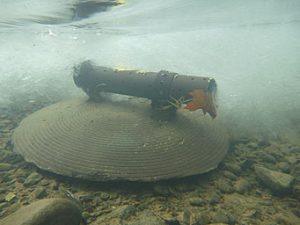
As part of its "Monitoring Natural Gas Development" project, the Gum Monitoring, Modeling and Evaluation division deployed Onset's U24-002-C, U24-001 conductivity and temperature loggers to drilling in the Delaware and Lackawaxen Rivers in Pennsylvania Likely to happen two creeks first. A low-profile concrete foundation constructed the Recorder facility into a flying saucer trolley pouring concrete. Two short aluminum pipes protrude from the concrete base, and a perforated PVC pipe is taped laterally to the house's sensor foundation, which is secured with zip ties. At the location of the sensor within the PVC tube, minimize air bubbles, as well as deposits that may accumulate on the sensor.
Before deploying the loggers, DRBC personnel tested the device's accuracy with other meters, measuring a variety of low and high conductivity waters such as ultrapure laboratory water, tap water, water and salt, and found they were consistent. Crews regularly retrieve data loggers and download reads using the HOBO Waterproof Data Shuttle, while Thermal Environmental Engineer and Supervisor John Yagecic notes, “…allowing us to easily download data to the field.” After the data was downloaded, the loggers used distilled water Clean and redeploy. By defining the extent and variability of conductivity measurements prior to natural gas drilling, this monitoring program will help thermally protect the precious water resources of the Delaware River Basin.
Advantages of data loggers
Onset's U24-002-C, U24-001 was chosen for the required equipment as it was quick to set up and guaranteed to launch the project hassle free. The nature of time, since it is not known when the gas companies started drilling, and without a lot of data, the variation in pre-drill water quality in the river will always remain a mystery.
The ability to withstand harsh weather conditions is also a requirement for data loggers in monitoring programs, since the logger deployment sites are subject to low temperatures and high mobility. Glad to learn that Onset's U24-002-C, U24-001 deployed under similar conditions from Hurricane Irene, which landed northeast in summer 2011. Yagecic is also pleased to report that since its deployment in January 2011 the logger has continued to tolerate debris moving downstream.
- 1Common types and application differences of STIP-scan
- 2How to choose the dissolved oxygen measurement method: optical method, current method, polarographic method?
- 3What is the importance of dissolved oxygen testing in water quality testing?
- 4Differences between several common water quality testing equipment
- 5ANLELIS DO410 Benchtop dissolved Oxygen Meter Concise operation guide
- 6ANLELIS DO300 Portable dissolved Oxygen Meter Concise operation guide
- 7ONSETHOBO U26-001 dissolved oxygen Recorder for monitoring dissolved oxygen in endangered mussel habitat


