Indiana School District Energy Waste Survey - Onset Data Logger
A degree in industrial technology, taught by Rob Lovett's nine-year Penn-Harris-Madison (List) School operating company in Mishawaka, Indiana, was a natural choice when, in 2007, the company decided to create a position for a full-time Energy Educator/Manager. At the time, Lovett's responsibilities expanded from fifth-grade classrooms to the entire List District, which included 20 buildings ranging in size from 1,600 square feet to 581,000 square feet, for a total of 1.9 million square feet of buildings.
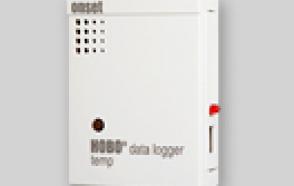
As energy manager, Lovett's focus is on identifying opportunities to reduce energy use and costs for the company, whose utility bills add up to about $2 million a year. He discovers these opportunities by monitoring surrounding buildings - by walking to see "what and if" and by analyzing the data recorded by Onset's HOBO Series® data loggers U12-006, U12-011, U12-012, U12 -013, U12-001, U12-008 from Massachusetts. Lovett deploys temperature and humidity loggers over a two-week period in various locations throughout the school, in known or suspected problem areas, or simply to conduct random inspections to verify equipment operation.
As an energy educator, Lovett visits classrooms from time to time throughout the school year to talk to students about energy conservation, but says education is about the job, making sure employees understand what they need to do to save energy, and the importance of their actions. While Onset’s HOBO series data loggers provide the temperature and humidity UX100-001, UX00-003, UX100-011, UX100-023 the data Lovett needs to do his job as an energy manager, they also provide the benefits”, Increased interest in energy-efficient companies. "Their presence in classrooms or other school spaces heightens employee attention for proper temperature and light control, opening/closing windows and doors UX90-002, UX90-002M, UX90-005, UX90-005M, UX90-006 , UX90-006M, and raise/lower shutters. Fortunately, displaying energy-saving behavior while data loggers are located in a particular location tends to become customary, perhaps in part because employees know "energy folding" Lovett is like a detective note, who can come back at any time for a two-week data logger Another study of their classrooms.
The energy education consultancy, which helped the Billboard school system kick-start its energy management program, is supplying two Onset HOBO Series data loggers as an initial "part of the kit." Billboard will be purchasing additional temperature and humidity loggers soon and now Owning each building, as well as BASE-U-4, BASE-U-1, U-DT-1 Lovett uses the information that will be logged from the logger, and HOBOware Pro software map data.
The portability of the temperature and humidity loggers is a huge advantage for Lovett, they move from room to room every two weeks. He says Onset's HOBO series "...is a great way to keep an eye on things in places that I can't, because as an energy manager you want to be able to see it all." Leavitt noted that the U-DT-1 is invaluable That's because he no longer carries his laptop with him to retrieve data from each monitoring location. Instead, U-DT-1 offloads the data and automatically restarts the logger before moving to a new location. Lovett can immediately draw information from about ten temperature and humidity loggers and transmit it to a computer in his office for analysis.
When deploying a data logger in a classroom, Lovett leaves a note informing the teacher of the log's location, usually in a prominent place, but preferably most of the students'. He also provided data loggers and students to share with teachers and provided contact information to answer any questions. Onset's HOBO series will record temperature, relative humidity, and light intensity with the U12-012 for a two-week period at 10-minute intervals, allowing Lovett to gather information regarding occupied/non-occupied weekends and weekdays/conditions.
Lovett's Onset Company's HOBO series is also used routinely to verify the operation of the equipment, such as confirming that an energy management system (EMS) turns on or off the heating system as scheduled and maintains a comfortable temperature range of 68ºF to 72ºF when a building is occupied. The date logger he used helped him discover that EMS schools run until five in the afternoon. Than necessary, about an hour later. In another instance, Lovett was able to correct the use of a data logger to detect that EMS's calculations were better started at two of the company's very large buildings which were excessively time-scheduled and unnecessarily heated spaces for five hours during the school day. Start. In spring, summer, and fall, he uses a thermo-humidity logger with the aim of running the air conditioner for the minimum amount of time necessary to reach a comfortable 40% relative humidity, avoiding conditions that could cause mold problems.
Currently, one of the proposed custodians of secondary schools, Lovett has a data logger deployed in a gymnasium that previously only used two available heated air handling units, but now looks too cool to even have an air handling unit operating. Lovett suspects maintenance issues, but noted that the first step is "getting the loggers to see what's going on."
Another example includes two identical top-ranked primary school construction firms. The schools were only a few miles apart, around the same time, built and contained the same equipment, except there was a central vacuum system that was shut down, although both schools used the same amount of electricity, with the central vacuum system already using 200% less natural gas than the other same temperature. Lovett found significantly more icicles forming along the school's roofline, using more natural gas, which made him suspect that it might not be insulating the other schools. Because it wasn't an actual visual inspection of the industrial building's roof insulation, Lovett deployed one of Onset's HOBO series data loggers in the space above each building's ceiling at the same location. The answer to this mystery remains to be solved, but if it turns out that the warmer the building is using more natural gas, Lovett can also conclude that it's not the insulation's twin and work to correct the problem.
Lovett walks rhythm between direct observation of conditions in the school building and dedicated Onset HOBO series at different times of day and night for analysis of well logging data, saving a lot of cost.
- 1Energy-saving Retrofit Research - Onset Recorder UX100-003/U90-001M
- 2ONSETHOBO U30-NRC/RX3003在沙漠中绿化屋顶研究
- 3Lake Temperature Monitoring and Global Warming UA-002-64
- 4Energy Assessment UX120-006M
- 5Temperature and humidity monitoring at the Dracula Exhibition Hall
- 6NASA's RG3-M study of volcanic parks
- 7Application of ONSETHOBO -UX90-004M Motor Switch Data Logger in Building Energy Conservation Audit
- 8Promotion of Green Buildings UA-002-64
- 9Low cost energy saving monitoring UX90-001M