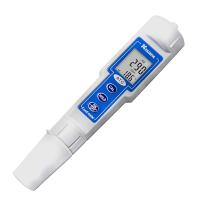
U22-001 for environment monitoring in Qatar coastal waters
Construction of the Qatar Doha International Airport (NDIA) began in 2004, with an expected opening date of 2011. The total construction area of the project is 22 square kilometers, and it will handle a full load of 50 million passengers per year. The airport's runway was built by recycling dredged material from pits borrowed from Qatar's near-shore waters.

As part of the overall statutory environmental management plan approval requirement, GHD NDIA participates in a global long-term environmental monitoring program. The two-year effort includes quarterly monitoring and assessment of the Marine Ecology NDIA and nearby borrow pits.
This project is one of the largest in Qatar. Whenever there is a project of this scale, with the risk of environmental impact, the environment needs to monitor the construction. A very important parameter to monitor is temperature.
At the airport there are seagrass and coral, these are very temperature dependent. If the temperature goes above or below a threshold, this can affect coral or seagrass. It's nice to have long term data on water temperature, in case anything happens to critters in the water.
GHD is also used to monitor water quality U20-001-01, U20-001-Ti, U20-001-02, U20-001-02Ti, U20-001-03, U20-001-03-Ti, KIT-S-U20-04, KIT-D-U20-04, KIT-S-U20-01, KIT-D-U20-01, KIT-S-U20-02, KIT-D-U20-02,
U20L-01, U20L-02, U20L-04 and other water level Recorders, U26-001 dissolved oxygen Recorder, UTBI-001, U22-001, U12-015-03, UA-001-08, UA-001-64 water temperature Loggers, UA-002-08, UA-002-64 water temperature light logger, U24-002-C, U24-001 conductivity logger and sediment quality and submit reports to client and MFA. The airport project has drastically changed the environment and it is important for them to know what is happening.
The main objectives of the marine ecological monitoring project are:
Monitoring of physicochemical parameters consisting of key water quality indicators and nutrient concentrations in the receiving environment;
Deposition environment received by monitor mode;
Monitoring habitat changes in shallow seabeds;
Monitor changes in fishery resources.
To meet the requirements of the first objective, in May 2008, GHD's commercial divers deployed HOBO temperature loggers U22-001 to six inshore sites at depths ranging from 1.5 to 9 meters. U22-001 is easily deployed and installed in the deposition area of nylon cable ties, as shown in Figure 1. HOBO Temperature Logger U22-001 is downloaded monthly underwater using HOBO Live, a fast and reliable data retrieval mechanism (Figure 2 and Figure 3).
HOBO temperature loggers are used to monitor water temperature over a period of time. Monitoring water temperature is important because it is known that water temperature affects chemical, physical, and biological processes in water bodies, including the growth and other reactions of organisms.
Water temperatures at inshore locations NDIA are typical for the Arabian Gulf and typically range from a minimum of 10℃ in December and a monthly high of January to 30℃ in June to August. Figure 4 shows a temperature high of 38°C in June. GHD has also utilized HOBO temperature sensors in other long-term environmental monitoring projects in the Arabian Gulf, including the Marine Ecological Survey of Ras Az Zawr in Saudi Arabia, where water temperatures in coastal waters near the coast below were recorded at 9℃ in January 2008.
It is important to collect all this data over a long period of time. The Arabian Gulf environment, in general, is very brutal and wide in temperature extremes. These temperatures affect the availability of heavy metals and nutrients in the water. Quarterly GHD water quality and sediment analysis.
It is easy to use data loggers because they do not require water. Instead, these data are simply downloaded through the HOBO U-DTW-1 waterproof. Data analysis using HOBOware software, which allows easy export of data to statistical analysis software packages

- 1The Working Principle of Gel Conductivity Meter Has Been Detailed
- 2Detection Principle and Application Analysis of Conductivity Meter
- 3Principle of Conductivity Analyzer
- 4Several common electrode types for Conductivity Meters
- 5Differences between three STIP-scans: pH Meter, Conductivity Meter, and Dissolved Oxygen Meter
- 6Conductivity Meter and Ion Meter specific differences
- 7Common types and application differences of STIP-scan
- 8How to detect the conductivity of lithium battery coating slurry?
- 9How to choose a high-precision conductivity meter?