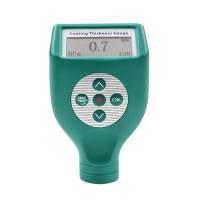
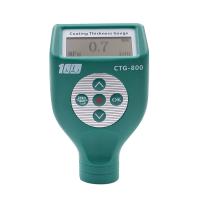
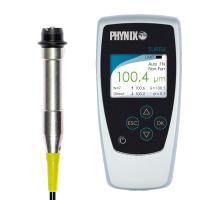
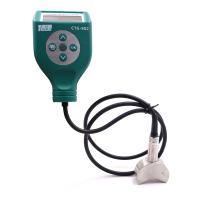
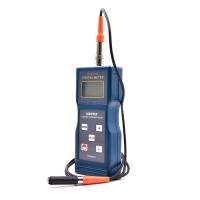
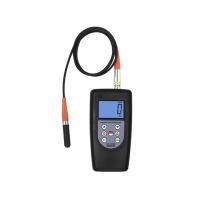
British elcometer Coating Thickness Gauge classification
British Elcometer coating Thickness Gauges include mechanical coating Thickness Gauges, destructive coating Thickness Gauges, permanent magnet coating Thickness Gauges, electromagnetic induction coating Thickness Gauges, and eddy current coating Thickness Gauges.

Mechanical Coating Thickness Gauge
The Elcometer range of mechanical coating Thickness Gauges provide cost effective dry film thickness measurement. Mechanical coating Thickness Gauges are suitable for working in high risk areas such as high temperature or flammable environments, underwater or at risk of explosion High, possibly caused by the electronic equipment used.
From the simplest coating Thickness Gauge, the Elcometer 101 will give you fast, immediate results, to the more accurate coating Thickness Gauge, the Elcometer 211, also known as the "Banana Gauge", is a cold and water Excellent choice for lower surfaces.
Destructive Coating Thickness Gauge
Specifically designed for measuring or assessing the thickness of multi-coatings on non-metallic substrates, Elcometer offers a range of destructive coating Thickness Gauges such as the Elcometer 121/4 and the portable and easy-to-use Elcometer 141.
How is the coating Thickness Gauge used?
Digital coating Thickness Gauge can measure dry film thickness on magnetic or non-magnetic metal surfaces such as stainless steel or aluminum. The principle of electromagnetic induction is used for non-magnetic coatings on magnetic substrates such as steel. The principle of eddy current is used for non-ferrous substrates. non-conductive coating on the
Permanent Magnetic Coating Thickness Gauge
A magnet is mounted on a balance arm, and the force required to pull the current magnet from the surface of the coating is a measure of the thickness of the coating. Force is applied through a coil spring, attached to one end of the balance arm, and a scale wheel at the other end. Due to the rotation of the scale wheel, the force gradually increases until the magnet pulls away from the surface. The scale is drawn in units of thickness rather than force, and the thickness of the coating can be read from the pointer on the instrument.
Electromagnetic Induction Coating Thickness Gauge
The electronic coating Thickness Gauge uses the principle of electromagnetic induction to measure magnetic materials. The three-coil probe system is used to detect the magnetic field generated by the instrument and two other coils, the central coil on either side. The signal generated by the instrument is sinusoidal, so an alternating magnetic field is established around the central coil.
When there is no magnetic material affecting the probe, then the magnetic field travels equally through the other two coils. As the probe gets closer to the uncoated substrate, the magnetic field becomes unbalanced, with more magnetic field passing through the closest coil, the furthest coil Less crossover. A net voltage will be developed between the two coils which measures the distance (coating thickness) to the substrate.
Eddy Current Coating Thickness Gauge
In the case of the eddy current principle, a single coil probe uses a signal with a relatively high frequency, several megahertz, to generate an alternating magnetic field in the non-ferrous metal under the coating. This magnetic field causes eddy currents to circulate in the substrate with associated Magnetic fields. These magnetic fields affect the coating thickness probe and cause changes in the electrical impedance of the coil. These changes are dependent on coating thickness.
How accurate are coating Thickness Gauges?
A key decision in choosing an appropriate coating Thickness Gauge is how accurate do the readings need to be? In the range of coating Thickness Gauge types offered, from moderately accurate series to very accurate gauges, the price increases as accuracy increases. In addition, the coating application and other factors that affect the variability in coating thickness also affect the results on a particular surface and the skill and knowledge of the coating thickness gage operator.
- 1Nondestructive measurement Coating thickness
- 2Principle, application and selection of traffic coatings Coating Thickness Gauge
- 3Principle, Application and Selection of Eddy current Coating Thickness Gauge
- 4Principle, Application and Type Selection of Electronic Coating Thickness Gauge
- 5Explore the principle, application and selection of phosphating layer Coating Thickness Gauge
- 6Principle, Application and Type Selection Analysis of Chrome Coating Thickness Gauge
- 7Principle, Application and Selection of Coating Thickness Gauge for inner wall of small pipe
- 8Basic principle and application scenario of steel Coating Thickness Gauge
- 9Principle and Application Analysis of Coating Thickness Gauge