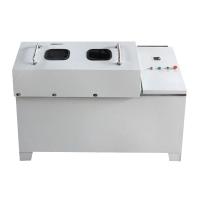
Ball mill works
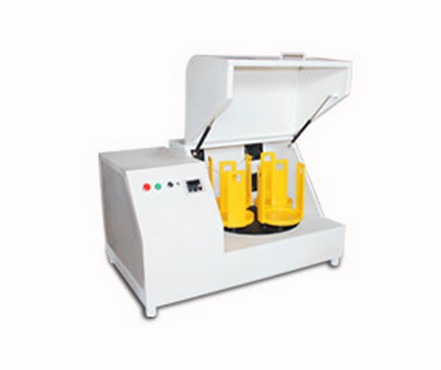
Generally speaking, machines that use balls as grinding media can be collectively referred to as ball mills. Generally speaking, a ball mill refers to a horizontal ball mill. The ball mill can be used as both a mixer and a Grinder. It is simple in design and easy to operate, because it is airtight. How the ball mill works, let's share the working principle of the ball mill below.
Ball mills include dry and wet ball mills, medium-speed powder mills, etc. Among them, wet ball mills are the most widely used.
Ball mills are widely used in thermal power plants, mineral processing plants, refractory material plants, cement plants, glass plants and other industrial sectors for fine grinding of medium-hard materials. The materials in the mine are initially crushed by the jaw crusher, and then sent to the ball mill evenly through the elevator and feeder after being crushed to a reasonable fineness, and the ore is crushed and ground by the ball mill. The ore fines after being ground by the ball mill enter the next process: classification. Classification equipment such as cyclones and spiral classifiers use the principle of different particle sizes of solid particles and different velocities in fluids to classify mixtures of various particle sizes and select particles that meet production needs. The unqualified particles are generally sent to the ball mill for grinding again through the return pipeline or equipment.
The ball mill is generally a low-speed mill with a rotating speed of 15 to 25 r/mm. The ball mill uses the low-speed rotating drum to drive the internal grinding medium (mostly steel balls) to move, and through its impact, extrusion and grinding on the material, the bulk material is crushed and ground into powder. The main body of the ball mill is a steel cylinder with a certain diameter and length, and steel balls with a total volume of 20% to 50% and a diameter of 25 to 80mm are installed in the cylinder. The steel balls in the barrel are rotated to a certain height and fall down, and the materials are ground through the stirring of the steel balls on the materials and the rolling between the steel balls and between the steel balls and the armor. The raw material and conveying medium (air or water) enter from one end of the valve, and the ground particles are taken out or overflowed from the other end of the cylinder by the conveying medium.
The ball mill is composed of a horizontal (so-called horizontal) foot (barrel), in which a part of pebbles, magnetic balls or balls are put, and then a part of the material is put in, and then the circle is rotated. Due to the grinding and shearing of the balls, The material can be dispersed. The total content of the ball and the material is about the same as the water axis (that is, the central axis of the cylinder), so that the ball can be lifted up to make them rotate, slide and roll. In order to prevent the lower ball from sliding back when rotating, Generally, a relatively narrow lifting handle is installed on the cylinder wall of the ball mill.
The grinding (dispersing) effect of the ball mill is caused by the rolling of the ball and the impact and strong shearing.
According to different grinding objects, the inner wall of some ball mills is lined with stones, magnetic plates or rubber, and pebbles (hence the name of pebbles) or magnetic balls are used as grinding media.
The volume of the ball mill has various specifications, and only one or two liters are used in the test. There are tens of liters, hundreds of liters or even thousands of liters for production.




- 1Factors Affecting the Grinding Efficiency of Ball Mill
- 25 Ways to Improve Ball Mill Efficiency
- 3Structure, principle and working process of ball mill
- 4Introduction and comparison of advantages and disadvantages of 4 kinds of dispersed equipment
- 5Comparison of three different dispersion Applicators
- 6What factors affect the dispersion efficiency of horizontal ball mills?
- 7Factors Affecting the Capacity and Quality of Ball Mill Grinders
- 8Common problems and solutions of ball mill
- 9How to choose the right Ball mill?