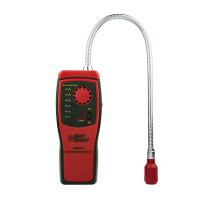
Sensors for catalytic combustion
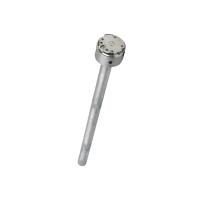
Catalytic combustion sensors are commonly used in the detection of combustible gases and vapors. This sensor consists of a coil surrounded by wire. The coils are doped with two different catalysts, one that activates the element and one that deactivates it. These two different coils come in pairs to sense the gas and serve as a reference, which together constitute the catalytic combustion sensor.
The sensor is placed in a loop, and when a steady voltage is supplied to both coils simultaneously, they are heated to very high temperatures. The sensor is connected to a Wheatstone bridge and a balancing resistor to detect changes in the resistance of the coil. When the combustible gas comes into contact with the sensor, the active coil will burn the combustible gas and cause the temperature of the resistance to increase, and the other reference coil will not have a temperature change because it cannot burn the gas. The difference in temperature leads to a difference in electrical resistance, from which the concentration signal of the combustible gas is derived.
Because the combustion process is inside the sensor, the sensor needs to be designed to be intrinsically safe and not be a source of ignition to ignite external gases. Its fire retardant technology has reached maturity. The sensor is usually made of sintered material, which acts as a cooling path for the escaping gases. Sensors are only considered intrinsically safe if they have been tested and passed by a third-party agency (UL, CSA, MSHA, FM or CENELEC).


- 1Principle and Application Analysis of Composite Four-in-One Gas Detector
- 2Introduction to Working Principle and Application of Carbon Monoxide Gas Detector
- 3Basic Principle and Application of Portable Gas Detector
- 4Basic Principle and Application Analysis of Gas Detector
- 5What is the alarm value of Gas Detector?
- 6What is phosphating Gas Detector?
- 7What is a combustion analyzer?
- 8Application Scheme of Gas Detector in Coking Coal Metallurgy Industry
保时安 - 《保时安》
- 9Application of Gas Detector in Medical Manufacturing
保时安 - 《保时安》