Difference between environment and reliability testing
Although the environmental test and the reliability test are closely related, they are completely different in the purpose of the test, the amount of environmental stress used, the selection criteria of the environmental force value, the type of test, and the test time.
Test purposes:
The environmental test examines the adaptability of the product to the environment, determines whether the environmental adaptability design of the product meets the requirements of the contract, and provides a decision-making basis for acceptance and rejection. The reliability test is to quantitatively evaluate the reliability of the product, that is, the probability that the product will complete the specified function within the specified time under specified environmental conditions.
Number of environmental stresses used:
As far as environmental testing is concerned, GJB150 specifies 19 test items, MIL-STD-810 D specifies 20 environmental test items, and 810F increases to 24 test items, including environmental stress that has a more important impact on products, such as: Temperature, humidity, salt spray, vibration and shock, pressure, solar radiation, sand dust, rain, etc. The test items should be selected according to the environmental conditions of its future use and the degree of impact. Generally, more than 10 environmental stresses should be investigated. However, because of the comprehensive simulation, the reliability test only combines the comprehensive environmental stress (temperature, humidity, vibration) and electrical stress for the test. It can be seen that the number of environmental stresses used in the reliability test is much less than that of the environmental test.
Environmental stress value selection criteria:
Environmental tests basically use extreme conditions, replacing mildness with harshness, that is, using extreme environmental conditions that a product may encounter during its life cycle as test conditions. Many tests are destructive and generally do not need to simulate the working state of the product during the test. The reliability test adopts the actual effect test, that is, to truly simulate the main environmental conditions encountered in the process of storage, transportation and use and their dynamic change process. In GJB-889 and the corresponding MIL-STD-781 D, a set of methods to determine the environmental profile according to the task profile, and then simplify the environmental profile to the test profile for long-term reliability assessment of the product is specified. Generally, the reliability test will not cause damage to the product. It needs to simulate the working state of the product. Most of the test conditions used simulate the milder stress environment often encountered in the work, and the value is much lower than that of the environmental test.
Test type:
Environmental tests usually use single-factor tests and multi-factor combination tests to act on the product in a certain order. Reliability tests mostly use comprehensive stress tests, where multiple environmental stresses are applied to the samples in the same space and at the same time to more realistically simulate the influence of environmental conditions. In order to improve the accuracy and reliability of test results, environmental testing has also begun to focus on the development of comprehensive testing, and actively develop large-scale multifunctional environmental testing equipment that can simultaneously apply stress such as temperature, humidity, vibration, radiation, dust, wind, and rain.
Test time:
In the environmental test, the time of each test basically depends on the selected test and the specific test procedure, but there are some differences due to the different time required for performance testing at each stage, and the test time is much shorter than the reliability test. The reliability test time depends on the reliability index value to be verified, the selected statistical test plan and the quality of the product itself. The time cannot be determined, until the total station hours of the tested product reaches the specified value or the decision of acceptance or rejection can be made.
Main Types of Environmental Tests
1. Climate and environment test
(GB2423, GJB150A, GJB4, IEC60068, GJB1032, GJB322A, GJB360A, GJB548, GB4208, GJB899, TB3021, etc.)
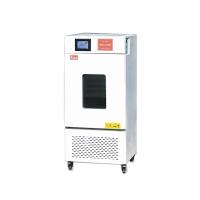
A. Temperature test: high temperature test, low temperature test, temperature shock test, temperature change test, rapid temperature change test (temperature change rate can reach 15 degrees/min), high temperature aging test, temperature cycle test.
B. Humidity (humidity) test: constant damp heat test, alternating damp heat test, high temperature and high humidity test (double 85 test, double 95 test).
C. Enclosure protection level test:
IP42, IP44, P54, IP55, IP65, IP66, IP67, IP68 protection level certification and testing services.
D. Three anti-tests: salt spray corrosion test (neutral salt spray test, alternating salt spray test, acid salt spray test), damp heat test (constant damp heat, alternating damp heat), mold test (mold test, mildew test) .
E. Special tests: low air pressure test (altitude test), high air pressure test, solar radiation test, rain test, sand and dust test, etc.
2. Mechanical environment test
(GB2423, GJB150A, GJB4, IEC60068, GJB1032, GJB322A, GJB360A, GJB548, TB3058, GJB899, GB/T21563, ISO16750, etc.)
A. Vibration test: sine vibration test (sweep frequency durability test), random vibration test, broadband random vibration test, narrow band random vibration test, sine + random superposition test.
B. Shock test: half sine wave mechanical shock test, rear peak sawtooth wave shock, shock response spectrum test.
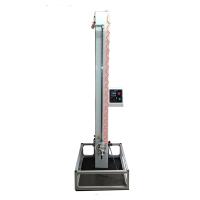
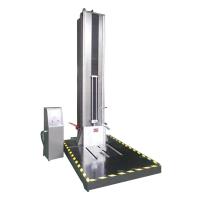
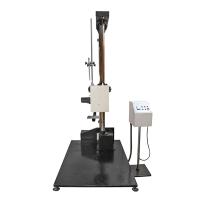
C. Other tests: drop test (free fall, repeated drop), impact test, acceleration test, etc.
3. Comprehensive environmental reliability test (GB2423, GJB150A, GJB899, etc.)
A. Temperature and humidity combination test, temperature + humidity + vibration comprehensive test (three comprehensive tests)
Electronic, electrical, electrical, railway locomotive equipment, military equipment products (environmental testing) test standards:
According to domestic and foreign standards, it provides a number of environmental and reliability tests such as light aging test, temperature and humidity test, gas corrosion test, mechanical vibration test, mechanical impact test, impact test and drop test, dustproof and waterproof test, and packaging pressure test, covering Most of the projects of climate environment test, mechanical environment test and comprehensive environment test can meet the requirements of GJB, GB, GB/T, IEC, ISO, EN, MIL-STD, SAE, ASTM, ISTA, JIS, IPC, JEDEC, GM , NISSAN and other international and domestic environmental and reliability test standards, and meet the requirements of relevant military standards.


- 1High Temperature Test Chamber selection considerations
- 2What is the purpose of the salt spray corrosion test?
- 3Application of Hot and Cold Shock Test Chamber in LED Industry
- 4What is reliability testing?
- 5What is a conditioning test and reliability test and what is the difference?
- 6Test method for salt spray resistance of films