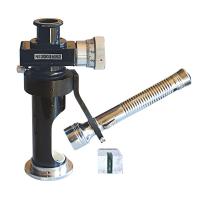
Measurement Indentation Hardness
Anyone can notice that rocks are harder than plastic toys. But when you work in engineering or metallurgy, measuring hardness gets more complicated. There are several ways to measure the hardness of a material. In engineering and metallurgy, workers commonly measure indentation hardness.
Indentation hardness measures how well a material resists changes when compressed. To measure indentation hardness, workers use equipment to compress the material. They then measured the level of indentation left on the material. In general, smaller indentations indicate harder material.
The method of measuring indentation hardness varies depending on which scale you use.
Compare Hardness Scales
There are four scales to choose from when measuring indented wire harnesses. The type of scale you use affects the type of device you use.
Brinell Hardness Tester
The Brinell Hardness Tester, developed by Johan August Brinell in 1900, was the first hardness scale used by engineers and metalworkers. To perform a Brinell test, the indenter penetrates the desired material.
People prefer Brinell Hardness Testers if they also need to determine the ultimate tensile strength (UTS) of steel. That's because when you divide the Brinell value in half, you get UTS in pounds per square inch.
Rockwell Scale
The Rockwell scale was developed by Hugh and Stanley Rockwell in the early 20th century. This scale compares the indentation caused by a large load to the indentation caused by a smaller load.
The Rockwell test preserves the integrity of the material better than the Brinell test. Brinell testing leaves a great impression and can actually damage the material being tested.
Vickers scale
The Vickers scale was developed in 1921 by Robert L. Smith and George E. Sandland of Vickers, Inc.
Vickers hardness measurements are generally easier to determine than measurements from other scales. Unlike other tests, the size of the Vickers indenter does not affect hardness calculations.
shore ruler
Invented by Albert Ferdinand Shore in the 1920s, the shore hardness scale uses a device called a durometer. Like other hardness devices, durometers apply force to the material and measure the depth of the indentation.
Unlike other hardness scales that focus on metals, the Shore scale measures the hardness of elastomers, rubber, and polymers.
Compare Tester Devices
Each type of hardness scale requires a different type of equipment. Rockwell and Brinell testing rely on two main types of equipment: bench and portable equipment.
The desktop device sits on top of the workbench. It displays test results on a dial (analog models) or a digital screen (digital models). The difference with portable equipment is that, in addition to being portable, larger metals can be tested than benchtop equipment.
The Vickers Hardness Tester uses diamond as the indenter. Regardless of the material used to measure, a diamond will produce an imprint of the same shape. Also, because diamonds create relatively small indentations, Vickers hardness equipment is ideal for testing thin materials such as thin foils.
As mentioned above, a Hardness Tester is an instrument used for shore mark testing. A durometer is a test bench similar to a kitchen scale.
There are several different hardness styles, including classic, pencil, and ergo. Each is manufactured to meet specific specifications. For example, pencil Hardness Testers have tiny bases that allow them to measure hard-to-reach areas.
When it comes to measuring indentation hardness, you have several options to choose from.
- 1Determination method of paint film hardness - swing rod hardness, scratch hardness, indentation hardness
- 2How does the Barkholz indentation Tester determine the indentation hardness of paint films?
- 3Test coating Hardness with Buchholz Indentation Tester
- 4Film Indentation Hardness Test
郑顺兴 - 《涂料与涂装科学技术基础》