How to save time and money with proper measurement Viscosity?
Like any other process, the conformal coating process has different variables, inputs and outputs. To be able to control the outcome of the application (output), we need to fully understand how each variable affects the process.
Importance of variables
In order to get the right amount of fluid, thickness, correct coverage, no contaminated areas, etc., you need to identify and understand the variables of your process.
Important variables:
viscosity
flow
Machine parameters (speed and altitude)
curing method
In this blog, we will focus on the first variable: Viscosity
Viscosity definition
Viscosity is a measure of a liquid's resistance to gradual deformation by shear or tensile stress. It corresponds to the informal concept of "thickness". For example, oil has a much higher viscosity than water, therefore, oil is "thicker" than water.
Viscosity affects the conformal coating process in two different ways:
If the viscosity of the coating is high, the thickness of the coating is also more likely to be high. "HIGH" is not always better protection.
If the viscosity is too low, the coating can easily flow to areas where we don't need it, and the thickness becomes thinner, increasing the risk of insufficient protection.
Additionally, viscosity affects how the coating will flow on the PCB. But to take advantage of viscosity, one needs to define a "viscosity working range" for the coating process, and it needs to be measured.
There are standards that explain how viscosity is measured using different methods and tools. However, measurements need to be performed in a well-controlled environment, mainly referring to temperature and humidity conditions. Why? Because temperature affects viscosity. In liquids, higher temperatures translate to lower viscosities.
How to measure viscosity:
Viscometer
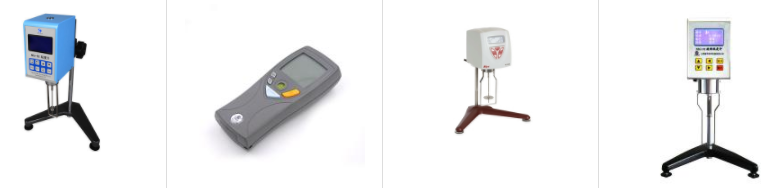
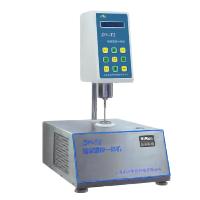
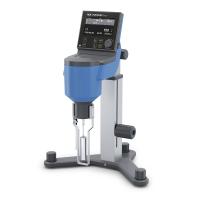
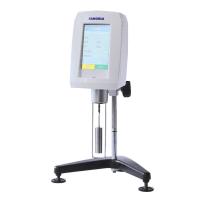
A viscometer is an automatic tool that measures the viscosity of a liquid by means of a rotating shaft submerged in the liquid while the liquid container is immersed in warm water set at 20-23°C. Based on the RPM and torque the spindle needs to rotate constantly and the resistance of the fluid, the viscometer calculates a viscosity value. It is important to note that spindle size and shape are also self-evident in getting the correct measurements, you cannot use the same spindle to measure oil and alcohol or use the same RPM and torque.
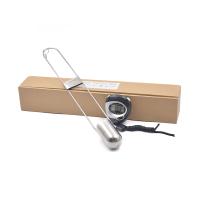
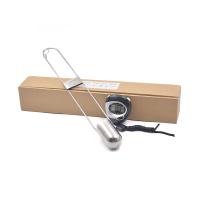
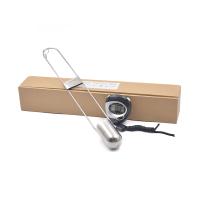
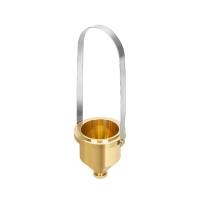
Viscosity Cup
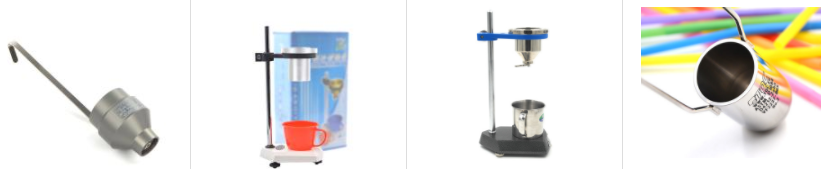
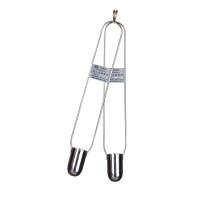
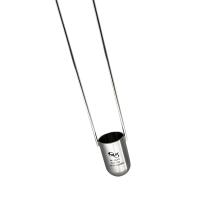
Viscosity cups are one of the very popular methods and come in different shapes and sizes.
The method of measuring viscosity is based on the same concept: taking time a liquid needs to flow out of a cup through a small hole in the bottom.
It sounds simple, but it's not.
First, we need to have the same basic premise:
liquid temperature
The vertical position of the cup, so the flow is only affected by gravity;
Finally, cups are used to measure a specific viscosity range of liquids.
Also with this method you will get the value in SECONDS. Stokes or Poises can be used to convert the time in seconds using the formula that usually accompanies Viscosity Cup manuals. Each cup type has its own recipe, based on size, brand and range.
An important point here, especially with Viscosity Cups, is that timing and converting to stokes or poises will only work properly if you do it the right way. Using Viscosity Cups on the production floor is practical, but necessarily correct. It helps to "monitor" process behavior through liquid properties, but it does not measure its quality.
Define the viscosity value:
Finally, for conformal coating applications, we define a viscosity "value," in seconds or centipoise, based on the result we want to achieve: thickness, coverage, and method of application.
Thickness, as mentioned earlier, we can manipulate the final thickness of our craft with viscosity. Say, if you're using a 50% solids coating, and you need to meet the 3 mil thickness minimum, you'll need to pour 6 mils on the wet to get it. 6 mil is easier to get if the liquid has a high viscosity.
Coverage, if the viscosity is low, the liquid flows more. As a result, it runs easily through boards and components with less viscosity. However, if it runs too much, it can also stain areas we don't want to coat, so we need to stick a little.
Method of application, for processes such as dipping or spraying, low viscosity paints are recommended. For example, during dipping, low viscosity helps conformants to drip faster and better from the plate; during spraying, low viscosity facilitates atomization of the coating. It requires less air pressure to atomize.
In conclusion, viscosity is an essential characteristic for properly establishing a conformal coating process. It's nice to know how to measure it, but knowing it's the right way to do it is just as important.

- 1Coating viscosity determination - viscosity cup Yiwen
- 2Principle, application and selection of ZAHN5 viscosity cup
- 3Corrugated fibreboard starch viscosity cup its principle, application and selection introduction
- 4Decryption paints original juice viscosity cup, principle, application and selection
- 5Wood lacquer viscosity cup, principle, application and selection introduction
- 6Analysis of the principle, use and application of Ford6 viscosity cup
- 7Principle, Structure, Usage and Application of QNB Viscosity cup
- 8Introduction to the use and application of No. 4 viscosity cup
- 9Coating viscosity determination by Flow Cup method