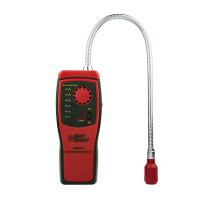
How many Gas Detectors are needed in terms of efficiency and savings?
Nobody wants to buy a Gas Detector. But buying the right gear is a critical part of keeping employees safe and seeing their families every night.
Nobody wants to buy safety equipment, including Gas Detectors. But selecting and buying the right gear is a critical part of getting your team home safely.
It's tempting to base your decision solely on unit purchase price. However, reliability, durability and availability should be the priority when it comes to keeping people safe. You also need to consider the long-term total cost of ownership.
How do you work within a budget and buy great equipment? The answer is to find leaner ways without compromising security.
For example, choosing a Gas Detector with features that allow you to operate a smaller Gas Detector can make a huge difference.
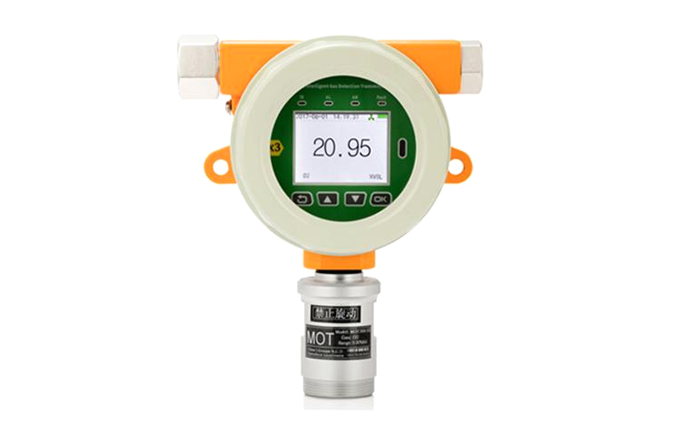
Here's a hypothetical example...
All of the company's 450 on-site employees spend part of their time in areas known to be high risk for exposure to H2S. It's not something that happens every day, but about once a week the H2S Detector is needed. Workers also sometimes work in confined spaces.
Between H2S risk and confined space entry, the safety manager estimates that everyone is safe if they wear 4 gas apparatus about 25% of their working hours.
Due to a tight budget, there was no dedicated staff to maintain the Gas Detectors. Instead, security administrators troubleshoot and repair devices between other priorities. It is uncommon for Gas Detectors to be out of service for weeks, sometimes months.
Safety managers are also responsible for knowing who owns which Gas Detectors. He kept a spreadsheet with names and serial numbers, but updating it manually every day was too time-consuming for him, so each employee was given his own Gas Detector.
If a problem arises, the employee reports it to a supervisor and arranges for the instrument to be replaced. Therefore, the security manager is not sure that his spreadsheet is completely accurate. Sometimes an instrument was handed out while he was out of the office, and he needed to keep track of it when he got the chance.
In this case, the company would probably buy about 500 standard 4-Gas Detectors. Of those, 450 will be used for each on-site employee, with another 50 for repairs and other downtime.
In this case, there are several opportunities to reduce the size of the Gas Detector and achieve cost savings.
1. Gas detection as a service. The need for “just in case” backup instrumentation is virtually eliminated with a gas detection program that readily provides replacement equipment should the need arise.
For example, a service provider may be alerted to a Gas Detector calibration failure. Replacement can be done within a few days. When an instrument is going through a lengthy process of troubleshooting and repair, there is no need to use multiple available lenders.
2. Smarter maintenance management. Gas detection management software allows service providers to be alerted to calibration failures and can be used to monitor equipment health for proactive maintenance.
The software can be used to monitor when a sensor is nearing the end of its useful life and can be replaced before the first calibration fails.
More to remember: the same software can be used to monitor whether the equipment is in normal use. Are your Gas Detectors tested daily? If not, how do you know they will react to toxic or flammable gases?
Gain a high level of visibility into your fleet maintenance with an easy way to ensure every instrument is always in top working order.
3. Powerful user assignment. Gas Detectors that allow users to dispense on-the-fly can significantly reduce the size of instrument clusters. For example, if a user can quickly tap a Gas Detector onto a label that programs its name into the instrument, there is no need for manual tracking. Electronic records can quickly show who owns which instrument.
Using a group of instruments is made easier with flexible and powerful user assignments, rather than assigning one to each person. You can greatly reduce the size of your fleet by planning for the need for one instrument at a time rather than the total number of workers.
4. The Gas Detector is durable. Gas Detectors designed to withstand harsh environments can save money in the long run. Less time is spent checking equipment, arranging replacements and repairs.
Considering these 4 opportunities, it is realistic for companies in the above scenario to significantly reduce the size of their Gas Detector fleets. They don't require as many backup instruments, since replacement equipment arrives automatically within days of any problems.
One more thing to remember: While Gas Detectors are built to last, they require a lot of maintenance. With improvements to assigning users, they can now manage the total number of simultaneous users instead of the total number of on-site employees.
Taking full advantage of these opportunities, the company could easily reduce its fleet of 500 Gas Detectors to just 100.
The savings aren't limited to equipment costs, though. Safety managers now spend less time on administrative tasks and keeping work tools on site. Instead, he was able to focus on figuring out more ways to make sure his employees got home every night.
No one wants to buy safety equipment, but choosing equipment that can reduce fleet size can save a lot of time and money.


- 1Principle and Application Analysis of Composite Four-in-One Gas Detector
- 2Introduction to Working Principle and Application of Carbon Monoxide Gas Detector
- 3Basic Principle and Application of Portable Gas Detector
- 4Basic Principle and Application Analysis of Gas Detector
- 5What is the alarm value of Gas Detector?
- 6What is phosphating Gas Detector?
- 7What is a combustion analyzer?
- 8Application Scheme of Gas Detector in Coking Coal Metallurgy Industry
保时安 - 《保时安》
- 9Application of Gas Detector in Medical Manufacturing
保时安 - 《保时安》